
5 Mistakes to Avoid With Fence Installation
The biggest fence installation mistakes in North Miami Beach aren’t about picking the wrong material. They’re about skipping the steps that decide whether a fence is code-compliant, structurally sound in a hurricane corridor, and built to last in coastal soil. Get those five things right and your fence stands for 20 years. Miss them and you’re paying twice. If you’d rather not gamble on the details yourself, call (844) 797-4868 and we’ll walk you through it.
Every year across South Florida, homeowners spend real money replacing fences that went up just a few years earlier. Not because a storm took them out. Because the original install never met wind load code and nobody pulled a permit. We see it constantly, and it’s the most avoidable kind of loss. Here are the five mistakes that cause it, and what the correct work actually looks like.
Mistake 1: Installing Without a Miami-Dade Permit
Skipping the permit feels like saving a few hundred dollars. It’s the mistake that costs the most down the road. In North Miami Beach, a fence over a set height, or any fence in certain easement or flood-zone conditions, needs a permit and an inspection. When you sell a home, a flagged unpermitted structure can stall the closing, force a retroactive permit or a full tear-out, and hand the buyer negotiating leverage. When you file an insurance claim after a wind event, an adjuster who finds an unpermitted, non-compliant fence has grounds to reduce or deny that portion of the claim.
What the correct process looks like:
- Pull the permit before the first post goes in the ground.
- Build to the approved plan so the inspection passes the first time.
- Keep the final inspection record with your home documents.
- Never let a contractor talk you out of the permit to “keep the price down.”
We pull permits and get inspections passed on fence work in North Miami Beach because a fence that fails the paperwork test is a liability, not an asset.
Mistake 2: Undersetting Post Depth in Our High-Water-Table Soil
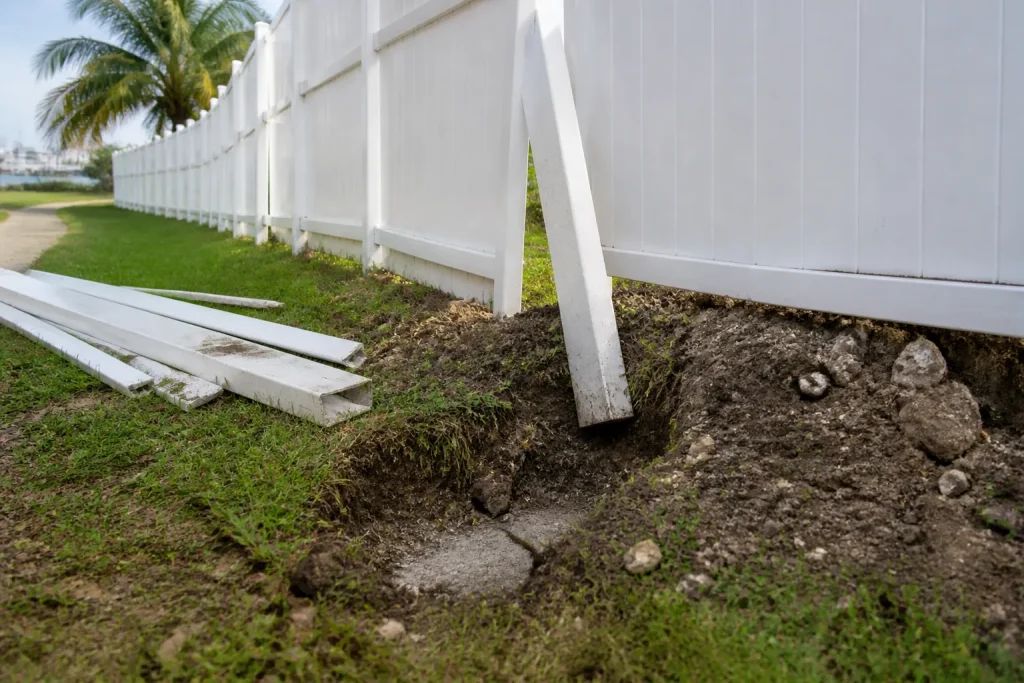
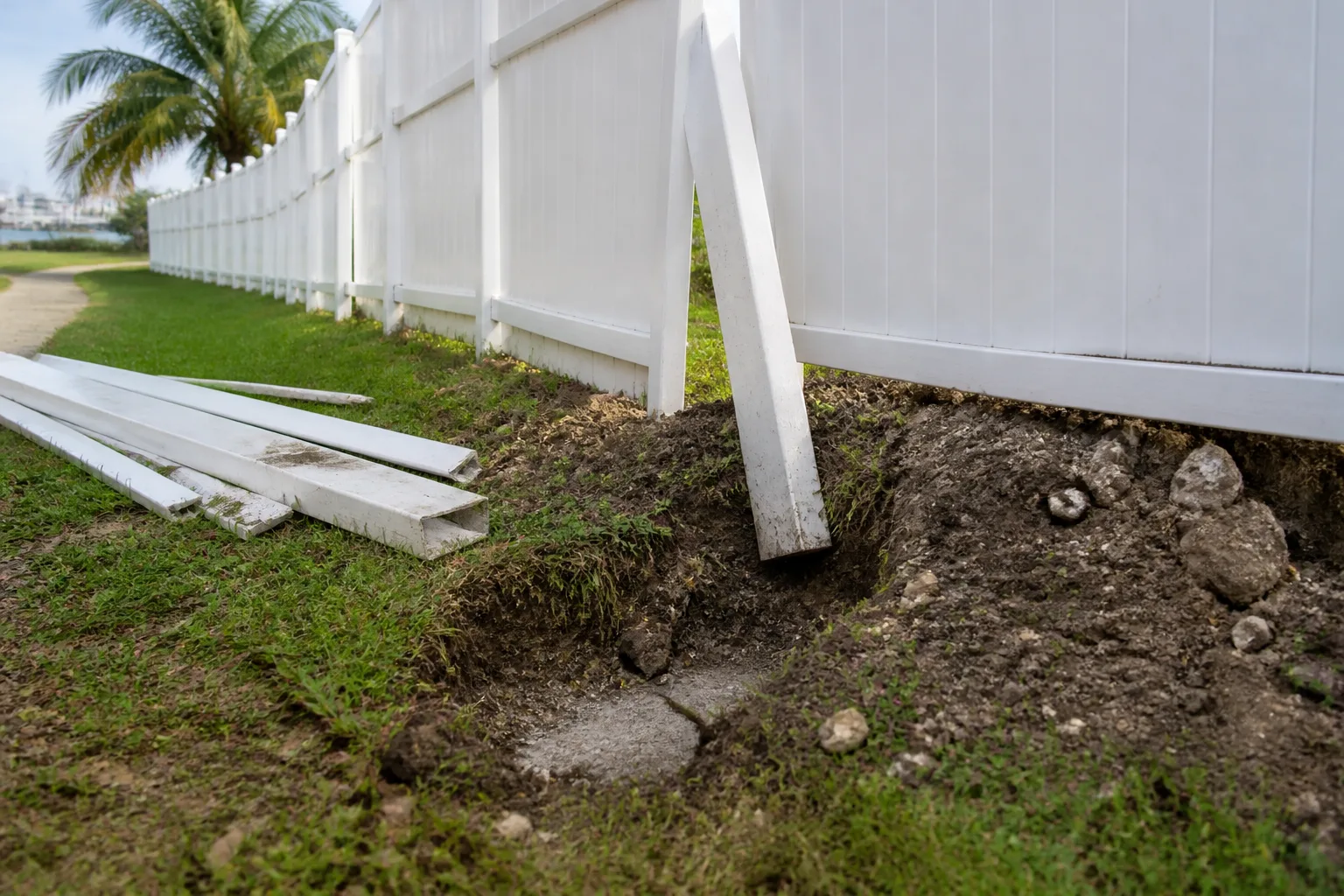
This is the mistake that quietly destroys fence lines in North Miami Beach. Our water table sits high and the soil stays damp, so a shallow post in a thin concrete collar heaves, leans, and rots at the base long before the panels wear out. A post set the “standard” way for drier climates won’t hold here. The footing has to account for our soil and drainage or the whole run goes wavy within a few seasons.
What holds up in North Miami Beach:
- Posts set well below the frost-free shallow depths used up north, into stable soil rather than the wet top layer.
- A properly sized concrete footing around each post, not a half-bag splash at the surface.
- Drainage planned around the fence line so water doesn’t pond at the base.
- Post material chosen for ground contact in a wet, salt-air environment.
When a post is underset, you’ll see the lean start at the gate first, since that’s where the load concentrates. By the time the panels wobble, you’re rebuilding footings, not tightening bolts.
Mistake 3: Choosing Material on Upfront Cost Alone
Upfront price is the wrong number to compare. The right number is what the fence costs you over ten years in salt air, sun, and rain. This is where North Miami Beach homeowners get burned: the cheapest-looking choice at the bid stage is often the most expensive to keep standing.
A realistic look at three common materials in our climate:
- Wood: Lowest sticker price, highest upkeep. In coastal humidity it wants sealing, staining, and rot repair on a regular cycle, and it can warp and gray fast. Cheap to start, pricey to own.
- Vinyl: Middle of the road up front. Holds up well with almost no maintenance, though cheaper grades can get brittle in strong UV and need quality components to survive wind.
- Aluminum: Higher initial cost, lowest long-term maintenance. Rust-resistant, handles salt air, and keeps its finish. Over a decade the gap in maintenance cost often closes the upfront difference.
Quality hardware and coatings matter as much as the panels. The same way we lean on vetted brand partners like James Hardie for siding, we spec fence components that are built for coastal exposure rather than whatever’s stacked at the yard.
Mistake 4: Skipping the Property Survey Before You Build
A fence in the wrong place is a legal problem, not a cosmetic one. Build over the property line and you’ve encroached on a neighbor’s land. Block an easement and you may be ordered to remove the fence at your own cost. Both scenarios land squarely on the homeowner, and both are avoided with one step: pull the survey before anyone sets a post.
Before installation in North Miami Beach, confirm:
- The exact property line from a current survey, not a guess from an old photo.
- Whether any easements run along the fence line.
- Local setback and height rules that apply to your lot.
- Where utilities run before digging.
We’ve seen fence lines come within inches of a neighbor’s property, and settling it after the fact means tearing out and rebuilding. Check the survey first. It’s the cheapest insurance on the whole project.
Mistake 5: Using Standard Wind Ratings in a Hurricane Zone
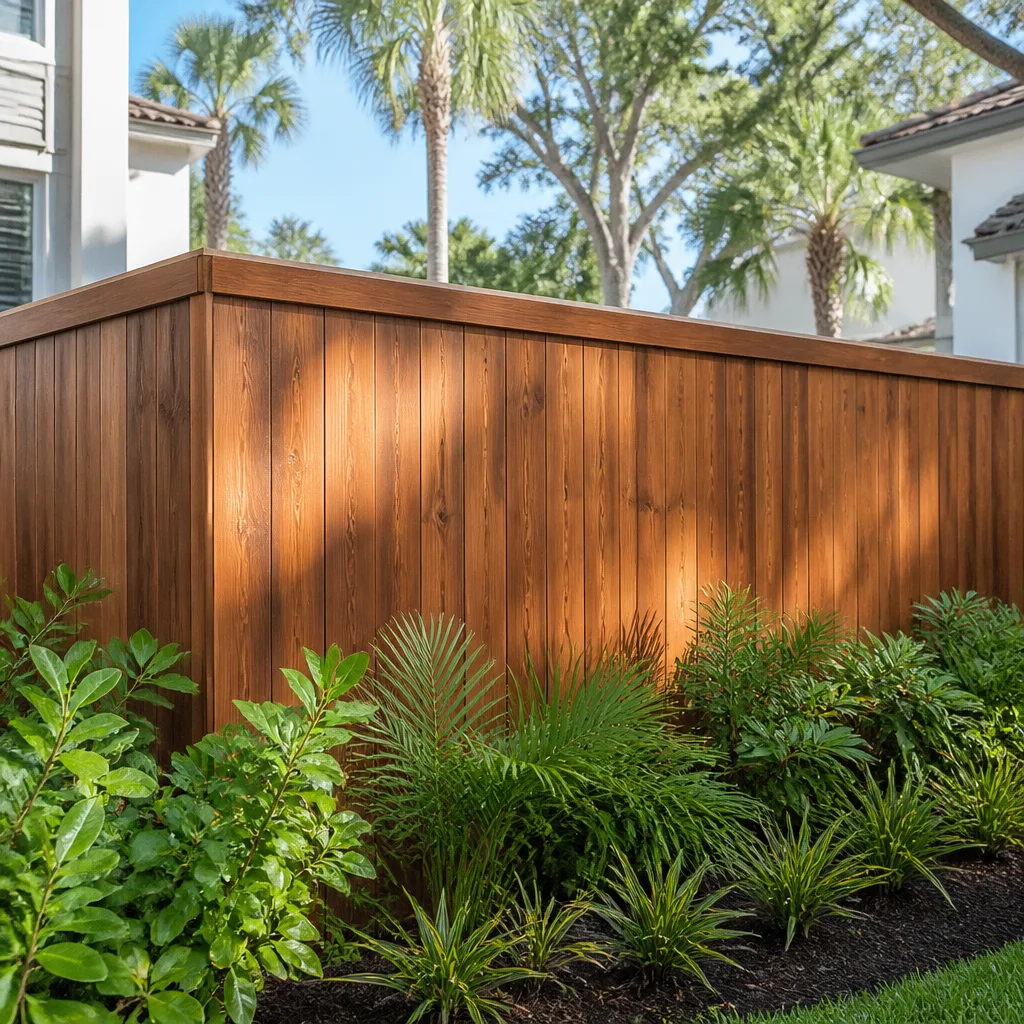
North Miami Beach sits inside the High Velocity Hurricane Zone, and a fence built to a generic residential wind rating is underspec’d for where we live. Standard panels, thin posts, and light hardware are rated for weather we don’t get. When a real wind event arrives, the fence that met Miami-Dade’s high-velocity requirements performs very differently from the one that didn’t.
What the correct spec looks like:
- Materials and assemblies that carry the Miami-Dade product approval for high-velocity wind zones.
- Post spacing and embedment engineered for wind load, not eyeballed.
- Fasteners and brackets rated for the same loads as the panels.
- Documentation on file showing the assembly meets the code for your area.
How to verify it: ask for the product approval and confirm the assembly, not just the panel, is rated for the HVHZ. A contractor who can’t produce that paperwork is guessing with your property.
When to Call a Pro
Some jobs reward a weekend and a rented auger. A hurricane-zone fence with permit, footing, survey, and code requirements is not one of them. We pulled a fence out of a yard near Eastern Shores last month where every post had been set in a shallow concrete splash. The panels looked fine from the street. The footings were the whole story. That’s the kind of thing only shows up when someone who does this every day takes a close look.
Our technicians have up to 12 years of experience on installs exactly like this, and every job is covered by our 730-Day Done Right Promise – if it’s not done right, we make it right. Calls are answered by a live person, 24/7, and pricing is upfront with no surprises.
Related services in North Miami Beach: exploring a wider exterior upgrade? See our Fence Installation in North Miami Beach and Driveway & Pavers in North Miami Beach pages, or start at the Groundwork Construction Co. of North Miami Beach home page. Planning a larger addition that changes your fence line? Our Home Additions & ADU in North Miami Beach team can coordinate it from foundation to finish line.
The Bottom Line
The five mistakes that sink a North Miami Beach fence are the same five every time: no permit, underset posts, material chosen on sticker price, no survey, and a wind rating that doesn’t belong in a hurricane zone. Each one is preventable, and each one is far cheaper to prevent than to fix. Choose materials for the long haul, build to Miami-Dade code, and keep the paperwork. Do that and your fence is built to last, backed in writing.
If you’re in North Miami Beach and need help, Groundwork Construction Co. of North Miami Beach offers free estimates – call (844) 797-4868. Projects over $10,000 get $1,000 off, and 0% financing for 18 months is available.
Frequently Asked Questions
Often yes. Fences over a set height, or those in certain easement or flood-zone conditions, require a Miami-Dade permit and an inspection in North Miami Beach. Skipping it can stall a home sale or complicate an insurance claim. Call (844) 797-4868 and we’ll confirm what your specific lot requires.
Deep enough to reach stable soil below our high water table, with a properly sized concrete footing around each post rather than a shallow collar. Standard shallow-depth methods used in drier climates don’t hold here and cause leaning within a few seasons. Call (844) 797-4868 for a free estimate on a footing spec built for your yard.
Aluminum tends to hold up best in salt air with the least maintenance, though quality vinyl is a solid middle option and wood costs the most over ten years once you factor in sealing and rot repair. The right choice depends on your budget and how long you plan to stay. Call (844) 797-4868 to talk through the trade-offs.
It can affect both. A flagged unpermitted fence can hold up a closing or force a retroactive permit or tear-out, and an insurer may reduce or deny a wind claim tied to a non-compliant fence. Getting it permitted and built to code up front avoids all of that. Call (844) 797-4868 for a free, compliant estimate.
Written by the team at Groundwork Construction Co. of North Miami Beach.
Need Construction Help?
Call Groundwork Construction Co. of North Miami Beach - licensed & insured, here with fast after-hours help in North Miami Beach.
(844) 797-4868