




Free written scope consultation - allowances, timeline, and change-order rules on paper before a single trade is scheduled
Styles & brands we work with
- Kitchen remodeling
- Bathroom remodeling
- Home additions & ADU
- Roofing
- Windows & doors
- Driveway & pavers
- Fence
See the difference
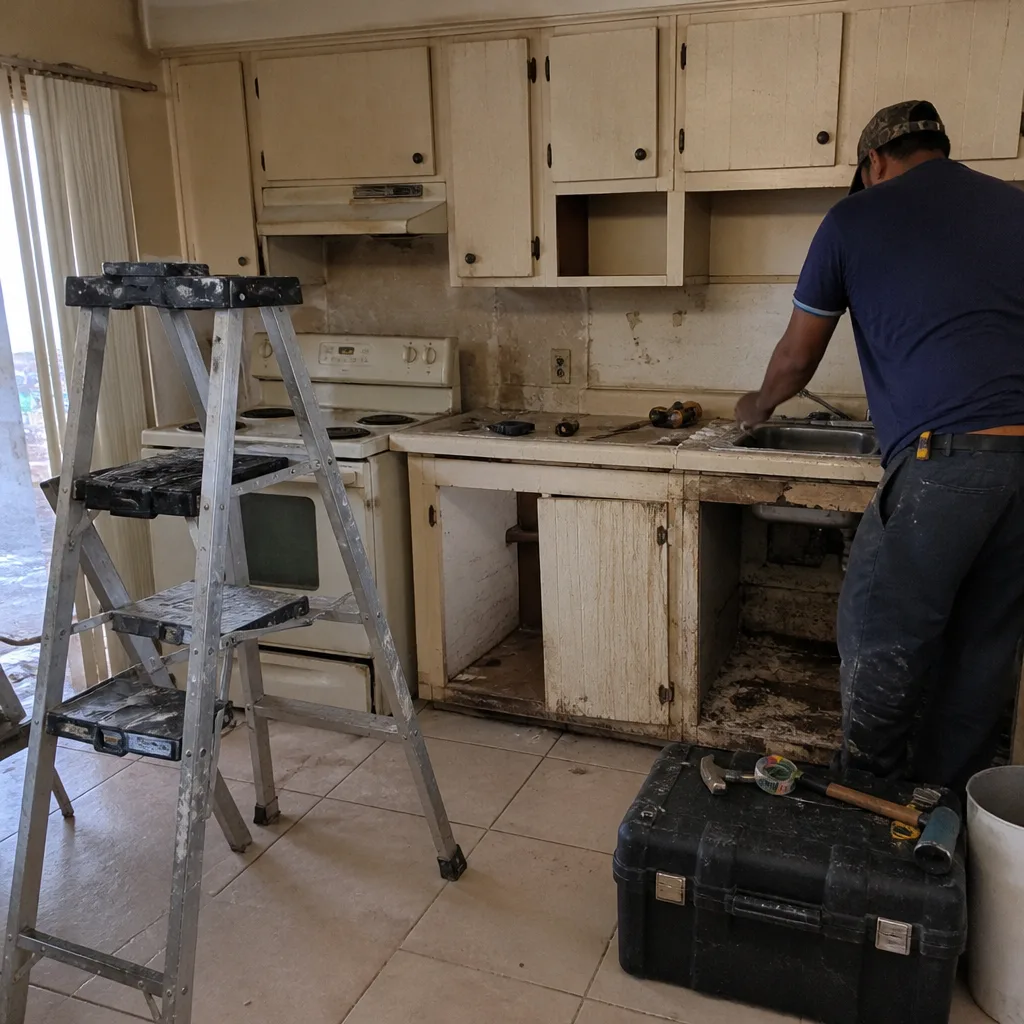 Before
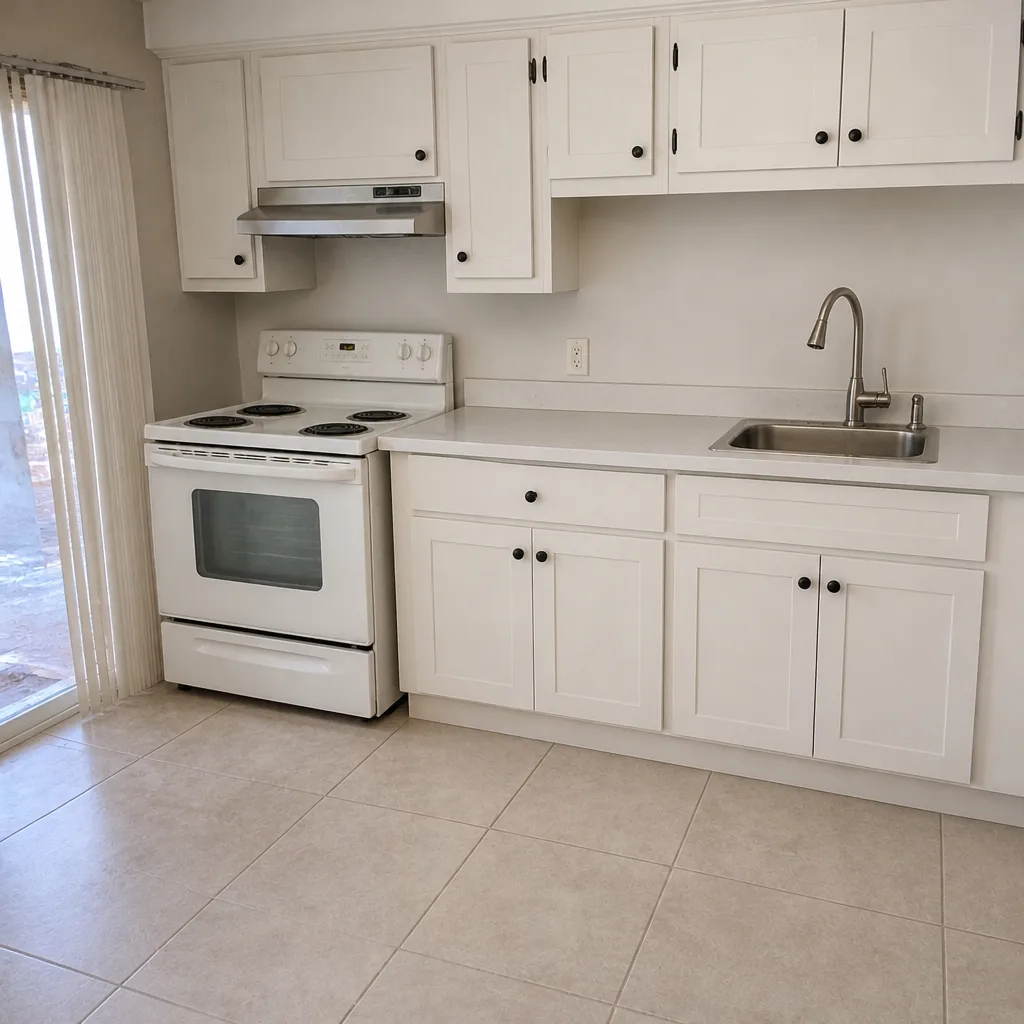 After
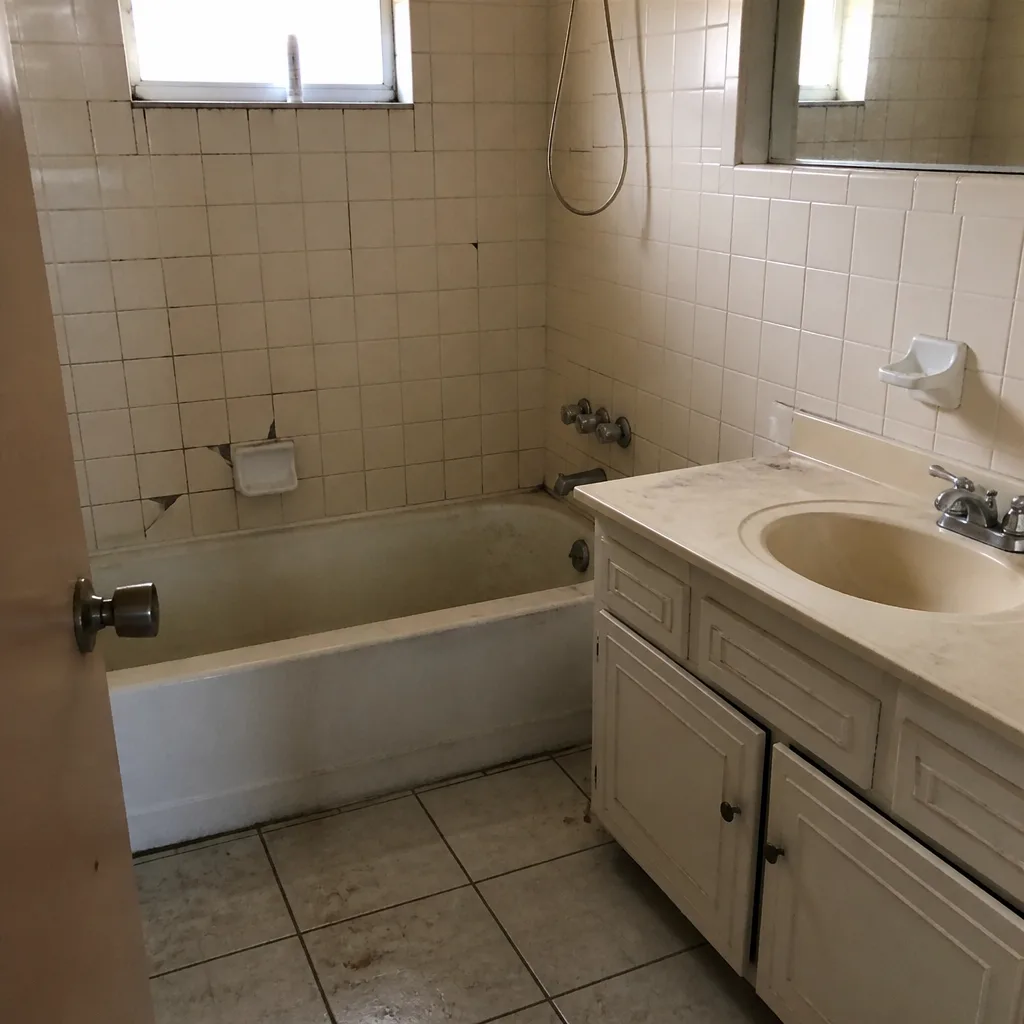 Before
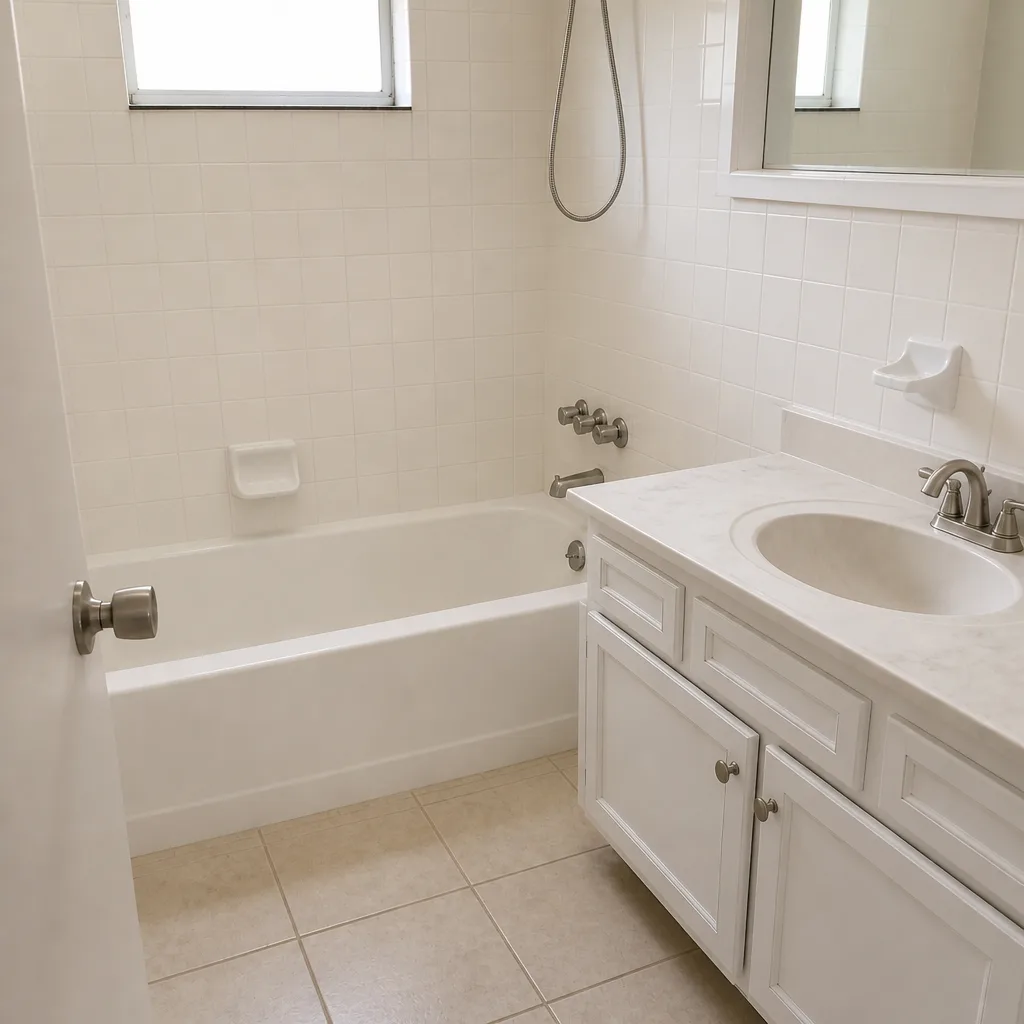 After
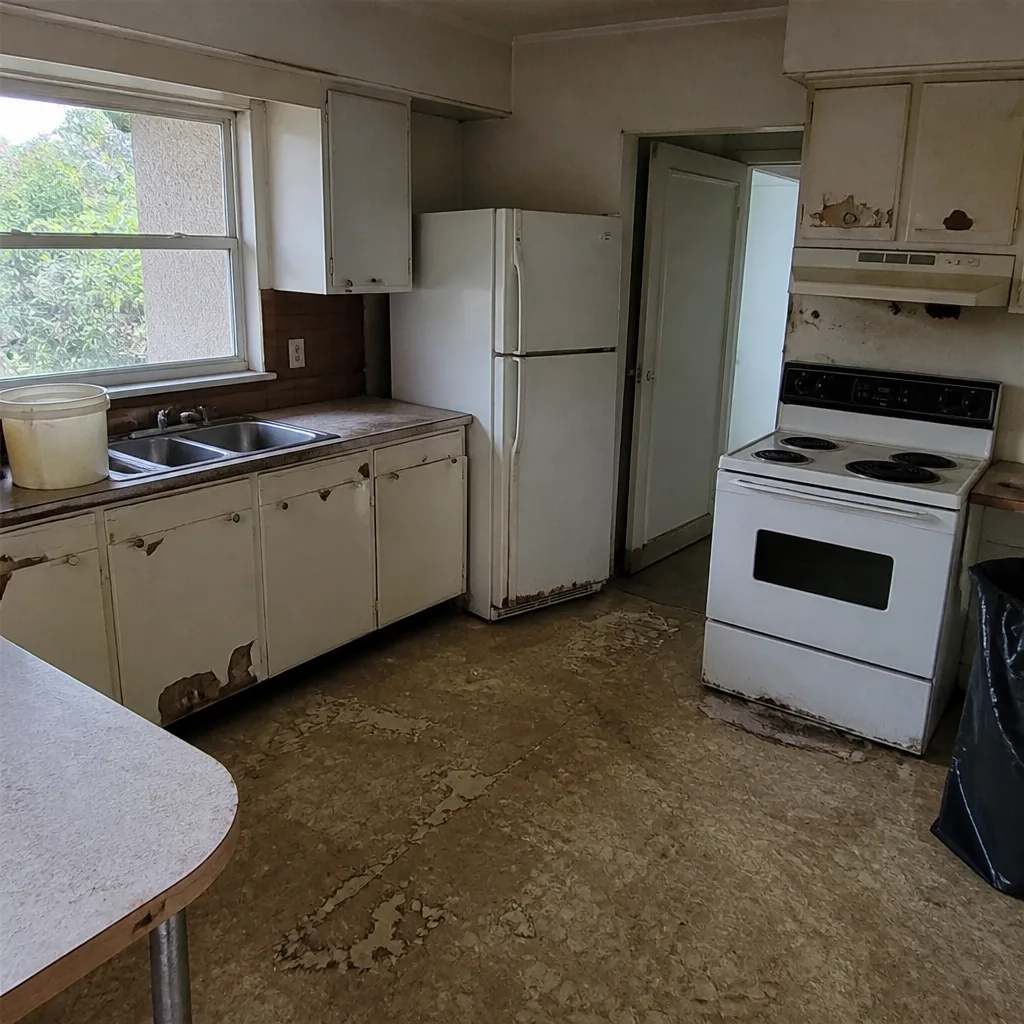 Before
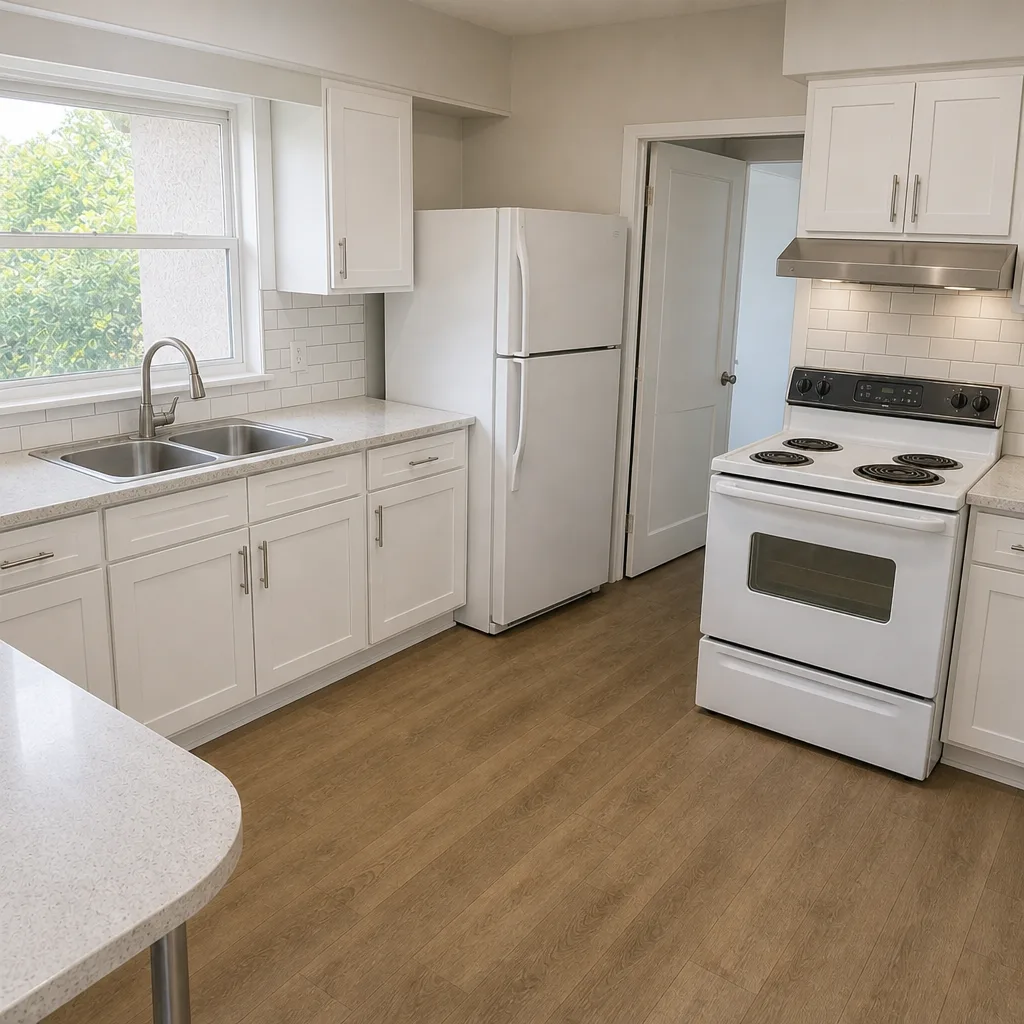 After
How to Find a Roof Leak in North Miami Beach, FL: Start Where the Water Is, Not Where the Stain Is
To find a roof leak, you trace it backward from the penetration, not from the ceiling stain: on a flat roof the stain is almost never directly under the leak. Water enters at a failed seam, a cracked vent boot, or an HVAC curb, travels across the deck under the membrane, and surfaces 10-20 feet away. That’s why the garden-hose method most guides push finds nothing on North Miami Beach’s low-slope ranches. If you’re already staring at a wet patch and running out of patience, call (844) 797-4868 and a live person will pick up.
We’re Groundwork Construction Co. of North Miami Beach, and we deal with this exact problem across the city’s 1950s-1970s concrete-block ranch homes every rainy season.
Key Takeaways
- On a flat or low-slope roof, the ceiling stain is usually 10-20 feet from the actual breach. Visual tracing alone fails.
- The three highest-probability leak sources on North Miami Beach ranch homes: aged cast-iron vent boots, 1970s window AC curbs cut through the membrane, and low parapet walls with failing counterflashing.
- In High Velocity Hurricane Zone conditions, a leak often shows up two or three rains after a storm, not during it.
- Document the stain with a photo and timestamp, then stop. Opening the membrane yourself usually makes the repair bigger.
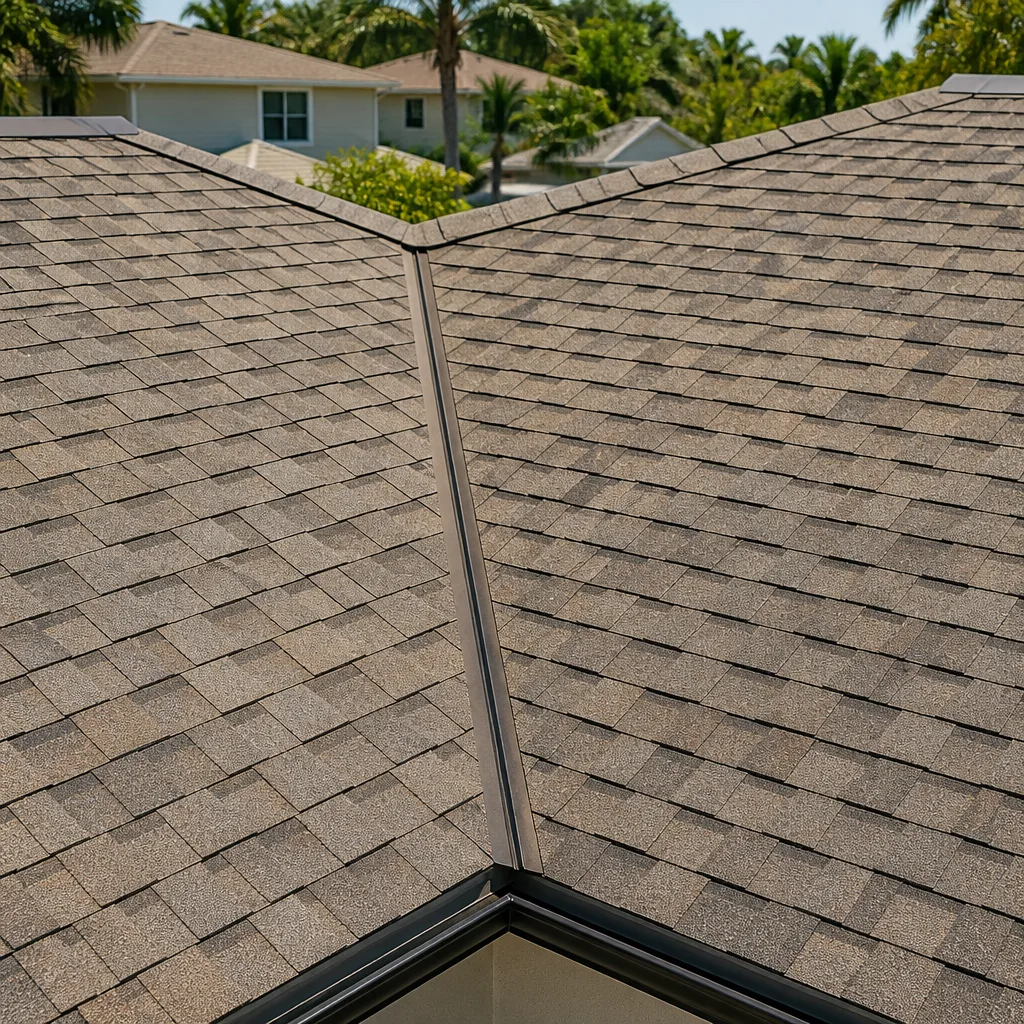
Why the Stain on Your Ceiling Is Almost Never the Leak
Pitched shingle roofs drain fast. Water hits the slope, runs downhill, and finds a path through in minutes. On a low-slope membrane, gravity and drainage are working against that assumption. Water that gets past a seam or penetration sits on the deck, spreads along the underside of the membrane, and moves horizontally until it finds a joint or fastener it can wick through. By then it may have crossed an entire room.
That lateral migration is why the common advice to “trace the stain uphill” breaks down here. There may be no uphill. On a North Miami Beach ranch with a barely-there slope, water follows the deck seams, not the compass. The fix is instrumentation, not eyesight: infrared thermography reads the temperature difference where moisture sits under the membrane, and electronic leak detection (ELD) traces the path of water through the assembly. Both locate the breach in a way a hose test on a flat roof can’t, because the hose water just pools somewhere near where you sprayed it.
We’ve had jobs where the ceiling was wet in a bedroom and the entry point turned out to be a vent boot on the opposite side of the house. On the flat sections that’s normal. Our technicians have up to 12 years of experience chasing exactly this, and every project is backed by our Roofing workmanship under the 730-Day Done Right Promise: if it’s not done right, we make it right.
The Penetrations That Actually Leak on North Miami Beach Ranch Homes
Look at the roof of a 1962 home west of Biscayne Boulevard and you’ll see the same suspects show up again and again. These are the spots worth checking first, in order of how often we find them leaking.
1. Original cast-iron and galvanized vent boots
Every plumbing vent that pierces the roof needs a boot, and the originals from 60 years ago are now cracked, brittle, and often missing their seals. The cast-iron pipe itself may still be fine while the flashing around it has failed. That single boot can let in enough water to soak a hallway ceiling three rooms away.
2. 1970s window AC curbs cut through the membrane
A generation of window units were installed on curbs built right through the roof assembly instead of the wall. Those curbs push up on the membrane at the corners, and every summer of thermal cycling opens them up. If you still have an AC unit sitting on a roof curb, the curb seal is a prime suspect.
3. Low parapet walls with failing counterflashing
North Miami Beach’s low parapets take intense UV and salt-laden coastal air. The counterflashing that should cap them dries, lifts, or pulls away from the wall, and water slips behind it into the deck. This is the one leak that often hides behind a wall rather than a ceiling, which makes it harder to spot from below.
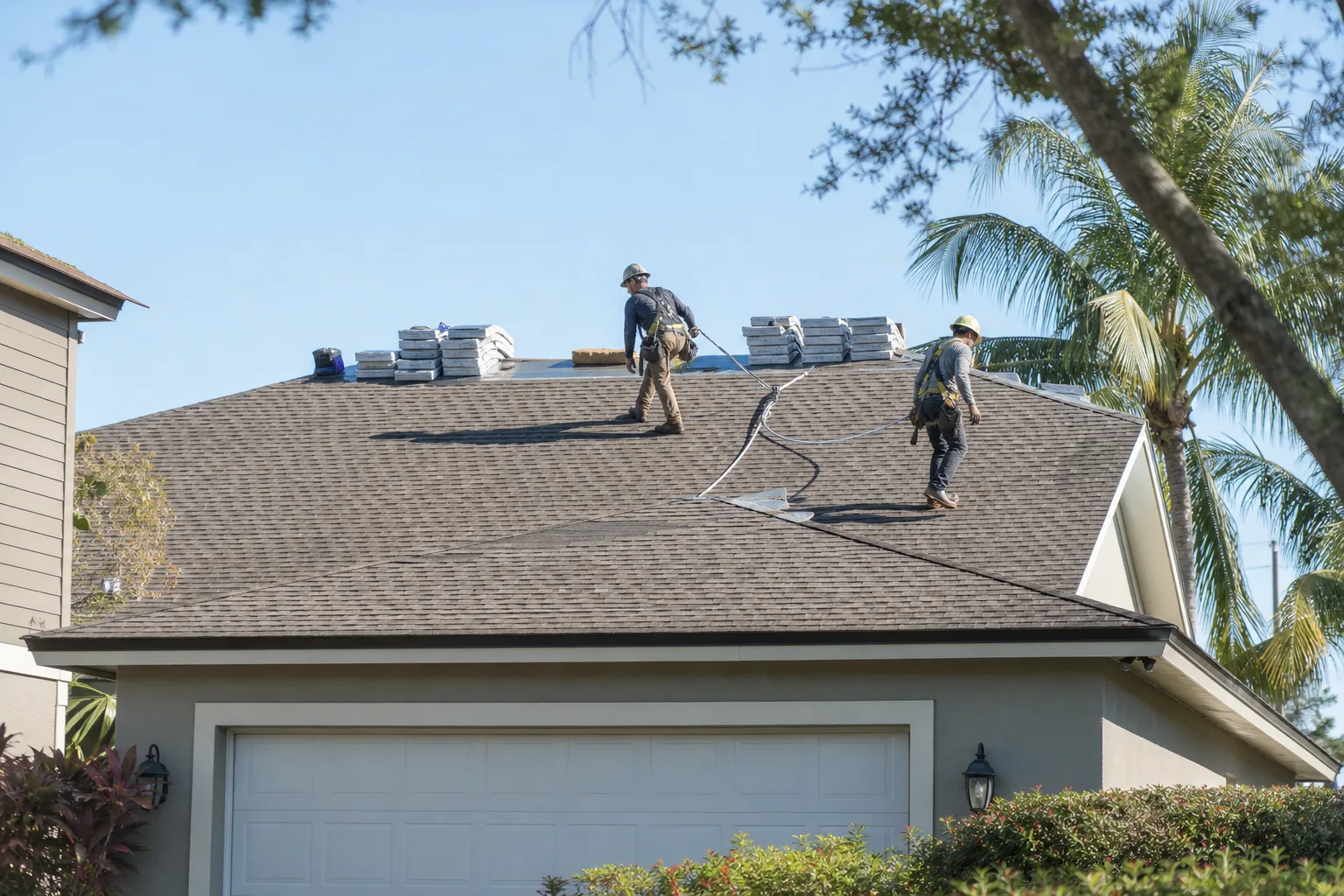
Why Post-Storm Leaks Show Up Late
Here’s a pattern we see after every named storm. A homeowner walks outside, sees the roof still on the house, and figures they dodged it. Then it’s dry for a week. Then the second rain comes and there’s a brown ring spreading across the ceiling. The reason is wind-driven rain: during a hurricane, water gets pushed at angles and pressures that push past seals and let a little in without triggering a drip. That moisture sits in the assembly. It takes another rain or two to build up enough to show inside.
So a “we’re fine” assessment right after a storm is premature. Give it a week and a couple of rains before you breathe out. North Miami Beach sits inside Miami-Dade’s High Velocity Hurricane Zone, and the wind-load and flood-proofing rules here are about as strict as they get, which means the roof over your head was engineered for real cyclonic pressure. But engineered doesn’t mean invincible, and time under UV doesn’t help it.
A Safe First Step You Can Do Yourself
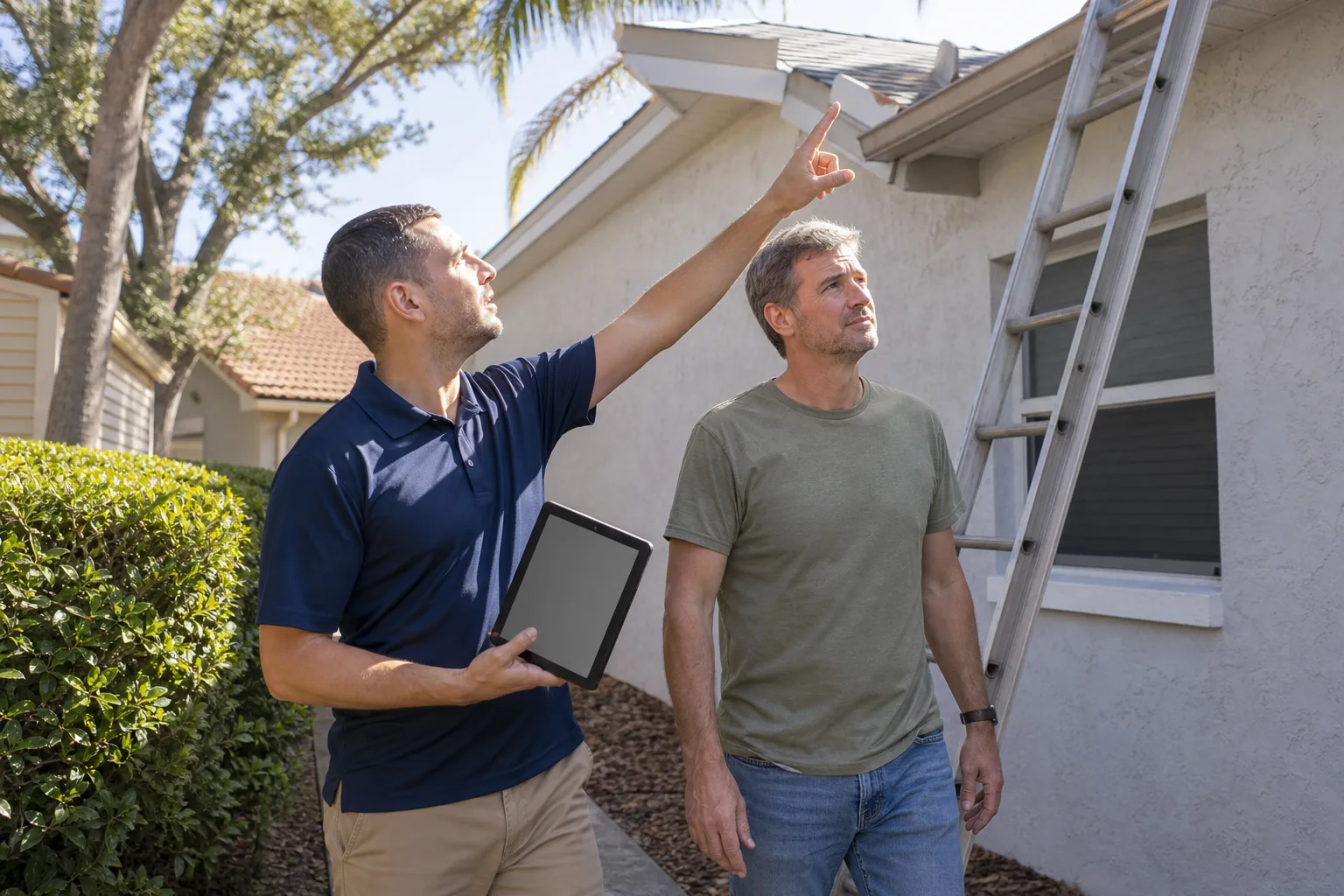
There’s plenty you can do to help us find a leak faster. None of it involves climbing on a low-slope roof and peeling back membrane, which is the quickest way to turn a small repair into a bigger one.
- Photograph the stain with a timestamp on your phone. Mark the outer edge with painter’s tape so you know if it grows after the next rain.
- Check the nearest penetration within about 10 feet upslope or upcurrent of the stain – vent pipes, HVAC curbs, skylights, chimney flashing. If the roof has no real slope, “current” means the direction the roof actually pitches, which may be barely visible.
- From the attic side, feel the deck for soft spots and look for water tracks on the framing. Soft spots tell you the deck has been wet longer than the stain suggests.
- Then call. Opening the membrane is the step best left to us – a trained crew with the right detection tools, not a DIY project on a low-slope assembly.
Our calls are answered by a live person 24 hours a day, seven days a week, so a midnight squall that leaves a wet ceiling doesn’t have to wait until Monday morning. We built that in specifically for post-storm leak calls.
What a Leak Diagnosis and Repair Costs in North Miami Beach
Roof repair in North Miami Beach typically runs $470 to $2,125 depending on what’s leaking and how far the water traveled. Locating the breach on a flat roof is where the money usually goes, not the patch itself.
| Service | Typical North Miami Beach Range |
|---|---|
| Roof repair (leak diagnosis plus patch) | $470-$2,125 |
| Tile roof repair | $710-$2,950 |
| Roof replacement (if the assembly is past patching) | $9,440-$23,600 |
| Metal roof installation | $17,700-$47,200 |
Upfront pricing is how we work. The number we quote is the number you pay, and we back every project with our 730-Day Done Right Promise plus no-hassle 0% financing for 18 months and $1,000 off projects over $10,000. When the assembly is shot, a reroof in GAF or Owens Corning materials usually makes more sense than a third patch on a deck that’s already wet.
More Than Just a Wet Ceiling: What’s at Stake
A slow roof leak isn’t an inconvenience that clears up on its own. On a concrete-block home with a wood deck under the membrane, moisture feeds mold in the attic and rots framing a homeowner can’t see. It also finds its way into electrical and plumbing chases, which is a different problem entirely. The longer a leak runs, the deeper the repair goes. That’s why we’d rather help you find it early with a no-pressure assessment than wait for the ceiling to fall. We’re the full-scope partner for North Miami Beach homeowners, from the first call to the final walkthrough, with a curated set of trusted brand partners (GAF and Owens Corning among them) so the replacement, if you need one, is a known quantity rather than whatever’s on the truck.
We cover the whole North Miami Beach service area and our main home page lays out the rest of what we do.
FAQs
Partially, yes. You can document the stain, check nearby attic-side decking for soft spots, and identify the nearest penetration, but you can’t reliably pinpoint a flat-roof leak from the ground. The lateral migration means the entry point is usually 10-20 feet from where the water shows up inside. A technician with infrared or electronic detection will find it in a fraction of the time. Call (844) 797-4868 for a free estimate.
Because wind-driven rain from a storm pushes past seals at angles normal rain never reaches, letting moisture into the assembly without triggering a drip. That water sits in the deck, and it takes another rain or two for it to build up and surface inside. A post-storm inspection a week later, after a couple of rains, tells a much truer story than one done the next morning.
Most roof repairs in North Miami Beach land between $470 and $2,125. That includes locating the breach (the hard part on a low-slope roof) and sealing or patching the entry point. If the deck has been wet long enough that the assembly is compromised, a partial or full replacement may make more sense, and those run $9,440 to $23,600. Call (844) 797-4868 for an exact, no-surprise quote.
Repair wins if the deck is dry and the leak is a single failed seam, boot, or curb. Replace if you’re facing the third leak in two seasons on the same assembly, because at that point you’re paying for patches on top of a deck that keeps failing. Call (844) 797-4868 and we’ll tell you honestly which one your roof actually needs.
If you’d rather have it looked at, Groundwork Construction Co. of North Miami Beach offers a no-pressure assessment in North Miami Beach – call (844) 797-4868.
Written by the team at Groundwork Construction Co. of North Miami Beach, serving North Miami Beach, FL.