




Free written scope consultation - allowances, timeline, and change-order rules on paper before a single trade is scheduled
Styles & brands we work with
- Kitchen remodeling
- Bathroom remodeling
- Home additions & ADU
- Roofing
- Windows & doors
- Driveway & pavers
- Fence
See the difference
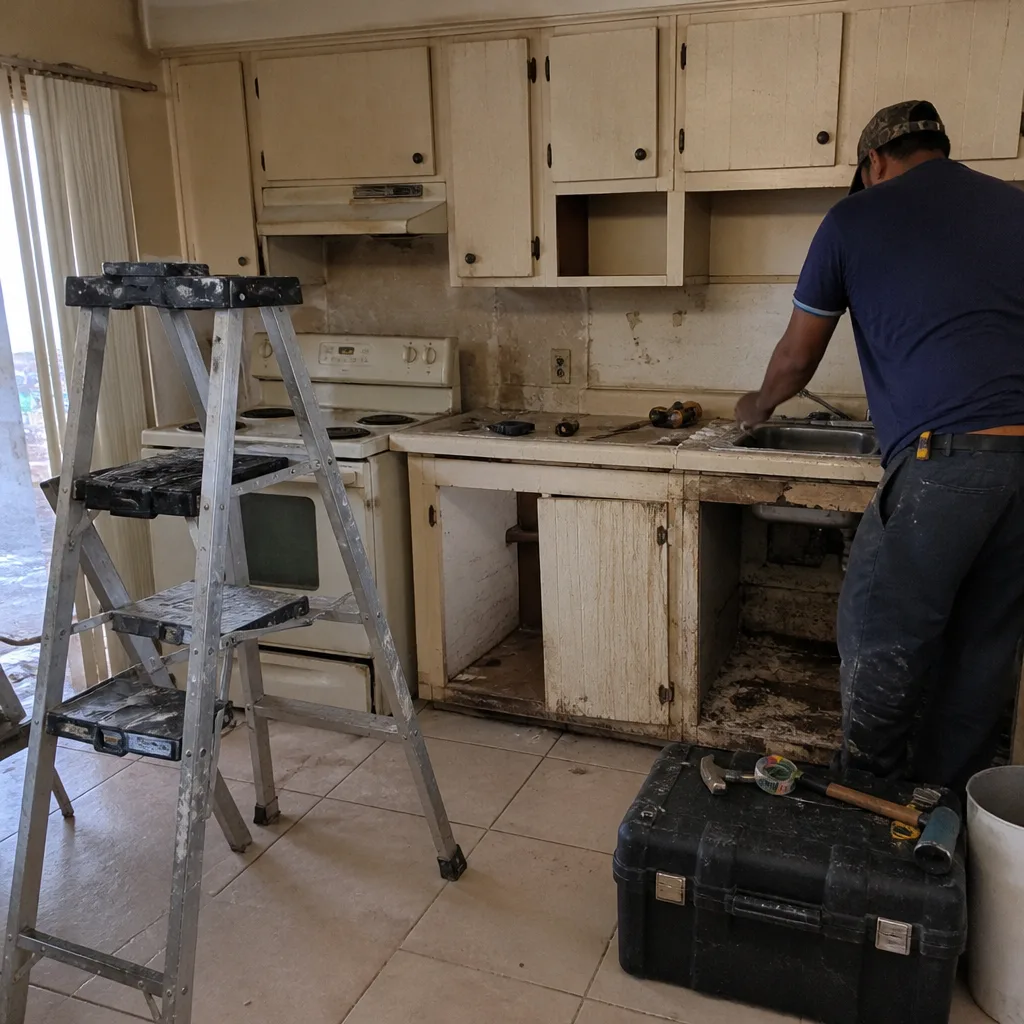 Before
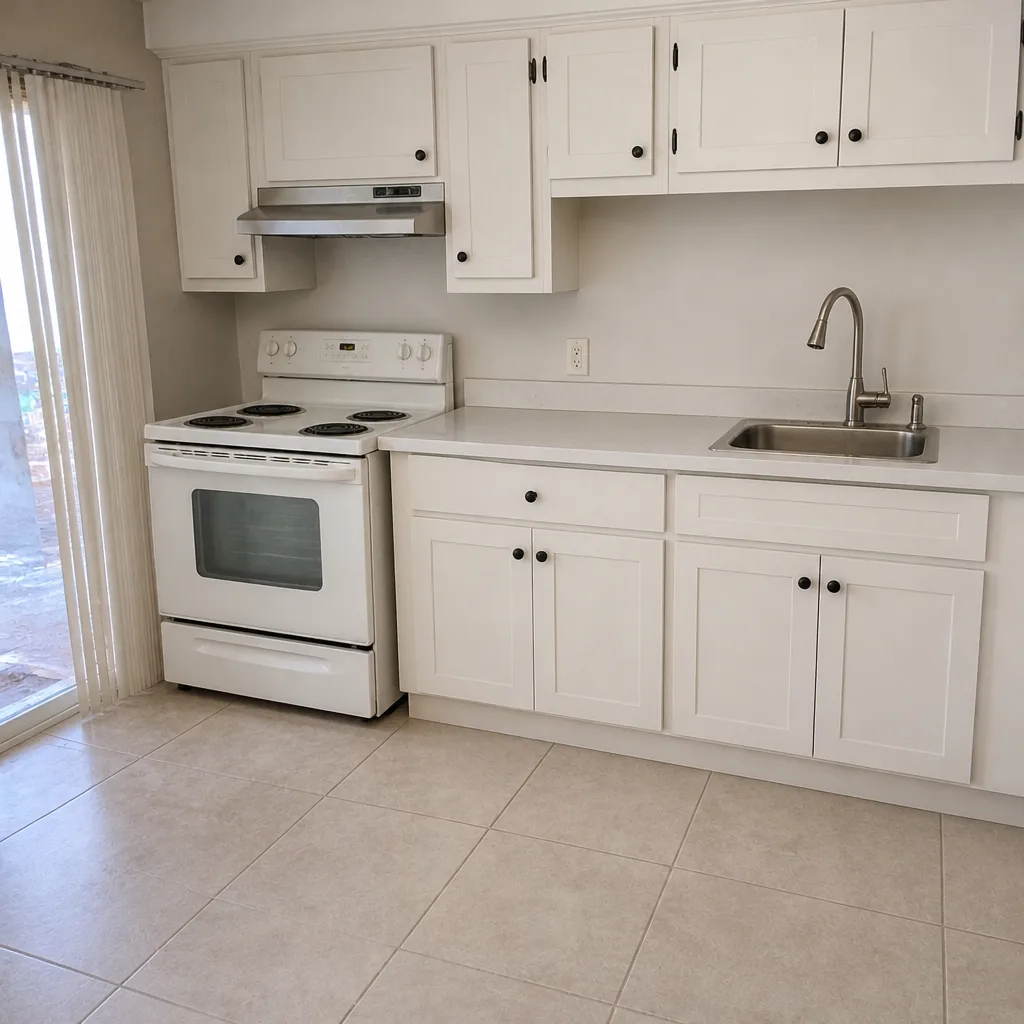 After
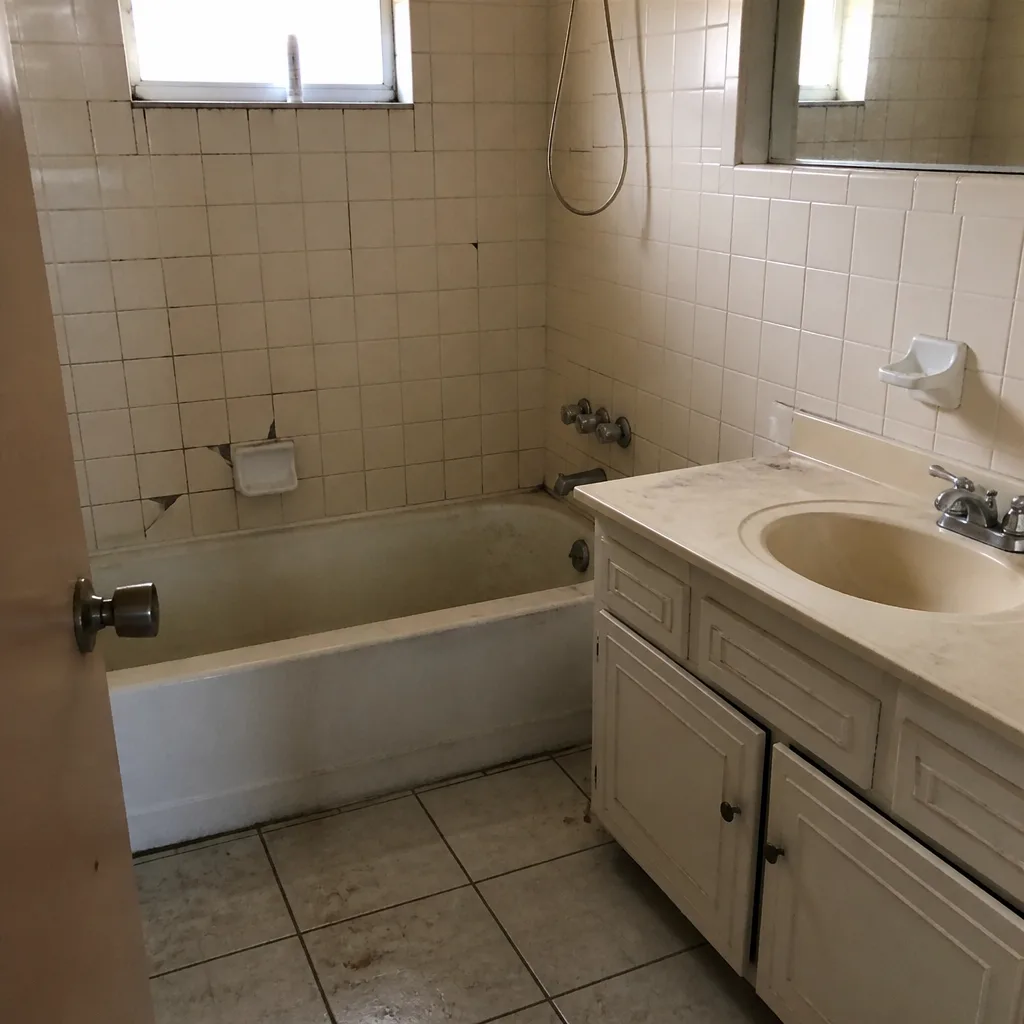 Before
 After
 Before
 After
What Causes Roof Leaks in North Miami Beach, FL? The Short Answer First
The single most common cause of roof leaks in North Miami Beach is the wall-to-roof transition on 1950s-1970s concrete-block homes, where the original builder relied on a stucco overlap instead of a metal counterflash. That joint has cycled through roughly 50 years of thermal expansion, and it has opened. Wind-driven rain at hurricane-force angles, oxidized flat-membrane seams, rooftop HVAC penetrations, and clogged internal drains round out the rest of the list. In our routine inspections of ranch homes west of Biscayne Boulevard, that stucco-to-membrane joint is the leak source more often than storm damage or missing shingles combined.
If water is already coming through a ceiling, call (844) 797-4868. A live person answers around the clock, and we’ll tell you what to do before anyone arrives.
Key Takeaways
- On pre-1980 concrete-block and stucco homes, the roof-to-wall joint fails before the roof surface does.
- High-velocity hurricane zone wind drives rain sideways, so a roof can pass every rain season and still leak in a tropical storm.
- Rooftop HVAC curbs and condensate lines are chronic leak starters in a market where the AC runs 10-11 months a year.
- Flat roofs drain through internal scuppers that clog with tropical leaf debris. Ponding above 2 inches for more than 48 hours is a real structural and seam-stress problem, not cosmetic.

Cause #1: The Stucco-to-Membrane Joint on Mid-Century CBS Homes
North Miami Beach’s residential core is dominated by single-story concrete-block-and-stucco (CBS) ranch homes built between 1950 and 1980, and many still carry their original flat or low-slope roofs. When those homes went up, builders often detailed the roof-to-wall connection with a stucco reglet or a surface-applied flashing membrane, no true metal counterflash with a turned edge. That worked fine in 1965. Fifty-plus years of South Florida sun later, the stucco has hairline-cracked, the sealant has dried, and the transition has separated just enough to let water track behind the wall finish and into the attic.
This is the leak that shows up as a ceiling stain near an exterior wall, not in the middle of a room. It is also the one most likely to be misdiagnosed. A technician who only looks down at the roof surface from a ladder will miss it entirely, because the failure is vertical, in the wall, not horizontal on the roof deck. Any proper assessment of a Roofing problem on a mid-century North Miami Beach home starts at that joint.
When we repair one, the fix is a proper counterflash detail tied into the wall, not another bead of caulk. And it’s covered by our 730-Day Done Right Promise: if it’s not done right, we make it right. That guarantee is why we chase the actual cause instead of the symptom you can see from the attic.
Cause #2: Wind-Driven Rain at Hurricane-Zone Angles
North Miami Beach sits inside Miami-Dade County’s High Velocity Hurricane Zone, so roofs here are built to some of the nation’s strictest wind-load standards – and that changes how water behaves. Standard rain falls vertically, and most flashing designs shrug it off. Storm rain moves horizontally at 100+ mph, and it finds every lapped joint, penetration, and perimeter edge that performs perfectly in ordinary weather.
Picture the difference this way:
- Ordinary afternoon storm: rain falls down. The roof sheds it. Nothing gets wet inside.
- Tropical storm or hurricane: rain travels almost sideways. It enters at penetrations, laps, and roof-to-wall edges that were never designed for that angle of attack.
That’s why a homeowner can go three rainy seasons with a dry ceiling, then spring a leak during one named storm. It’s not that the roof suddenly “wore out” overnight. The vulnerable detail was there the whole time, waiting for the right wind direction. Our technicians, with up to 12 years of experience on South Florida roofs, know which HVHZ details fail first under wind-driven rain and inspect for those specifically.
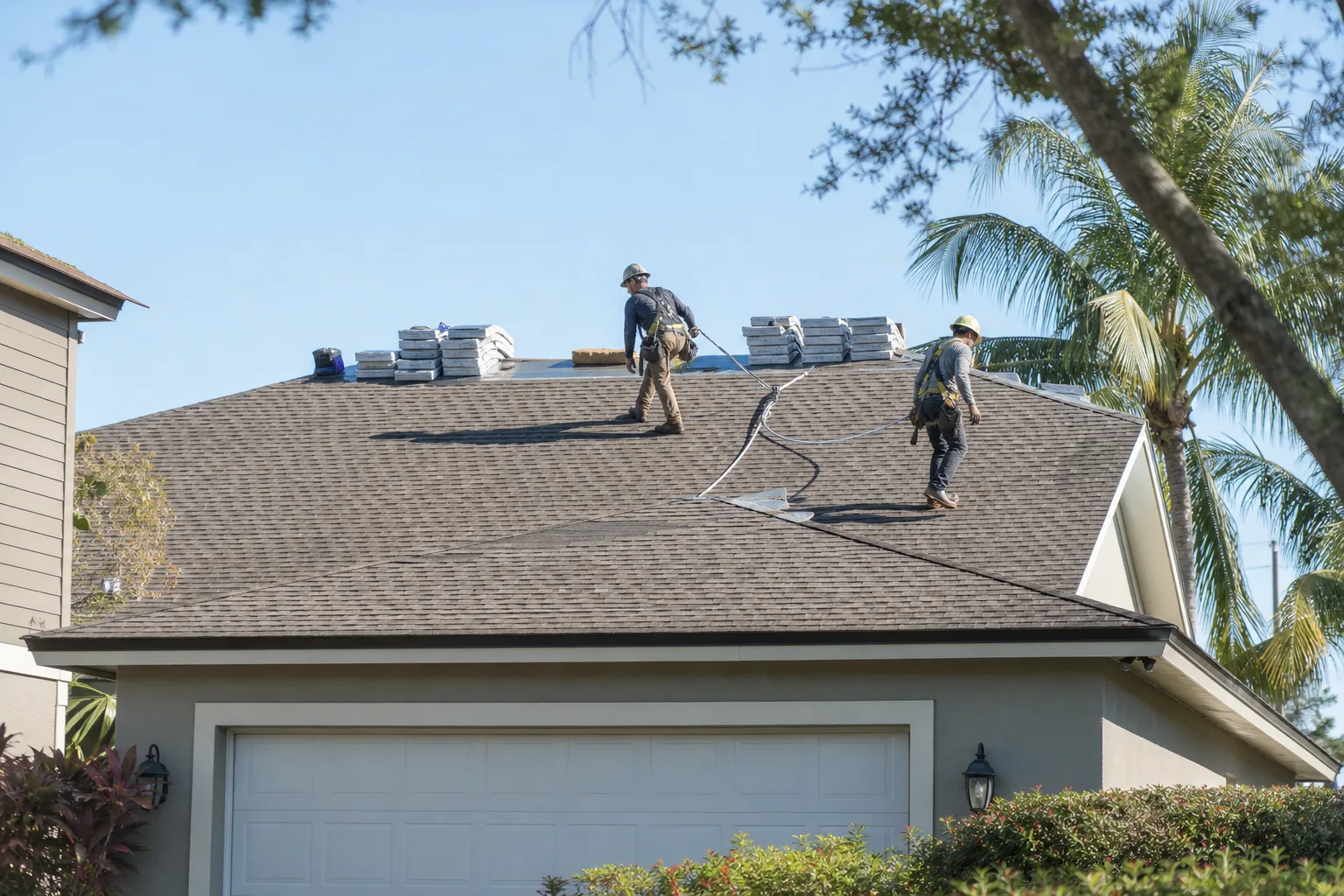
Cause #3: HVAC Curbs, Condensate Lines, and Penetrations
In a market where the air conditioning runs 10-11 months out of the year, the mechanical system on your roof becomes a leak source on its own schedule. Three culprits account for a large share of the penetration leaks we find in North Miami Beach:
- Equipment curbs: the raised frame an AC unit sits on. As the unit’s pad and the aging membrane around it move differently, the seal at the curb edge opens.
- Condensate drain lines: often routed straight through the roof deck. A clog or a cracked fitting turns into a slow, steady drip that soaks the deck over months.
- Satellite dishes and mounts: any fastener punched through a membrane is a future leak. Small penetrations with worn sealant are among the most common leak points we find.
These leaks rarely announce themselves with a dramatic stain. They show up as a musty smell in a closet, a soft spot near an equipment room, or paint that keeps peeling over one spot in the ceiling. If you can’t trace it, that’s the point to bring in someone who inspects penetrations as a category.
Cause #4: Clogged Internal Drains and Ponding on Flat Roofs
Flat and low-slope roofs drain through internal scuppers or roof drains, not gutters along an eave. Those drains collect leaf litter from the surrounding tropical canopy, and once a scupper clogs, water stands. Above roughly 2 inches of ponding for more than 48 hours, two things happen at once: the standing water adds structural load to a roof system that may already be at the end of its service life, and it pressurizes the membrane seams, which is often where the leak begins.
Add near-constant UV exposure, which oxidizes and stiffens an aging membrane, and a flat roof in North Miami Beach takes more punishment in five years than most national guides assume it takes in fifteen. We’re also working on homes that sit just above a high water table, so a leak that soaks the soil around shallow footings can create drainage issues on top of the roof problem. When we specify replacement materials, we lean on partners like GAF and CertainTeed whose systems are rated for this climate.
What Roof Leak Repair Costs in North Miami Beach
Most roof leak repairs here land between $470 and $2,125 depending on how hard the leak is to reach and what caused it. A torn tile unit is straightforward; a stucco-to-membrane counterflash rebuild takes more time because it involves opening the wall finish. Here’s how the numbers break down:
| Repair Type | Typical Range in North Miami Beach |
|---|---|
| Roof repair (general leak source) | $470-$2,125 |
| Tile roof repair (cracked or slipped tiles, flashing) | $710-$2,950 |
| Full roof replacement, when the deck is beyond repair | $9,440-$23,600 |
| Metal roof installation | $17,700-$47,200 |
We price upfront – the number you see is the number you pay, and the estimate is free. If a repair is the right call, we say so. If a roof is genuinely at the end of its life and patching it would only buy you a season, we’ll show you why, and 0% financing for 18 months plus $1,000 off projects over $10,000 keeps a replacement within reach.
We’re a full-scope home construction partner, not a roofing-only shop, so when a leak turns out to be tied to a larger remodel or an addition, the work stays under one roof. You can see how we approach the whole market on our North Miami Beach service area page.
Roof Leak FAQs
Because the leak point may only fail under wind-driven rain, not vertical rainfall. At HVHZ wind speeds, rain travels almost horizontally and enters at roof-to-wall joints, lapped seams, and penetrations that perform perfectly in an ordinary afternoon storm. If you notice water only during tropical systems, the cause is likely an angled-entry detail that needs a proper flashing repair – call (844) 797-4868 to have it looked at.
On a pre-1980 concrete-block ranch, the leak most often starts at the wall-to-roof joint, where the original stucco overlap has cracked and separated after decades of heat cycling. Ceiling stains near an exterior wall are the tell. A technician who only scans the roof surface from a ladder will likely miss it, because the failure is in the wall transition, not the roof field.
It’s almost always cheaper to repair the leak if the roof deck and membrane are otherwise sound. Most leak repairs in North Miami Beach run $470-$2,125, while a replacement runs $9,440-$23,600. The deciding factor is whether the cause is a single detail (fix it) or a system at the end of its service life (replace it). We’ll tell you honestly which you’re looking at, and the estimate is free.
Yes – every leak repair we do is guaranteed for 730 days under the 730-Day Done Right Promise, so we’re on the hook to fix the real cause, not the symptom. We trace the water path back to its entry point, whether that’s the stucco joint, an HVAC curb, or a clogged internal drain. Call (844) 797-4868 and a live person answers around the clock.
If you’d rather have it looked at than chase it yourself, Groundwork Construction Co. of North Miami Beach offers a no-pressure assessment in North Miami Beach – call (844) 797-4868 for a free estimate, and we’ll find the cause before we quote the fix. Background-checked, uniformed technicians handle every job.
Written by the team at Groundwork Construction Co. of North Miami Beach, serving North Miami Beach, FL.