Last updated November 17, 2026





Free written scope consultation - allowances, timeline, and change-order rules on paper before a single trade is scheduled
Construction Emergency Preparedness Guide for North Miami Beach Homes
After Hurricane Irma, the average Miami-Dade homeowner waited 11 days for a contractor assessment. That number is the whole argument of this guide. The homeowners who sailed through that wait had done something most people never bother with: they had already photographed their roof framing, filed their permit numbers in one place, and vetted two contractors before the storm even had a name. Preparation is leverage. It moves you up the line and keeps your insurance claim out of dispute. What follows is the North Miami Beach-specific version of that preparation – the documentation file, the pre-storm checklist, the post-storm triage rules, the expedited permit process, and how to pre-qualify a contractor so the phone gets answered when everyone on your block is calling at once.
Quick Answer
Construction emergency preparedness for a North Miami Beach home means building a permanent documentation file of your home’s construction details – photos, permit numbers, material specs, structural notes – before a storm, then pairing it with a South Florida-specific pre-storm checklist and a pre-vetted contractor. That file is what gets you faster assessments, cleaner insurance settlements, and access to Miami-Dade’s expedited post-disaster permitting when a named storm hits. It is not a hurricane kit. It is a plan for this geography, this building stock, and this code.
Styles & brands we work with
- Kitchen remodeling
- Bathroom remodeling
- Home additions & ADU
- Roofing
- Windows & doors
- Driveway & pavers
- Fence
Table of Contents
- Why the Documentation File Is Your Most Valuable Asset After a Storm
- The Pre-Storm Construction Checklist for South Florida Homes
- Post-Storm Structural Triage: What Needs a Professional Now vs. What You Can Protect
- How to Work Miami-Dade’s Emergency Permit System After a Declared Disaster
- Pre-Qualifying a Contractor Before the Emergency Happens
- What North Miami Beach Building Stock Actually Does in a Storm
- The Order of Recovery: What to Fix First, Second, and Last
Why the Documentation File Is Your Most Valuable Asset After a Storm
An insurance adjuster and a contractor both ask the same question after storm damage: what was here before? If you can’t answer that with photos, permits, and material specs, you spend weeks arguing over what existed. The homeowners who got through the Irma backlog fastest were the ones who could hand an adjuster a folder and point to a specific photo taken eighteen months earlier. That folder is the single highest-value thing you can build this weekend, and it costs you an afternoon.
Build the file in a physical binder and a cloud folder, so neither a flooded cabinet nor a dead phone can take it out. Here’s what goes in it:
- Photos of every wall, ceiling, and floor in every room, taken on a sunny day with the lights on. Wide shots first, then close-ups of anything newly repaired or replaced.
- Roof photos from ground level plus any drone shots you have. Note the roof material by name, the approximate age, and the color.
- Permit numbers and inspection records for every addition, remodel, re-roof, fence, or paver job on the property. Miami-Dade’s online portal lets you pull old permits; do it once and file the printouts.
- Material specs: window brand and model (Andersen, Pella, or whatever’s installed), impact rating if any, roof underlayment type, fence material (Barrette and Ameristar vinyl and aluminum are common in this area), driveway paver pattern.
- Structural notes: whether the home is CBS block or wood frame, where the load-bearing walls are, and any past structural repair. In North Miami Beach, plenty of homes from the 1950s and 1960s are block with a newer frame addition, and that mixed construction matters after a storm.
- Utility shutoff locations, photographed, with a note on how to turn off gas, water, and power at the main.
- A one-page summary: address, year built, square footage, roof age, and the names of two vetted contractors. An adjuster will read that page first.
Re-shoot the photos after any major project. A new roof, a new impact window set, or an addition should trigger a fresh walkthrough. That keeps the record honest, and an honest record is what ends disputes.
The Pre-Storm Construction Checklist for South Florida Homes
When a named storm enters the cone and points at Biscayne Bay, the generic advice – water, batteries, sandbags – covers only part of the job. The construction side of preparation is what protects the structure itself, and it’s different in North Miami Beach than it would be in Tampa or Naples because of how tight the lots are, how much of the housing stock is block, and how much of the wind protection here is already built into newer windows and roofs.
Work this list in the 72 hours before landfall, in order:
- Clear the roof. Palm fronds, loose tiles, and anything else up there becomes a projectile at 90 mph. Don’t climb if you’re not confident on a ladder; a roofer or handyman can do it in an hour.
- Secure or remove everything on the ground that becomes a missile. Patio furniture, grills, trash bins, planters, kids’ toys, and the loose sections of fence are what punch holes in screens and break windows. Barrette and Master Halco vinyl panels can be lifted out of their channels and stored inside; that’s a two-person job on a calm Saturday but a bad idea at the last minute.
- Check your impact windows and door seals. Look for cracked glazing, failed seals, and gaps around frames. A compromised window that was fine in a light storm is a failure point in a strong one. Call in a fix before the storm, not after.
- Brace the garage door if it isn’t a rated door. The garage door is the most common wind failure point on a North Miami Beach home, and a brace kit that takes a half-hour to install can save the roof.
- Trim trees back from the roof and remove dead limbs over the house. This is a safety call – don’t work a chainsaw near an overhead line.
- Confirm your storm shutters or panels fit and are labeled. Dig them out now. The night before landfall is not when you want to discover that the corner panel doesn’t line up.
- Photograph everything in its current, undamaged state, immediately after the pre-storm tidy-up. That final photo set is the “before” picture your insurance claim will rely on.
Anything that requires a ladder above one story, electrical work, or gas line work belongs to a professional even on a tight timeline. A fall from a North Miami Beach roof or a gas mistake during a rushed pre-storm scramble is a much worse outcome than a rain-soaked patio.
Post-Storm Structural Triage: What Needs a Professional Now vs. What You Can Protect
After the storm passes, every homeowner in North Miami Beach walks outside, sees six problems at once, and can’t tell which one is urgent. The triage rule is simple: anything that endangers structure, safety, or a growing water problem is a call-now problem. Everything else is a call-tomorrow problem, and you can protect it in the meantime.
Call a professional immediately for:
- Any crack in a load-bearing wall, or a crack wider than a hairline that widens as you watch it
- A sagging or soft roof deck, a visible dip in a roofline, or attic framing that’s visibly bent or separated
- Water actively entering through a ceiling or wall – not a stain, actual flowing water
- Any roof opening to the sky, missing shingles over a section, or a tree limb through the roof
- Foundation cracks wide enough to fit a coin, or a slab that’s heaved or dropped
- A downed power line near the house – call the utility, not a contractor, and stay clear
These are not “wait and see” conditions. In a South Florida post-storm week, a small structural crack can open further as wet walls dry, and water entering a ceiling will find its way to insulation, drywall, and framing in hours, not days.
You can temporarily protect but not repair:
- A missing fence panel – file it, secure the rest, and keep the damaged material for the adjuster before you toss it
- A cracked or lifted driveway paver – photograph it, keep the pieces, don’t try to reset it while the ground is soaked
- A leaking window seal or a screen that’s torn but the glass is intact – tape the seal, keep it dry, and schedule the fix
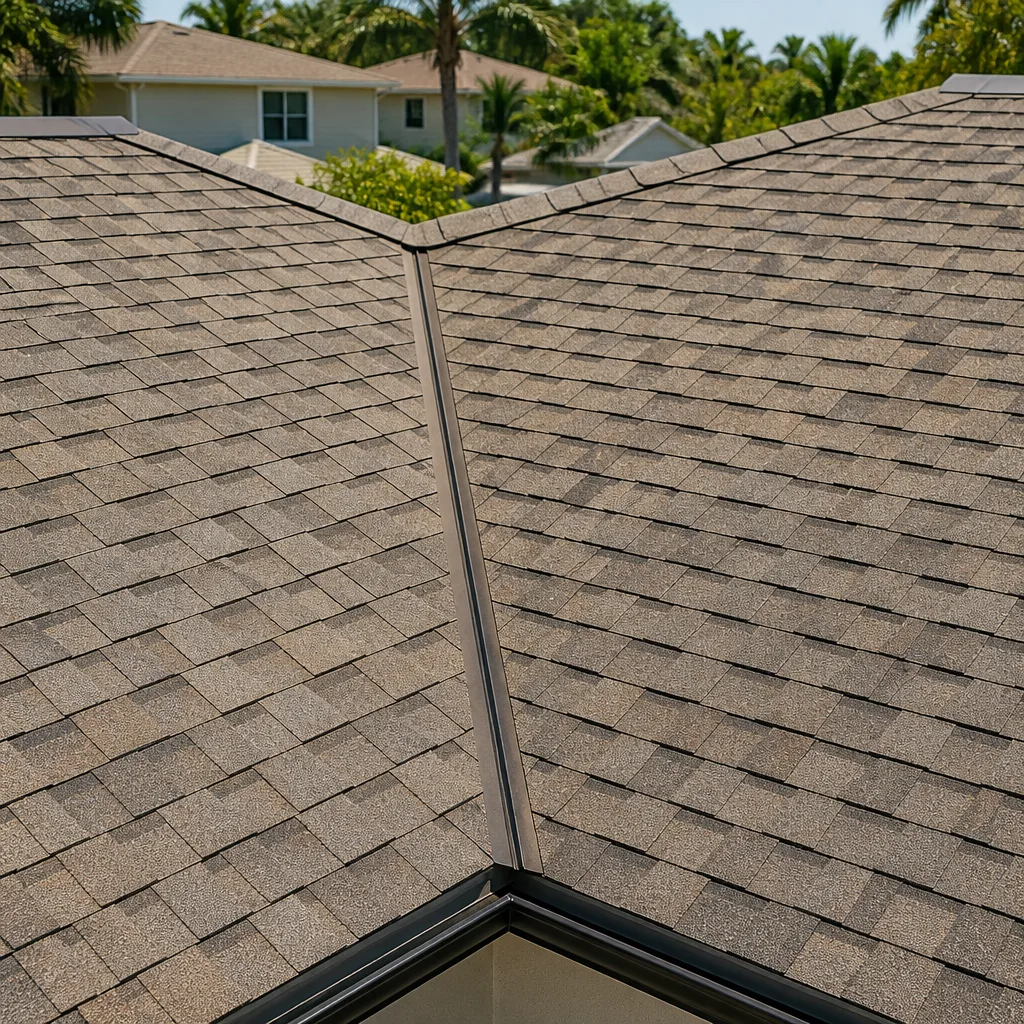
- A small section of a shingle or roof covering lifted but the deck underneath is intact – tarp it if you can do it safely from the ground or a low pitch
Tarping only what you can reach from the ground is fine. Tarping a roof above one story is ladder-and-height work in wet, gusty conditions and is exactly the wrong moment to get on a roof. Pay a pro to do it. A tarp job also should be documented and photographed, because a well-tarped roof reads to an insurance adjuster as a protective mitigation, not a repair, and it keeps the claim clean.
If you’re weighing whether the fix is a small repair or a larger rebuild, our Groundwork Construction Co. of North Miami Beach home team can walk the house with you before anything gets torn out.
How to Work Miami-Dade’s Emergency Permit System After a Declared Disaster
Most homeowners don’t know this exists. After a declared disaster, Miami-Dade County opens an expedited permitting path for storm-related repairs, and the process is faster than the standard residential permit because the county is triaging damage, not reviewing a fresh design. The catch is that you have to know it exists and file correctly the first time. Contractors who’ve worked this system know which repairs qualify and how to document damage, and that’s one of the reasons to have a contractor lined up before the storm rather than after.
The typical path looks like this:
- Confirm the declared disaster zone and dates. The expedited window applies to a specific geographic area and timeframe. A North Miami Beach address is in Miami-Dade and typically falls within the county’s designated zones, but verify against the county’s current notice, not last storm’s.
- Document the damage before any work. Photos with timestamps, adjuster’s report number, and damage description. Without documentation, the expedited review slows down.
- File through the county’s Disaster Recovery permitting channel – this is a separate intake from routine permits. Your contractor should know which channel and which form.
- Expect an inspection before close-out, sometimes during. Plan for the county to see the work at specific stages, and don’t skip the inspection to save a week – a permit without a passed inspection becomes an open permit, and an open permit becomes a headache when you sell the house.
- Keep the permit number in the documentation file. It belongs with the purchase records, not in a drawer with loose receipts.
North Miami Beach has its own building department, and storm-related work sometimes touches both the city and the county depending on scope. That’s part of why the expedited path is confusing – it’s two doors, not one, and knowing which door your repair goes through saves days.
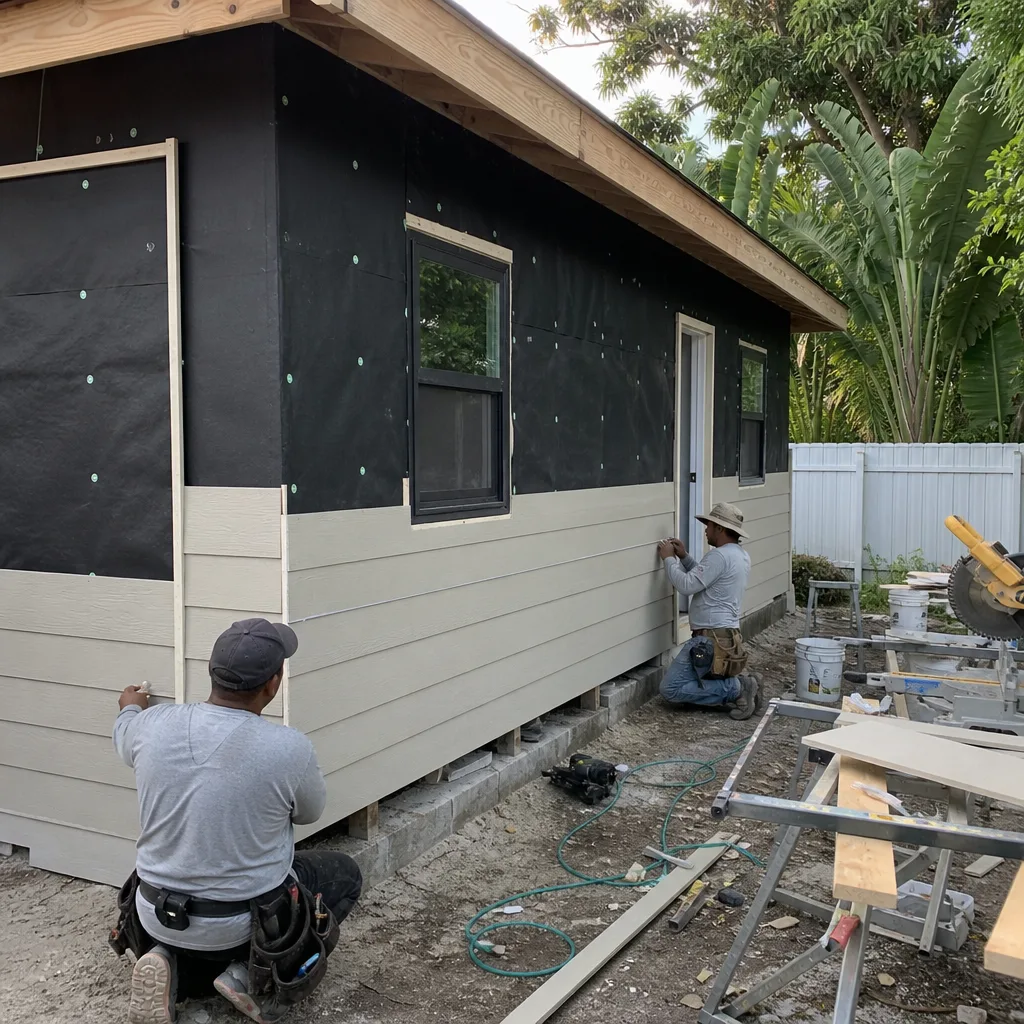
Substantial structural repairs – a re-roof, a wall rebuild, an addition – go through a different process than a patched window or a repaired fence. Our fence installation in North Miami Beach and Driveway & Pavers in North Miami Beach pages cover the permitting that applies to those trade-specific repairs, and we’ll pull and close out the permits on the work we do. Upfront pricing, no surprises, and the permits get handled, not handed to you.
Pre-Qualifying a Contractor Before the Emergency Happens
The single most important decision you’ll make is who answers the phone at 6 a.m. the morning after a storm. When a major event hits, every homeowner in North Miami Beach calls at once. The contractors who can absorb the volume are the ones with processes already in place – and the ones who know you before the storm are the ones who make time for you first. Pre-qualify two contractors now, and you’ll be on their call-back list, not buried in their voicemail inbox.
Use these questions as a filter, and expect written answers:
- Are you licensed and insured? Ask for the license number and a current certificate of insurance, and verify both. “We’re fully insured” with no document is a non-answer.
- What’s your workmanship guarantee? Ask for it in writing, with the number of days clearly stated. Our 730-Day Done Right Promise is one of the longest workmanship guarantees you’ll find in residential construction, and we put it in writing.
- Do you pull permits yourself, or hand the permit to the homeowner? The right answer is: we pull, we inspect, we close out.
- Who actually does the work? Ask whether the crew that shows up is background-checked and uniformed, or a rotating set of subs you won’t meet until the truck arrives.
- Is the quote line-itemed and fixed? A number on a napkin can change once the work starts. A line-item quote with a fixed price can’t. Ask specifically whether there are change-orders in the path.
- How do I reach you outside business hours? If the answer is an email address or a “we’ll get back to you Monday,” keep shopping. Our phones are answered by a live person 24/7, which is the standard an emergency-ready contractor should hit.
Two vetted contractors, with their numbers saved in your documentation file and on your phone, is the whole exercise. It takes a morning now and saves you a week later.
For larger rebuild work – a structural repair that turns into a partial addition, or a storm-damaged enclosure that becomes a new roofline – our Home Additions & ADU in North Miami Beach team handles the design and build side once the insurance picture is clear. And if the storm-damaged part of the property is a driveway or a paver walkway, that’s a scoped fix, not a whole-house rebuild, and worth pricing on its own.
What North Miami Beach Building Stock Actually Does in a Storm
Most emergency checklists are written as if every home in Florida is the same. They aren’t. Understanding what’s likely to fail in your part of North Miami Beach starts with understanding what your house is made of.
Older block homes. Much of the housing in North Miami Beach dates to the 1950s and 1960s, built of concrete block with a stucco finish and a low-pitch or flat roof. Block handles wind well. What fails on these homes is the roof perimeter and the connection between the roof deck and the wall. A long, flat roof also pools water, so after a storm the interior damage is often from ponding, not wind. If your home is one of these, the pre-storm checklist should prioritize roof-edge debris, drains, and scuppers.
Homes with newer additions. A lot of North Miami Beach properties have had a rear addition or a second-story frame addition added onto the older block core. That’s a mixed structure, and the weakest point is the tie-in where the new frame meets the old block. After a storm, check that connection line first – look for movement, cracks along the seam, or daylight where the two meet. It’s the kind of thing that’s invisible from the street and visible from the right angle inside the attic.
Newer construction with impact glazing. Impact-rated windows and doors (Andersen, Pella, and similar manufacturers are common in the area) genuinely handle storm-driven debris well, but the seals are the failure point. A storm can crack a seal without shattering the glass, letting water in at the frame. After a storm, run your hand along the inside of each frame and look for moisture. That one check catches the most common impact-window post-storm issue.
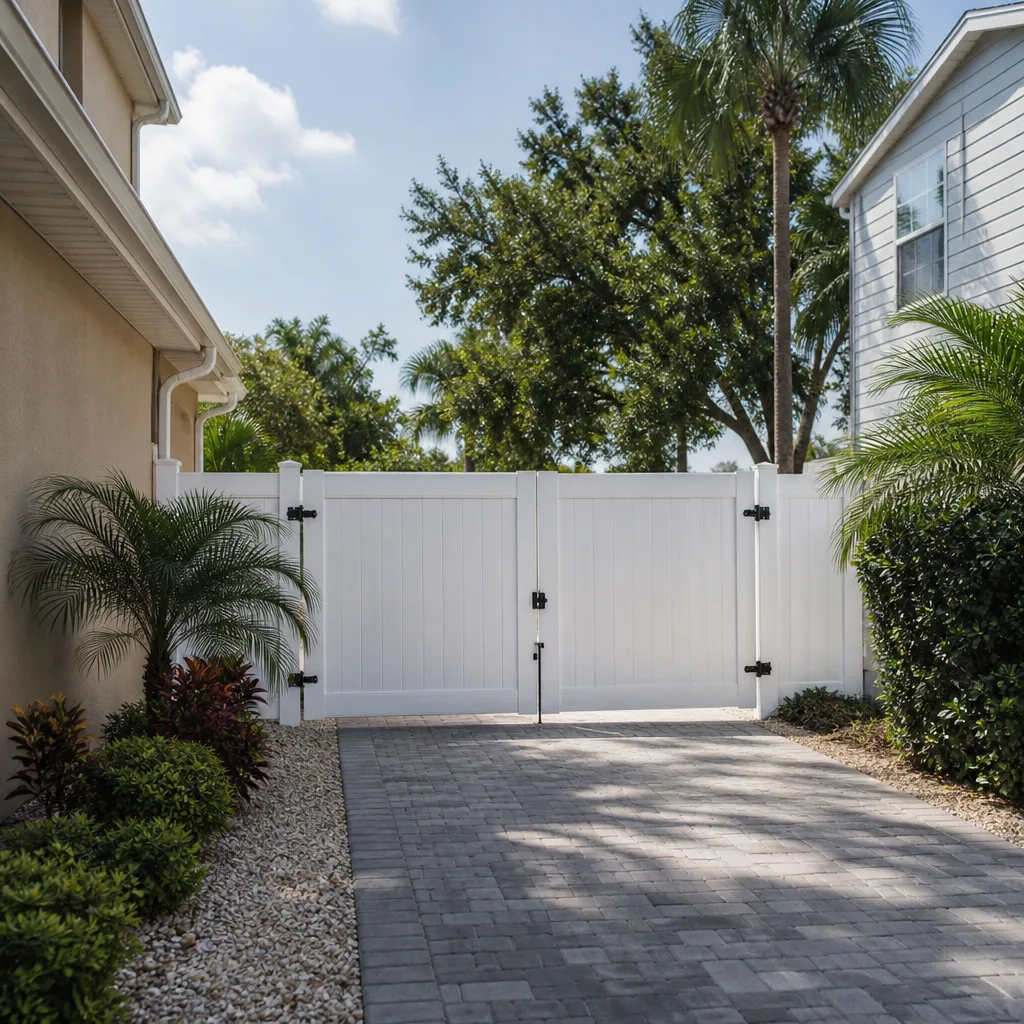
Fences and driveways. Vinyl fence panels – Barrette and Master Halco are the most common on North Miami Beach properties – can lift out of their post channels in high wind and become projectiles. Aluminum panels from Ameristar handle wind far better. Your pavers survive storm wind but suffer from the drainage pattern: a storm that dumps several inches in an hour can undermine a driveway or lifta section of pavers where water sheets toward the street. If your paver driveway sits low on the block, that’s the part of the property that needs eyes after a storm.
None of this is a reason to panic. It’s a reason to know your specific home, not the generic Florida home, when you’re deciding what to protect and what to leave alone.
The Order of Recovery: What to Fix First, Second, and Last
Here’s the sequence that works, in practice. It’s the one that keeps the insurance claim clean, the home safe, and the homeowner out of a rabbit hole of small fixes while the big one goes unaddressed.
- Safety first. Power lines down, gas smell, water at an outlet, or a live tree limb over the house – that’s the first hour. Call the utility and get out of the area until told it’s clear. Any structural crack that gets wider over a few hours is a call-now item, not a call-tomorrow item.
- Stop water. Tarp the opening, get the standing water out, and get the wet materials drying. In a South Florida summer post-storm, mold starts on wet drywall and insulation within 24 to 48 hours, and what would’ve been a small repair becomes a gut-and-rebuild.
- Document everything before the removal. Photos, measurements, and keep the debris in a pile. Adjusters want to see the original material, not a clean floor where it used to be.
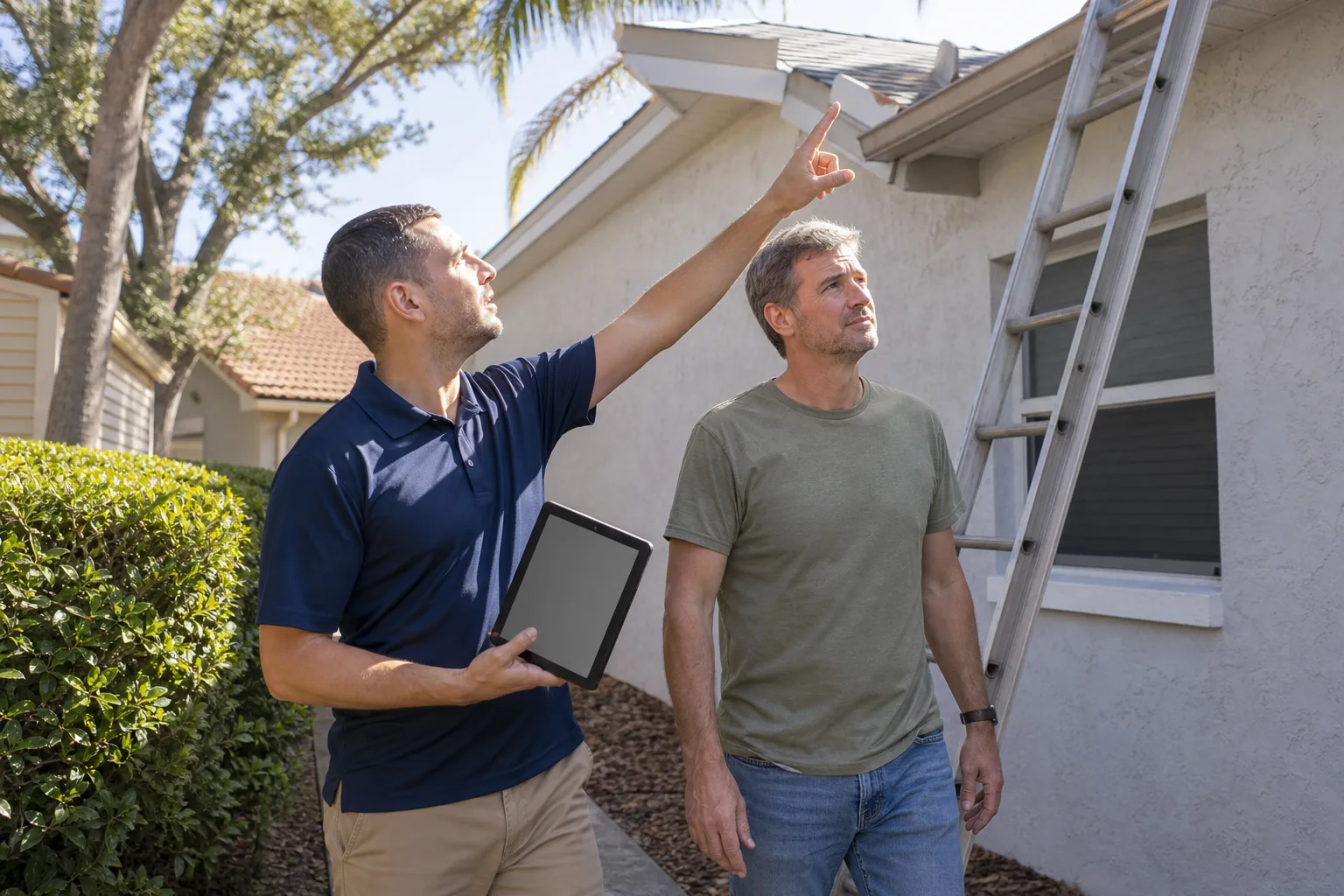
- Get an assessment in the first week. A contractor walk-through and a written assessment gives the insurance company what it needs to compute a scope. The homeowner who has a written assessment in the first week gets out of the claim dispute that follows the dispute that follows the first dispute.
- Permit before you rebuild. File the expedited permit before the work, not during. The inspection path is much harder to close after the fact.
- Rebuild in the right order. Roof and envelope first, then structural repairs, then interior rebuild, then the exterior finishing items – fence, driveway, paint. If the driveway’s gone and the roof is open, the roof wins every time.
That order isn’t arbitrary. It follows how water moves, how insurance assesses damage, and what happens if a step is skipped. Skipping the documentation step is the most expensive shortcut in the whole sequence.
Common Mistakes to Avoid
- Waiting for the storm to build the file. Photos taken after the damage show what’s broken, not what was there. The before photo set is what wins the claim, and it’s the one thing you can’t recreate later.
- Hiring the first contractor who shows up in the first week. After a large storm, out-of-area contractors arrive in North Miami Beach with a clipboard and a promise. Ask the same six pre-qualification questions you’d ask anyone, and get the answers in writing. Storm-chasers don’t come back for the warranty call.
- Tearing out damaged material before documenting it. We’ve watched homeowners haul a water-stained ceiling to the curb on day one and end up arguing about the repair cost on day ten. Photograph first, then remove.
- Skipping the permit to save a week. An unpermitted repair becomes an open permit when you sell, and an open permit becomes a stalled sale. The expedited disaster path exists precisely so you don’t have to make that trade.
- Protecting the wrong part of the home. Sandbags at the doors look productive. But in most North Miami Beach post-storm assessments, the damage came in through the roof, not the front door. Protect the roof edge and the garage door, not just the entryway.
- Ignoring the small cracks. A hairline crack that doesn’t widen is often fine. A crack that widens over the first 48 hours after a storm is a structural signal, and delaying the call is the mistake.
- Not knowing who to call at 6 a.m. The morning after a storm isn’t the moment to start researching contractors. You want two names already saved, with the phone answered by a live person, not a voicemail prompt.
See the difference
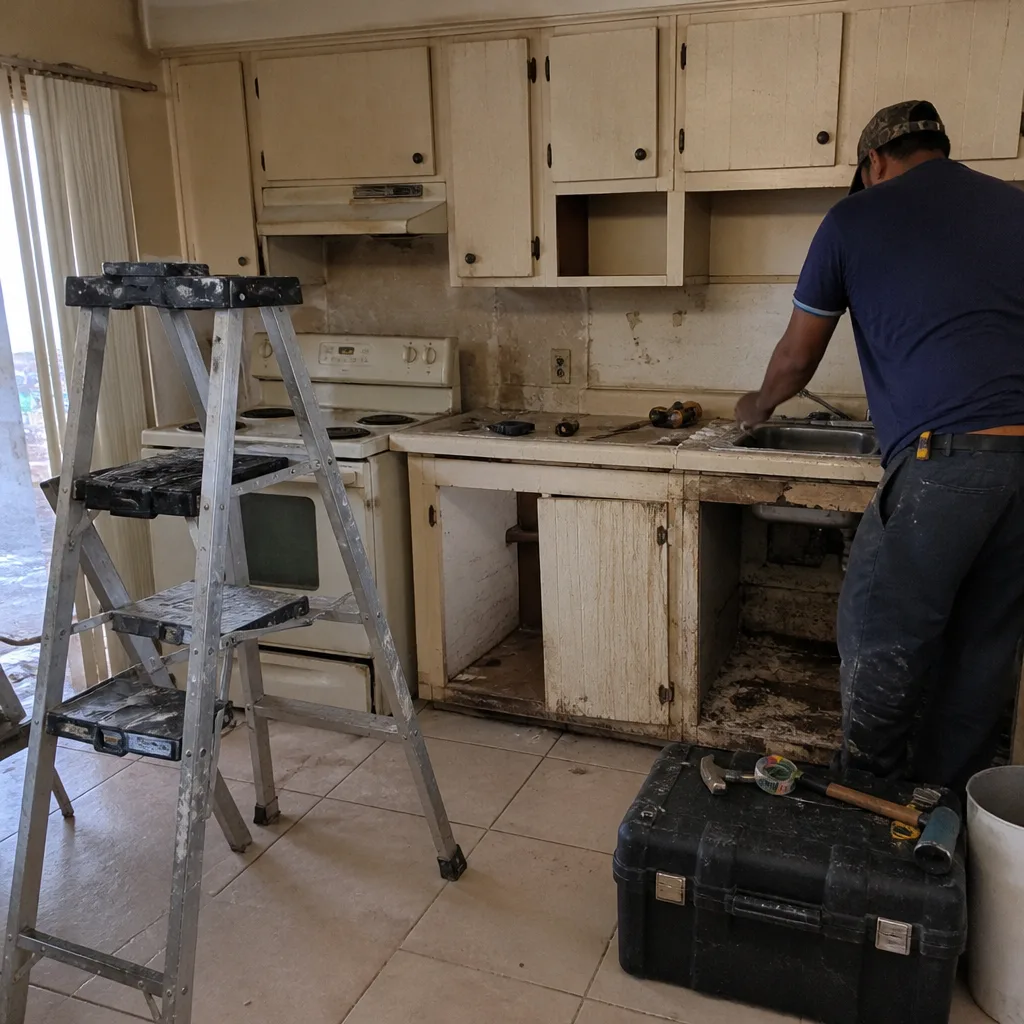 Before
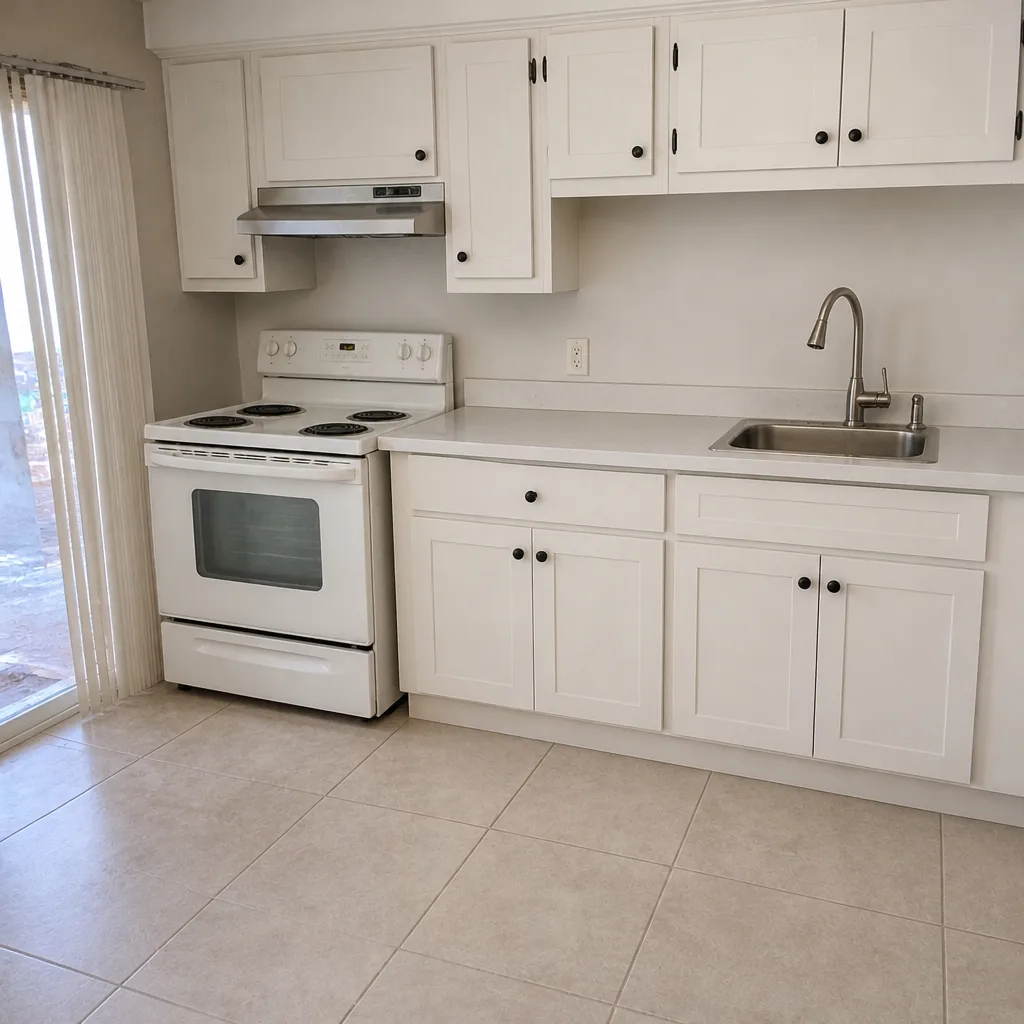 After
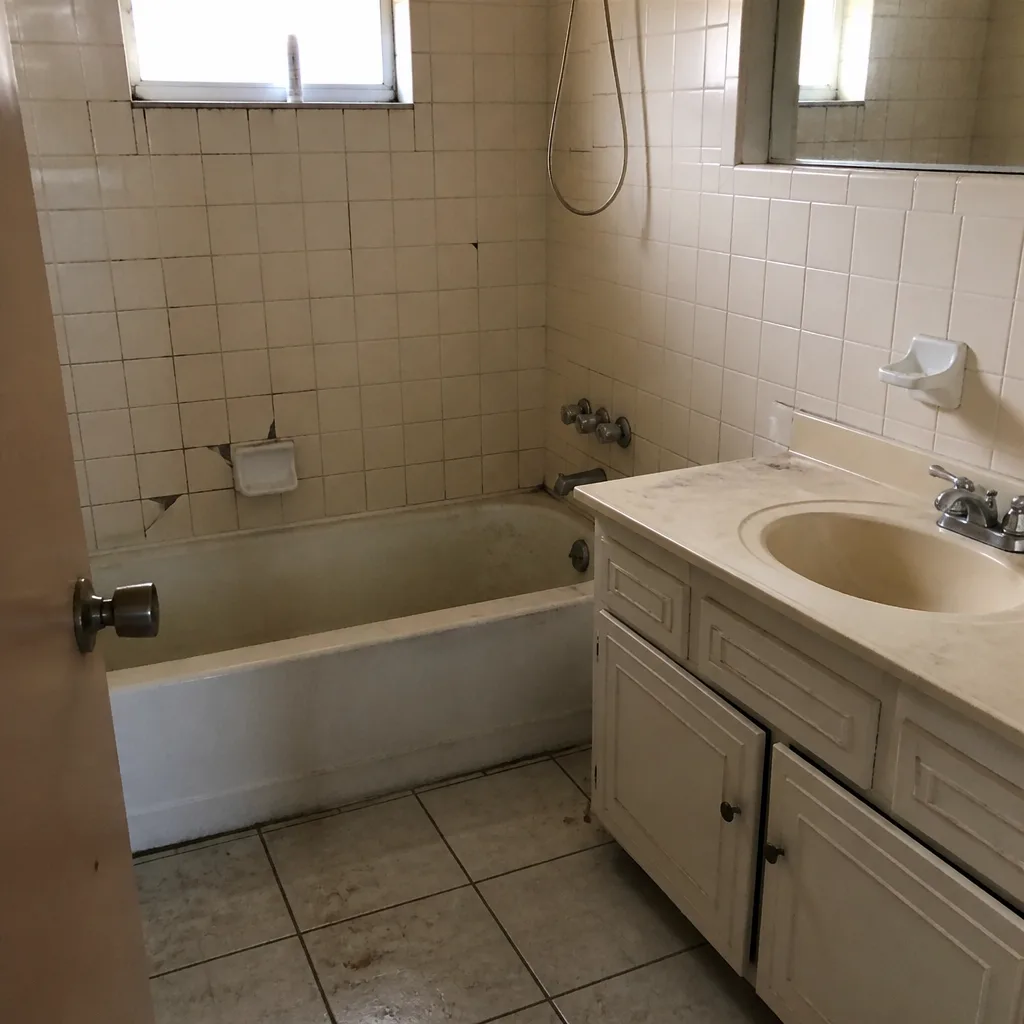 Before
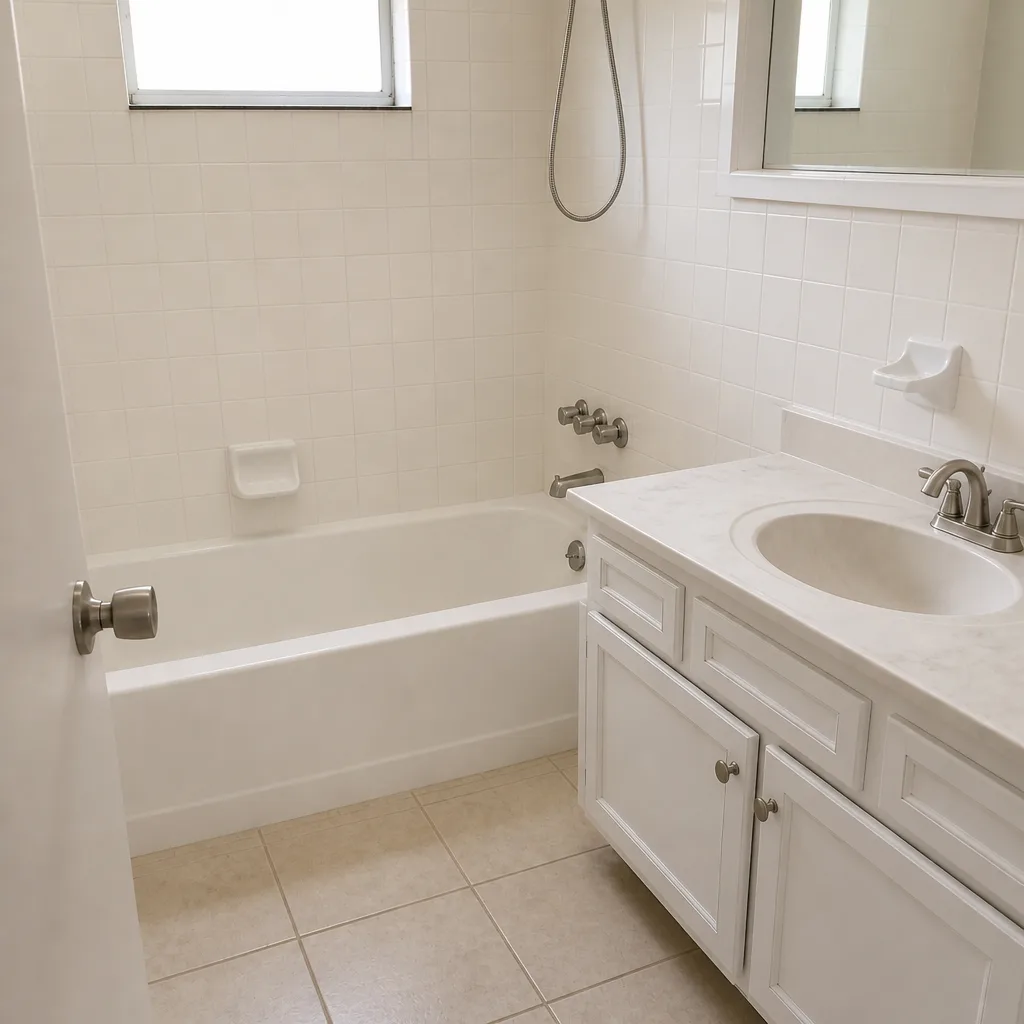 After
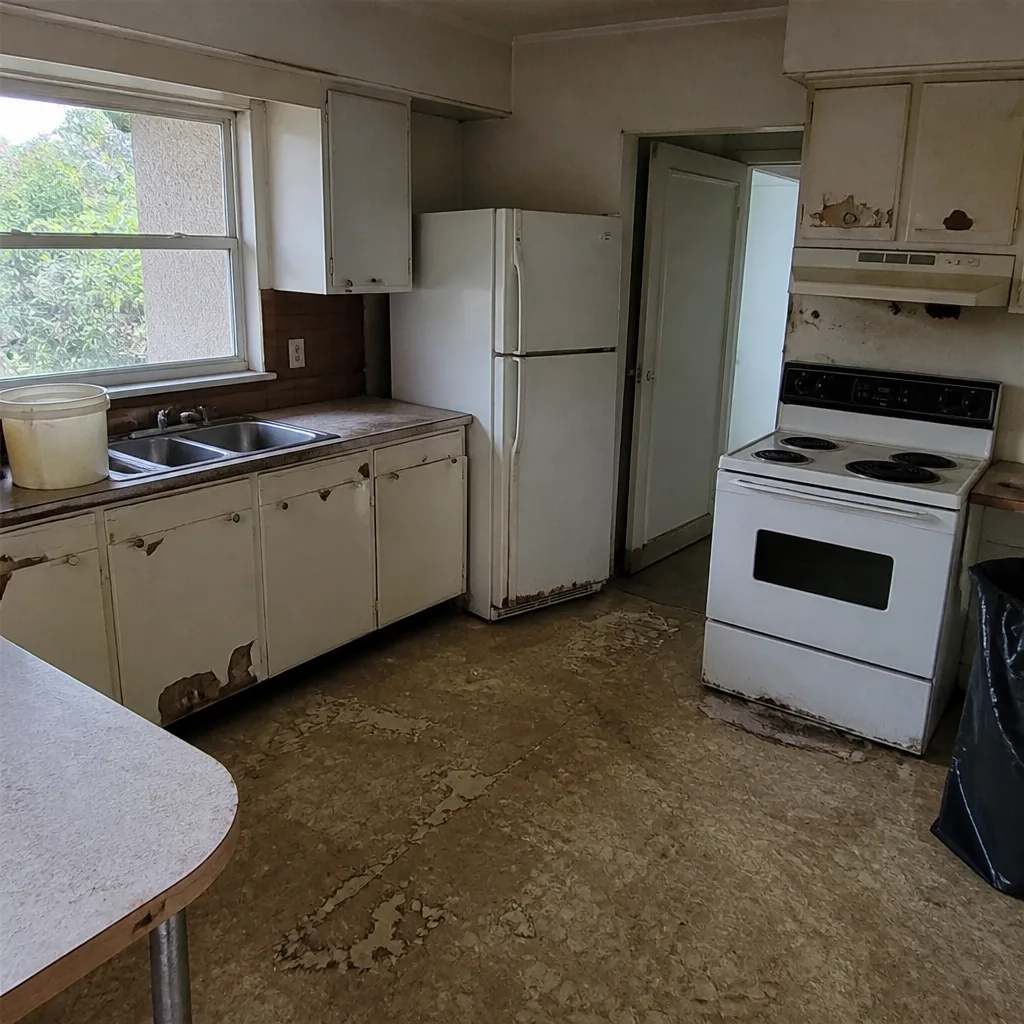 Before
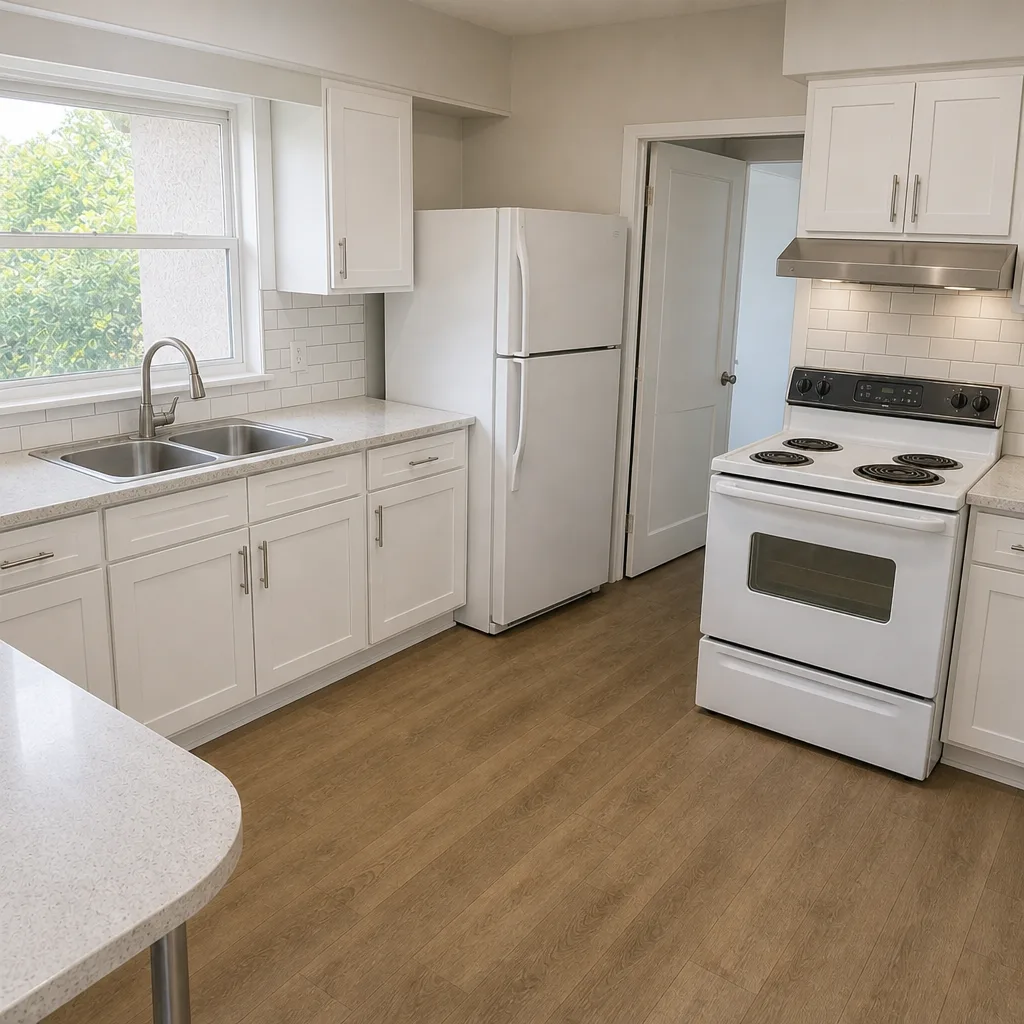 After
When to Call a Professional
Call a professional immediately for any structural crack that widens, water actively entering the home, a roof opening to the sky, damaged framing or a visible sag, a foundation that’s heaved or dropped, or anything involving a downed power line or gas smell. Call within the first week for a full post-storm assessment – even if you don’t think anything is wrong. Having a written assessment in hand is what smooths the insurance path, and it costs you nothing to check. The things you don’t have to call for: a missing fence panel, a single lifted paver, or a torn screen. Those wait, and you can protect them yourself while you schedule.
Groundwork Construction Co. of North Miami Beach offers free estimates in North Miami Beach – call (844) 797-4868. Our technicians have up to 12 years of experience, they’re background-checked, and they arrive in uniform. Work is covered by the 730-Day Done Right Promise. Live person, 24/7.
Frequently Asked Questions
Build the documentation file before the storm, not after. Photos of every room and the roof, permit numbers, and a written inventory of materials and structural details are what an adjuster and a contractor will both need, and they’re the one thing you can’t recreate after damage. The pre-storm checklist – clearing the roof, securing the garage door, bracing, removal of missiles – comes second. Call (844) 797-4868 if you want a professional walk-through to build the file for you.
Yes. After a declared disaster, Miami-Dade County opens a disaster recovery permitting channel that moves faster than the standard residential permit, because the county is triaging storm damage rather than reviewing a new design. The catch is filing correctly the first time and the fact that a North Miami Beach address sometimes touches both the county and the city building department. A contractor who knows the current filing channel saves days. Call (844) 797-4868 for a free estimate and we’ll walk you through the permit path for your specific repair.
Cracks that widen over the first 48 hours, water actively entering the home, a roof opening to the sky, sagging framing, or a foundation that’s heaved are all call-now signs. A missing fence panel, a lifted paver, or a torn screen is not – those can wait and be protected in the meantime. When in doubt, get a free assessment rather than guessing. Call (844) 797-4868.
After a major event, the wait depends heavily on whether you’re already on a contractor’s list. Homeowners who’ve pre-qualified two contractors typically get an assessment much faster than those starting cold, because the contractor knows the home and the address. Our phones are answered by a live person 24/7, so a North Miami Beach homeowner calling after a storm reaches a person, not a voicemail. Get your pre-storm walk-through scheduled now – call (844) 797-4868.
Only if you can do it safely from the ground or a low pitch. Roof work above one story is height work in wet, gusty conditions and is the wrong moment to test your ladder skills. Pay a professional to tarp it and photograph the work – a documented, well-applied tarp reads to an insurance adjuster as protective mitigation, not a repair. Call (844) 797-4868 to schedule a tarp or assessment.
A free assessment is a professional walk-through of the home with a written summary of what we saw, what needs professional repair, what can wait, and the permit path each repair follows. It’s the document you hand your insurance company. No-hassle upfront pricing means the number in the assessment is the number you pay if you proceed, with no change-orders in the path. Call (844) 797-4868 to schedule yours.
The Bottom Line
Construction emergency preparedness in North Miami Beach comes down to four moves: document your home before the storm, work the South Florida-specific pre-storm checklist, know the difference between a call-now structural sign and a protect-it-for-now item after the storm, and pre-qualify two contractors so the phone gets answered when everyone else is calling. The documentation file and the pre-vetted contractor list are what buy you a place at the front of the line and keep your insurance claim out of dispute. None of it is complicated. All of it is doable this weekend. Groundwork Construction Co. of North Miami Beach is here for the assessment, the rebuild, and the rebuild after the rebuild – from foundation to finish line.
Contact

Call Groundwork Construction Co. of North Miami Beach at (844) 797-4868 for a free estimate. A live person answers 24/7. Upfront pricing, no surprises. Background-checked, uniformed technicians on every job, with up to 12 years of experience. Every project is covered by the 730-Day Done Right Promise – if it’s not done right, we make it right. We also offer $1,000 off projects over $10,000 and 0% financing for 18 months. Built to last, backed in writing.
Written by the team at Groundwork Construction Co. of North Miami Beach.