Last updated November 17, 2026



Free written scope consultation - allowances, timeline, and change-order rules on paper before a single trade is scheduled
How Long Does Fence Installation Take? Timelines and What to Expect
The average fence installation takes 1 – 3 days of physical work. But the full project timeline in South Florida is closer to 2 – 6 weeks once permits, HOA approvals, and underground utility checks are factored in. That gap between the build and the real-world schedule is where most projects go sideways, and it’s almost never the fence’s fault. We’ve watched homeowners plan around a weekend install only to spend three weeks waiting on a locate ticket and a permit review. This guide breaks the timeline into two honest halves: the quiet groundwork before anyone digs, and the build itself. We’ll show you what each stage should take in North Miami Beach, how the Florida ground changes curing time, and how to hold your contractor to a schedule that’s real.
Quick Answer
Fence installation in North Miami Beach usually runs 2 – 6 weeks end to end: about 1 – 4 weeks for permits, survey, HOA sign-off, and utility locates, then 1 – 3 days of actual building for a typical residential lot. Material matters too. Chain link goes up fastest, vinyl and aluminum run a day longer, and wood takes the most time to set and finish. If a contractor quotes you a single weekend with no mention of the permitting phase, that’s not a schedule, that’s a guess.
Styles & brands we work with
- Kitchen remodeling
- Bathroom remodeling
- Home additions & ADU
- Roofing
- Windows & doors
- Driveway & pavers
- Fence
Table of Contents
- The Pre-Installation Phase: Where Timelines Are Really Won or Lost
- Permits, Surveys, and HOA Approvals in North Miami Beach
- The Build Phase: Realistic Day Counts by Fence Type
- How North Miami Beach Soil and Water Tables Affect Post-Setting
- How Material Choice Changes the Installation Window
- What Weather Delays Actually Look Like in a Miami-Area Summer
- Project Milestone Checklist: How to Verify Your Contractor Is On Track
The Pre-Installation Phase: Where Timelines Are Really Won or Lost
Before a single post hole is dug, a fence project runs through a sequence that has nothing to do with the fence and everything to do with timing. This is the part most estimates skip, and it’s the reason two identical-looking bids can hide wildly different schedules. In our experience, the pre-installation phase eats 60 – 80% of the total calendar time on a North Miami Beach job.
Here’s the honest sequence and roughly what each step costs you in days:
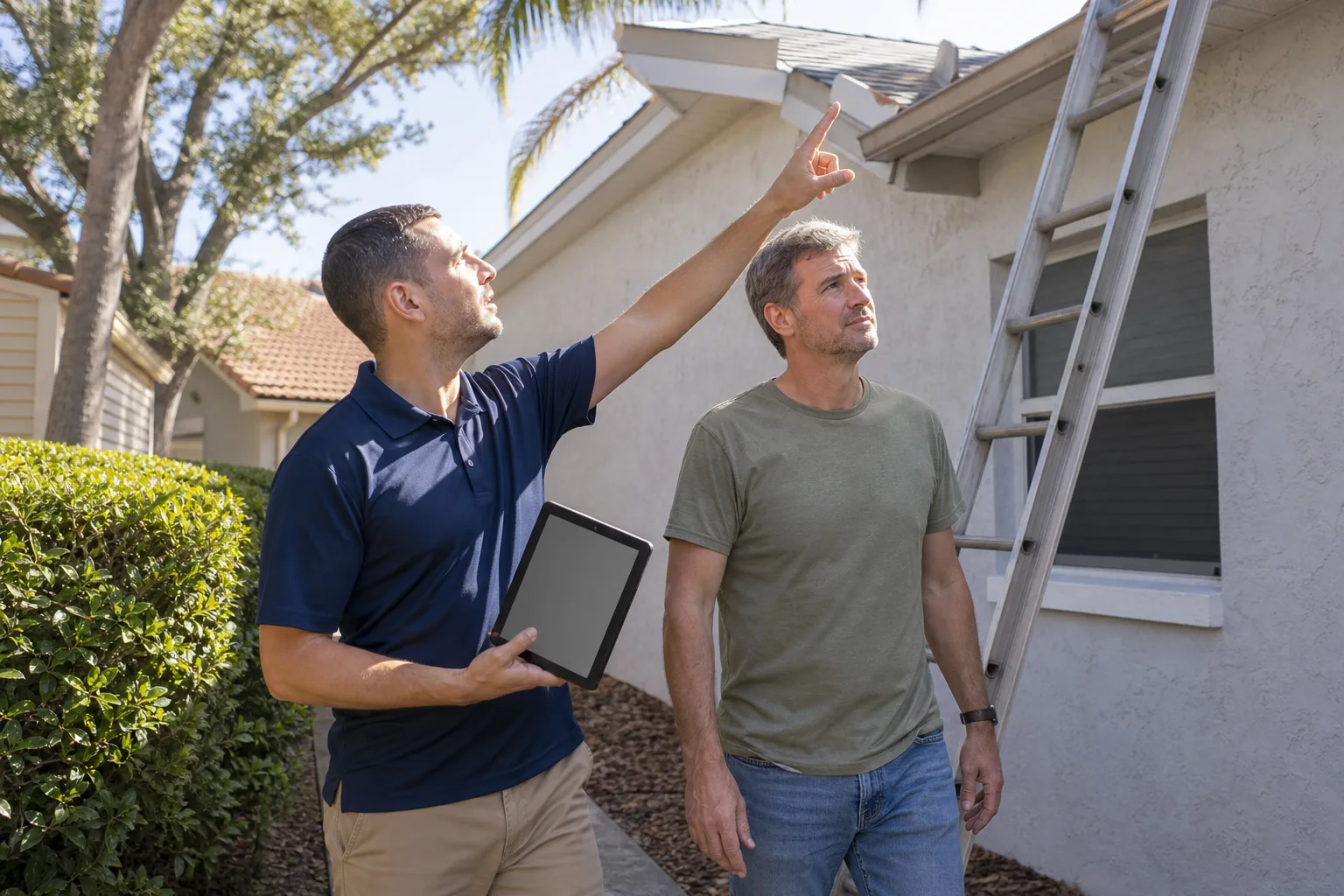
- Site visit and measurement – 1 – 3 days to schedule and complete. A real contractor measures the actual property line and notes slope, existing structures, and gate placements.
- Utility locate (Sunshine 811) – 2 – 3 business days minimum. Florida law requires you to have underground utilities marked before digging. Skipping this is illegal and dangerous.
- Survey review – 1 – 5 days depending on whether a current survey exists. If the property line is unclear, a surveyor has to be scheduled.
- Permit application and review – 1 – 4 weeks in most South Florida municipalities, longer if the request needs revisions.
- HOA approval (if applicable) – 1 – 3 weeks. Some North Miami Beach community associations meet monthly and review fence requests at those meetings only.
The lesson: your contractor should be running several of these steps in parallel, not in a single-file line. A crew that starts the utility locate and permit on the same day saves you a week. A crew that waits for the permit before calling 811 hasn’t thought about your time.
Permits, Surveys, and HOA Approvals in North Miami Beach
Permit requirements for fences vary across Miami-Dade County and within North Miami Beach itself, so the first real question is whether your fence needs a permit at all. The short answer: front-yard fences and fences over the typical height thresholds almost always do. Rear-yard privacy fences within height limits sometimes don’t, but “sometimes” is exactly why you want your contractor to confirm in writing rather than guess.
What the process looks like in practice:
- Confirm the requirement. Your contractor checks the current code and your specific zoning. A fence line along a corner lot often has different frontage rules than an interior lot.
- Provide the survey or plot plan. Most reviews want to see the proposed fence drawn to scale against the property line. If you don’t have a recent survey, that becomes step one.
- Submit the application. Plans, product specs, and post spacing details go in together. Incomplete submittals get kicked back and the clock restarts.
- Wait for review and any revisions. This is where the calendar stretches. A clean submittal moves faster than a resubmitted one.
- Get the inspection. When the fence is done, an inspector confirms it meets the approved plan. Post-hole inspections are sometimes required before concrete is poured.
HOA approval adds its own layer. If you live behind an association gate in a community near the Intracoastal or off Biscayne Boulevard, expect design rules on material, color, and height. Get the ARC (architectural review) approval in writing before you buy materials. A fence built to HOA specs that were never confirmed is a fence you may have to tear down.
The Build Phase: Realistic Day Counts by Fence Type
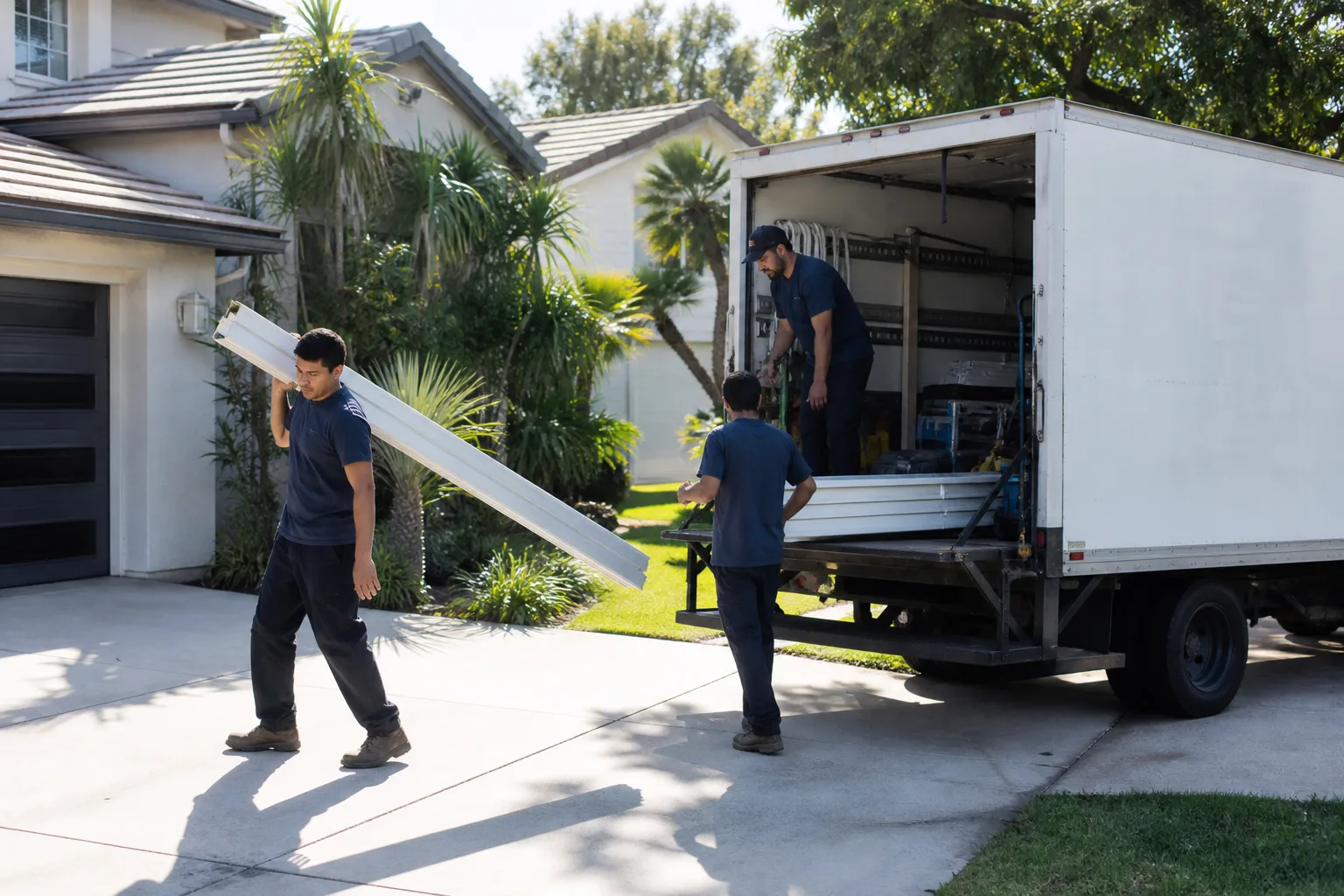
Once permits, locates, and approvals are cleared, the actual building is the fast part. For a typical residential lot in North Miami Beach, here’s what a realistic build window looks like by fence type. These counts assume a crew of two to four, a straight run of 100 – 200 linear feet, and no surprises underground.
- Chain link: 1 – 2 days for a standard lot. Fastest option, fewest moving parts.
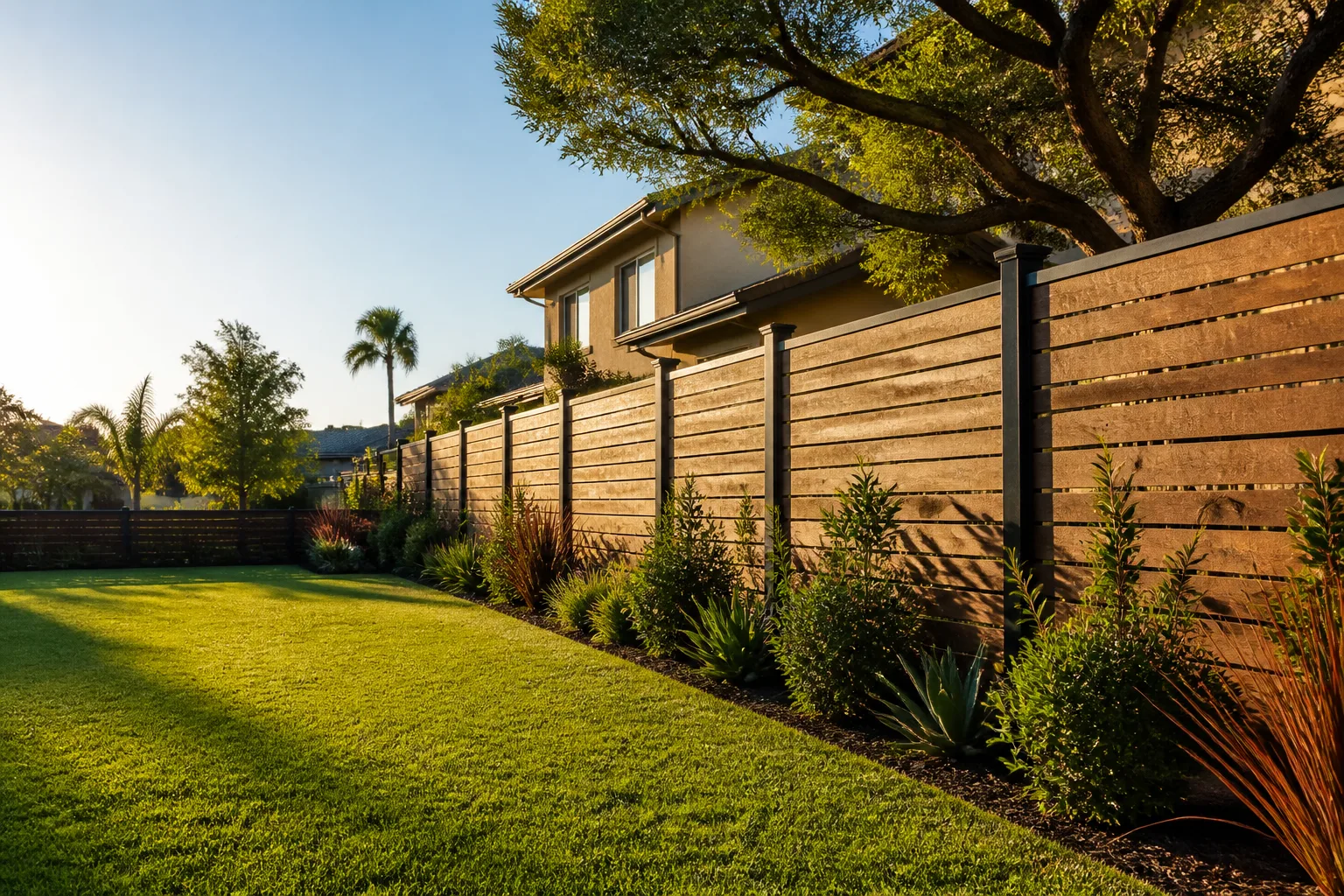
- Aluminum ornamental: 1 – 2 days. Panels arrive pre-fabricated, so the labor is in layout and setting posts true.
- Vinyl: 2 – 3 days. Posts need proper concrete curing before panels load, which stretches it slightly past chain link.
- Wood: 2 – 4 days. More cutting, more fastening, and often a staining or sealing day on top.
The day count itself is less useful than knowing what a good day looks like. A productive installation day has a crew that sets and braces posts early, works the panels along a string line, and leaves gates for last so alignment is exact. If your crew is spending day one digging post holes one at a time with a shovel, that’s a sign of unfinished soil prep, not a sign of care.
For a full breakdown of what a North Miami Beach fence build involves from selection to final walkthrough, see our Fence Installation in North Miami Beach page. If you’re pairing a fence with hardscape work, the Driveway & Pavers in North Miami Beach page shows how those projects get sequenced together.
How North Miami Beach Soil and Water Tables Affect Post-Setting
This is the part that catches people from out of state. South Florida doesn’t have the soft loam you can dig through with a post-hole digger and forget. Around North Miami Beach, the ground is often a thin layer of sand or fill over limestone, and the water table can sit surprisingly high. That combination changes everything about how fast a fence goes in and how long it takes to become permanent.
What we actually see:
- Limestone near the surface. In some parts of North Miami Beach, the limestone shelf is close enough that post holes need a rock bit or a bar to get depth. Those holes take longer to dig, and a contractor who showed up with only hand tools loses a day.
- High water tables. During the wet season, holes can fill with groundwater before concrete goes in. Concrete poured into standing water cures weak. A competent crew pumps or waits, and that waiting time is real.
- Sand-heavy fill. Sandy soil drains fast but doesn’t grip posts the way clay does. That’s why post depth and concrete volume matter more here than in other markets. A fence that’s 24 inches deep isn’t necessarily enough on a North Miami Beach lot.
- Concrete cure time. Standard concrete needs roughly 24 – 48 hours before you put load on it. In the Florida heat and humidity, that cure window shifts a little, and good crews brace posts until it’s set. Vinyl panels, in particular, stay off until the posts are truly ready.
This is why “1 – 3 days of physical work” doesn’t always mean three consecutive days. On a limestone-heavy or wet-table property, post-setting may stretch across four days with cure gaps. That’s not slowness, that’s a fence that will still be standing straight in ten years. We use brand partners like Bufftech and ActiveYards in part because their systems are engineered for these conditions.
How Material Choice Changes the Installation Window
Aesthetics get all the attention, but material decides your calendar. Each fence type carries its own installation rhythm: how posts get set, how panels load, and how much finish work lands at the end. Here’s how the four common choices compare for a North Miami Beach property.
- Chain link: Fewest steps. Posts go in, mesh rolls out, tension bands tighten. Two people can work a residential run in a day. Least attractive, fastest to finish.
- Aluminum ornamental: Pre-built panels and posts save assembly time. The time sits in careful layout and leveling, because a slight rack in one panel shows across the whole run. Belgard and similar quality partners build systems that hold alignment better.
- Vinyl: The middle ground. Post setting and curing governs the schedule, not panel assembly. Panels snap or slot in once posts are cured, so a vinyl run often finishes on day three with a clean look and near-zero maintenance.
- Wood: The longest window. Every picket, rail, and post gets cut and fastened on site. Add a day for stain or sealant if you want the fence to survive Florida humidity. Wood looks great and it demands the most labor.
Material also changes your repair timeline later. Vinyl and chain link panels are typically replaceable in a day. Wood that warps or rots in the humidity often needs panel-level work. For a property where you’re adding structures, a stronger system like Unilock hardscape work alongside the fence holds up to the same coastal conditions.
What Weather Delays Actually Look Like in a Miami-Area Summer
Miami’s wet season runs roughly May through October, and it’s not the drama of a named storm that wrecks fence schedules – it’s the steady afternoon rain. We tell North Miami Beach customers to expect one or two lost days on almost any summer installation, and to plan buffer for it. A contractor who promises a fixed three-day window in August without weather risk hasn’t worked a South Florida summer.
What legitimate weather delay looks like:
- Short daily disruptions. A morning rain pushes the start to late morning. Crews work around a passing storm rather than abandoning the day.
- Post-setting delays. Rain and standing water in post holes stop concrete work. Good crews cover or pump holes and return when it’s safe to cure.
- Storm-week resets. A tropical system can push a project a week or more. Legitimate contractors tell you this upfront and build a buffer into the estimate schedule, not after the fact.
- Material delays. High wind can slow or hold material shipments to suppliers, which cascades into your install date.
How do you know the delay is legitimate and not scheduling failure? Ask what the weather plan is on day one. A crew that watches the local radar and reschedules before it rains is proactive. A crew that shows up unprepared and tells you to call back later is disorganized. In our experience, the best way to protect your timeline is a written schedule with buffer stated, not a verbal promise.
Project Milestone Checklist: How to Verify Your Contractor Is On Track
Schedules matter because they give you a way to check on the work. Here are the milestones every fence project in North Miami Beach should hit, with what tells you it’s on track. Keep this list and ask your contractor where you are at each stage.
- Signed estimate with written timeline. It should list the pre-install phases, the expected build days, and a buffer for weather. If the estimate only gives a start date, ask for the full schedule in writing.
- Utility locate completed. You should see locate markings in the yard and a ticket reference. Locates are active for a limited window, so confirm the build starts before they expire.
- Permit submitted and paid for. Ask for the application number. Wait to schedule materials until you have it.
- HOA approval in hand (if applicable). Written approval, not a verbal yes. Material selection should match the approved design.
- Posts set and curing. Posts should be plumb, spaced to spec, and braced. Concrete cures roughly 24 – 48 hours before panels or rails go on.
- Panels, rails, and gates installed and aligned. Walk the line with a level and a tape. Gates should clear ground and swing square.
- Final inspection and walkthrough. Confirm the fence matches the approved plan, punch list items closed, and the workmanship warranty is documented.
For the full scope of what we can build alongside a fence, including structures and additions, see our Home Additions & ADU in North Miami Beach page. Every job we take on is backed by our 730-Day Done Right Promise, so the workmanship guarantee outlasts the schedule by a wide margin.
Building the Estimate Around Reality
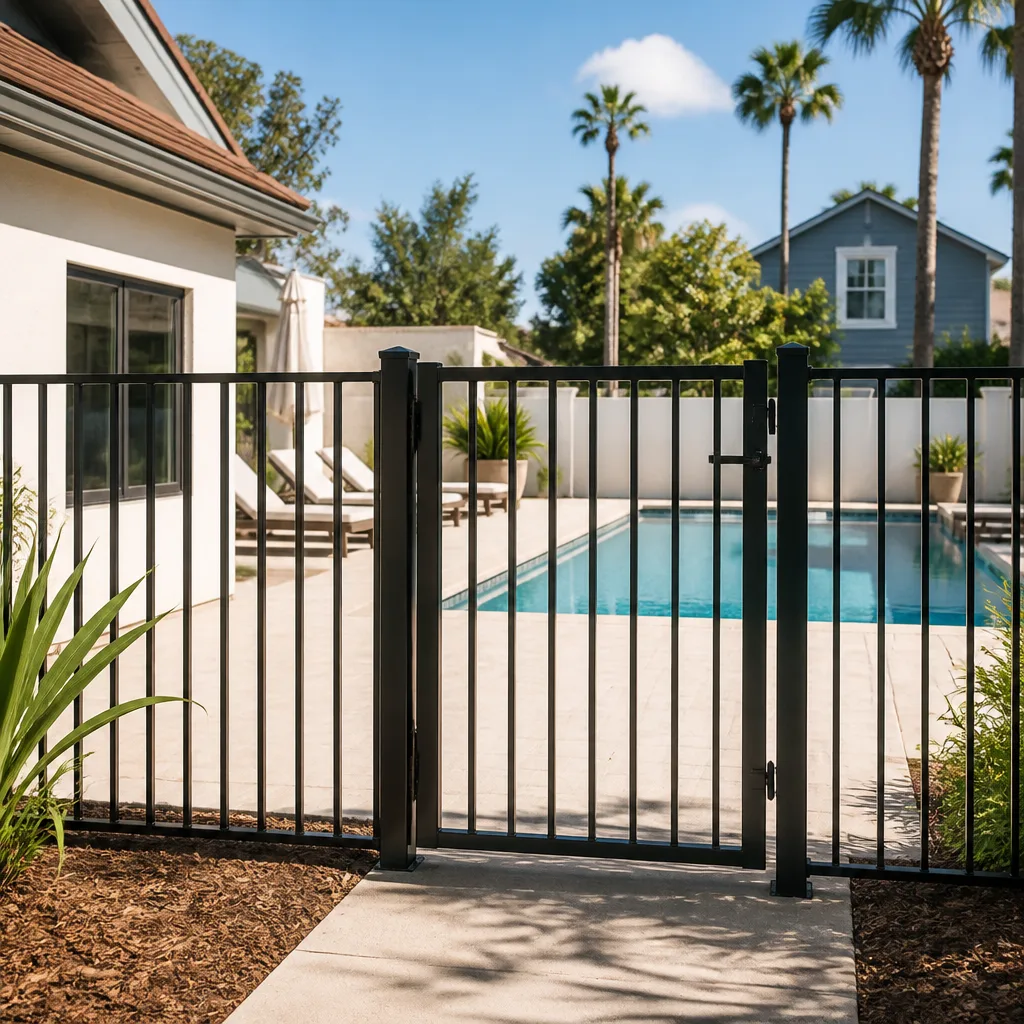
The most useful thing you can do before signing anything is ask for a phased timeline. A good estimate breaks the project into pre-installation and build, gives a date range for each, and states how weather will be handled. That structure is also where upfront pricing matters. The number you see should include the permit work and the site prep, not just the fence materials. If a bid is suspiciously low, check whether permits and locates are in it.
This is also where our brand partners help on the schedule side. Systems like Vinyl from quality manufacturers arrive ready and dimensionally consistent, which trims install days compared to piecing together materials that don’t fit. Material availability, not aesthetics, is the hidden driver of a fence timeline. Confirm lead times before you commit.
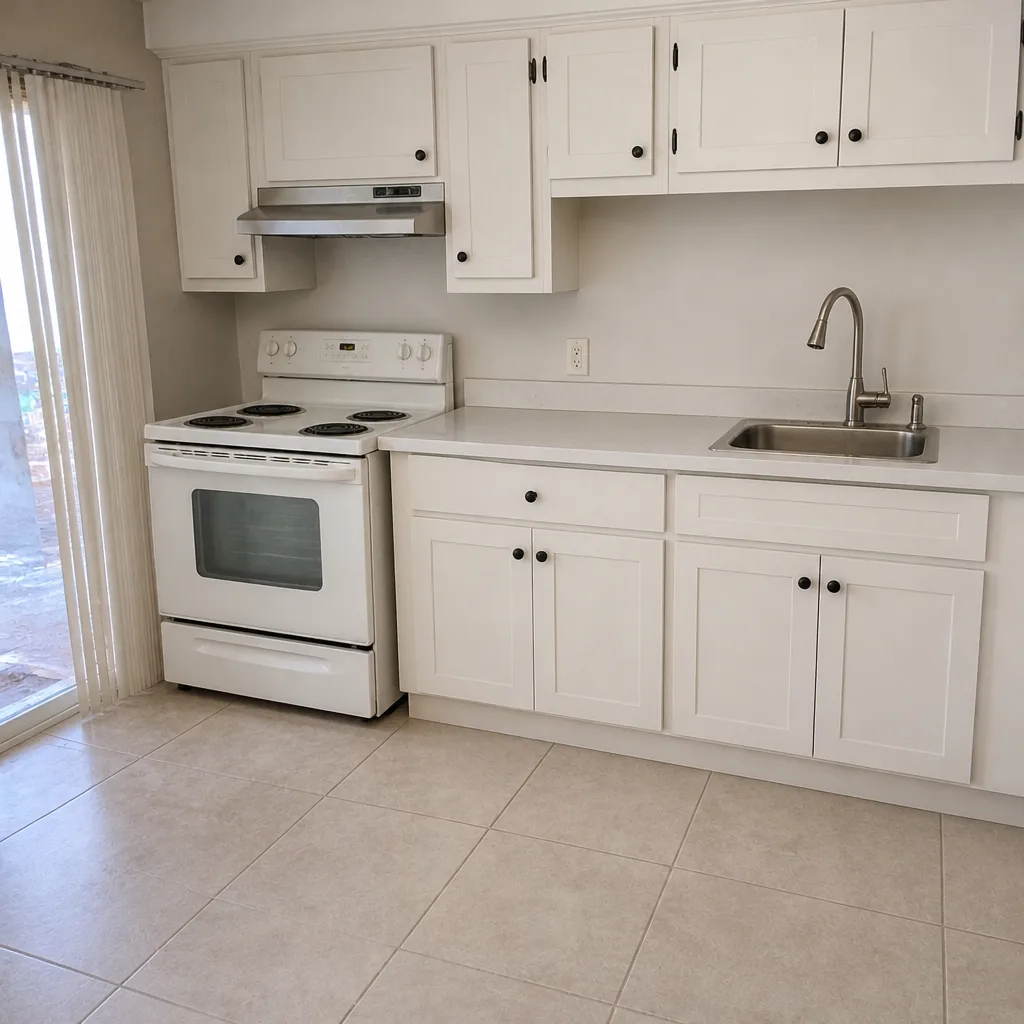
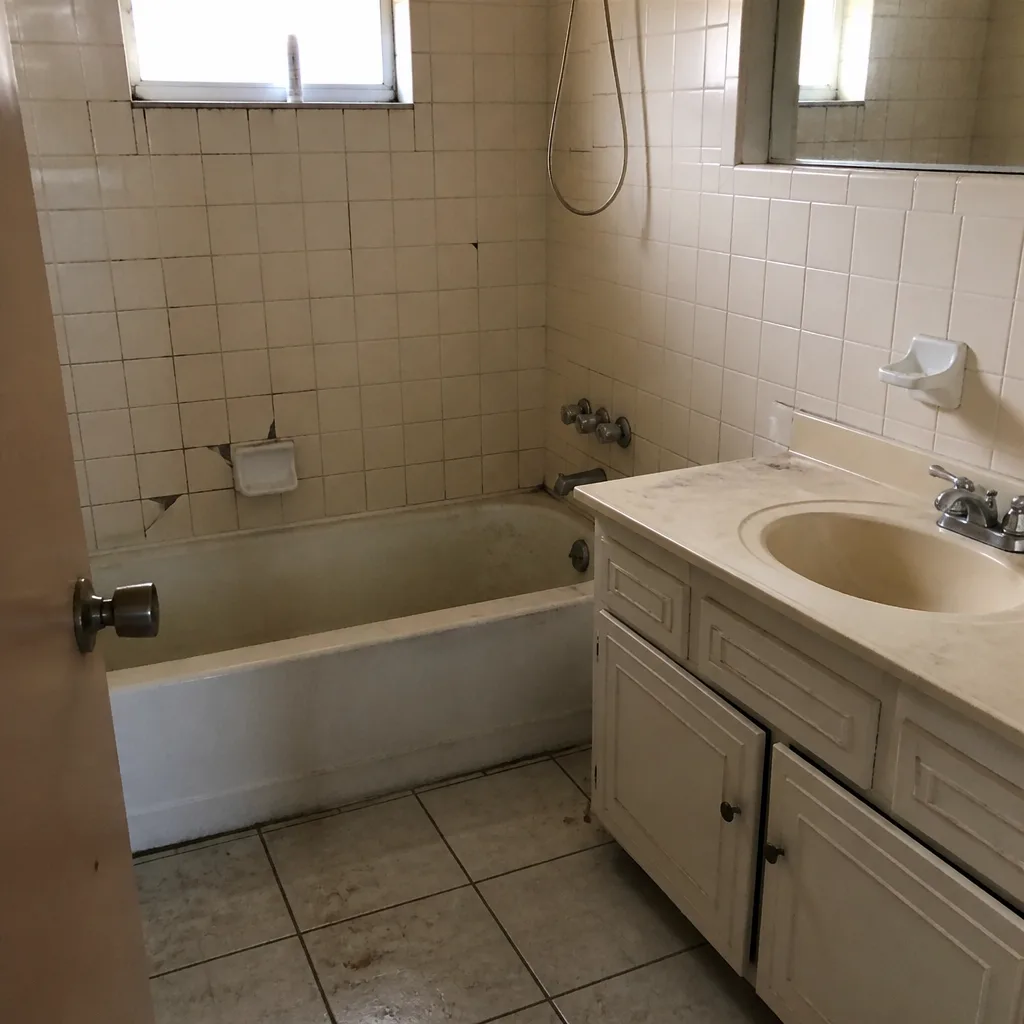
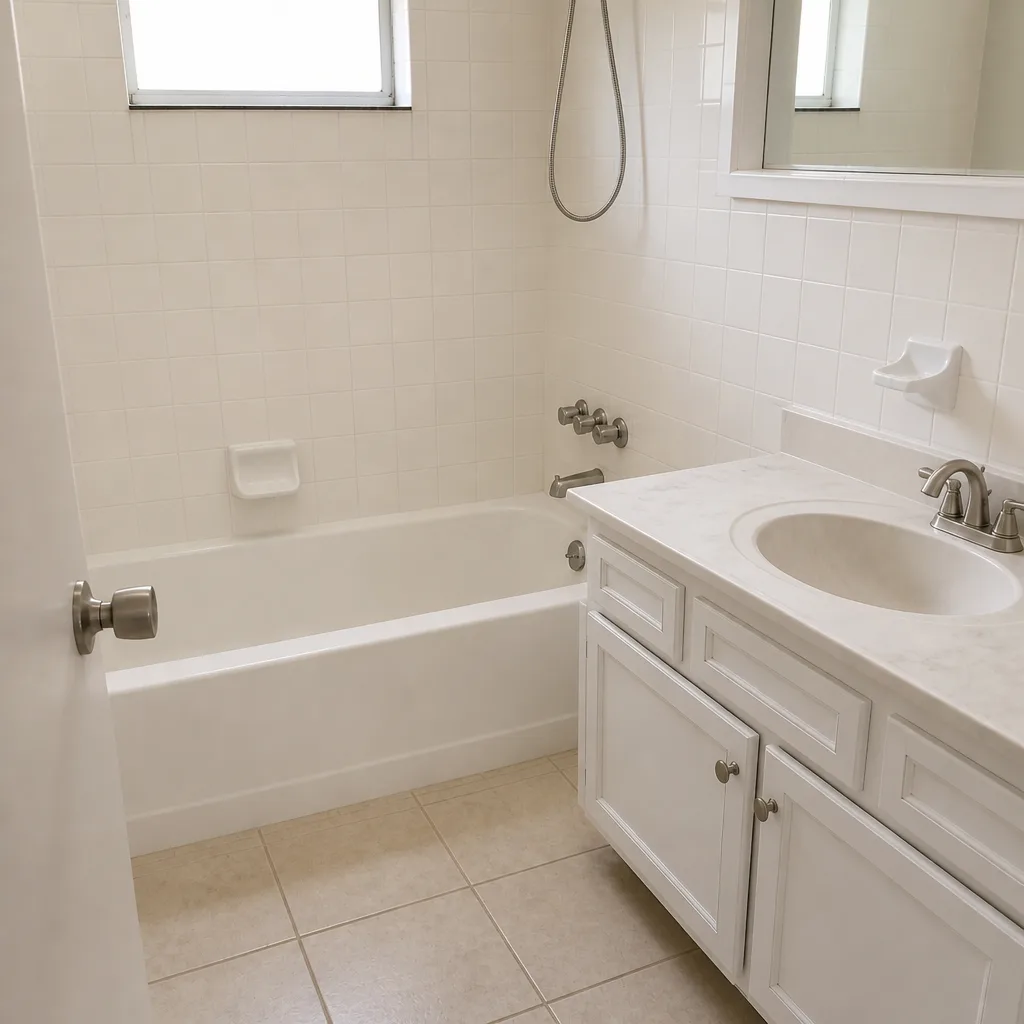
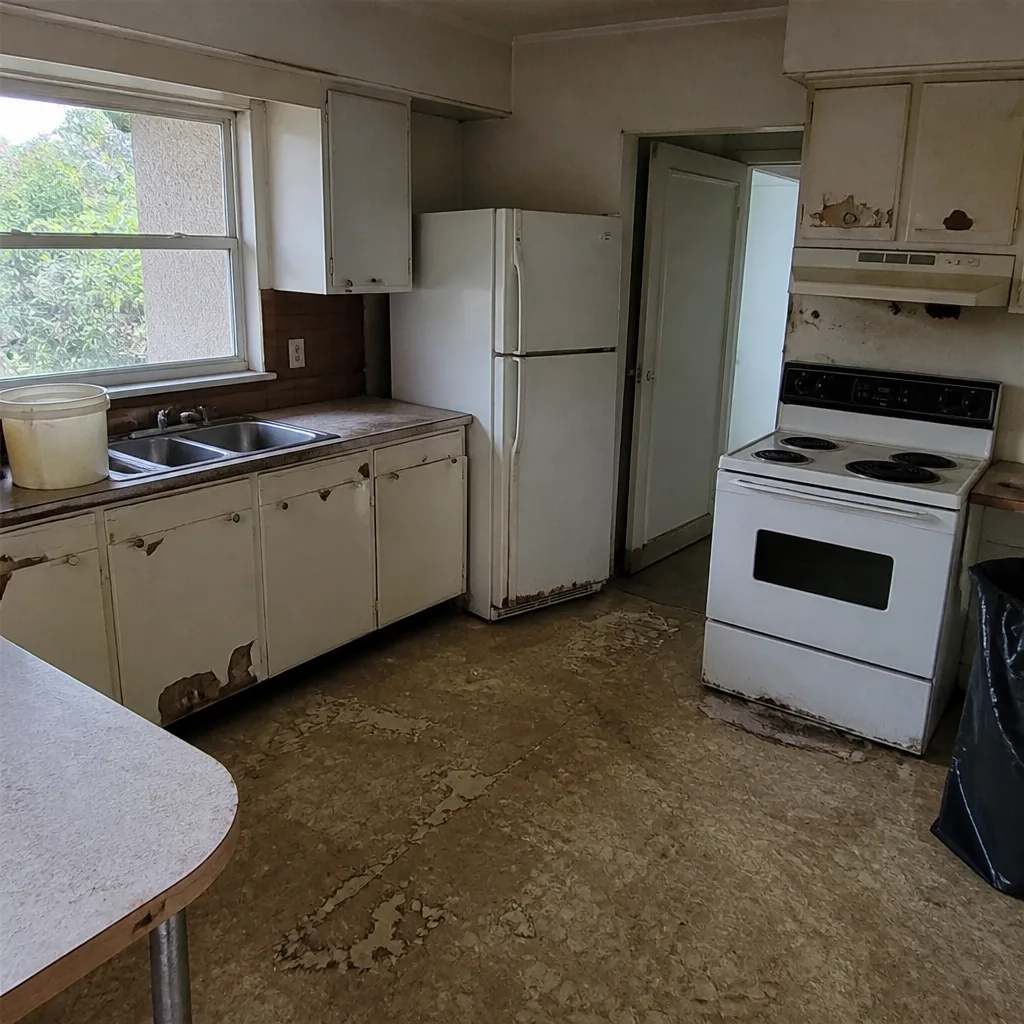
See the difference
 Before
 After
 Before
 After
 Before
 After
Common Mistakes to Avoid
- Digging before the utility locate expires. Locates have a limited window, and digging after it’s expired risks striking a line. Re-request every time before work starts.
- Buying materials before permit and HOA approval. A design your association rejects means returning materials and losing a week or more. Get written approval first.
- Assuming a single weekend is a real schedule. Between permitting, locates, and curing, a genuine North Miami Beach install rarely fits into one weekend for a full lot.
- Forgetting the high water table. A contractor who sets posts into standing water pours a fence that shifts. Ask how the crew handles wet-season holes.
- Skipping the post-hole inspection. When your municipality requires it, pouring concrete first means tearing out posts. Confirm the sequence in writing.
- Ignoring the cure gap. Panels on uncured posts lean and pop loose. The couple of days you wait protects the fence for years.
- Ignoring a fence line on a corner lot. Corner properties often face tighter frontage and height rules in North Miami Beach, and those rules change the schedule, not just the design.
When to Call a Professional
A fence install is one of the few projects where “just do it yourself” is genuinely tempting, and occasionally it works for a short run of chain link. It stops working when permits and utility locates are involved, when the ground is limestone or the water table is high, or when the run meets an HOA rulebook. Those are the cases where a professional’s schedule and paperwork matter more than the labor itself. If you’re replacing a fence after storm damage, coordinating with an inspection, or tying a fence into a larger outdoor build, bring a professional in early. Groundwork Construction Co. of North Miami Beach offers free estimates in North Miami Beach. Call Groundwork Construction Co. of North Miami Beach home at (844) 797-4868 to schedule yours.
Frequently Asked Questions
Most Florida fence installations run 2 – 6 weeks from contract to final inspection, with 1 – 3 days of actual building. The bulk of the time is permit review, utility locates, and HOA approval. In North Miami Beach, adding high water tables and limestone can stretch the schedule further. Call (844) 797-4868 for an estimate that puts a real timeline in writing.
A short chain link run on a clear property can sometimes be built in a single day, but a typical residential lot takes more. Post curing alone adds 24 – 48 hours before panels or rails go on. Anyone promising a full-lot fence in one day is skipping steps you’ll pay for later. Call (844) 797-4868 and we’ll give you an honest day count.
Yes, and that’s expected. Permit review typically takes 1 – 4 weeks, longer if revisions are needed. The way to protect your timeline is to submit a complete application with survey and plan, and run the utility locate at the same time. Call (844) 797-4868 if you want the permit process handled for you.
Expect one or two lost days on almost any summer install due to afternoon rain, and possibly a week for a tropical system. Standing water in post holes halts concrete work until a crew can pump and wait. Good contractors build buffer into the schedule rather than compressing it. Call (844) 797-4868 and we’ll plan around the season.
Two reasons: limestone just under the surface and a high water table. Both make post holes slower to dig and require more care in concrete placement and curing. A post set right on a North Miami Beach lot can take a full extra day compared to softer ground. Call (844) 797-4868 for a build schedule specific to your property.
It can add 1 – 3 weeks, and some associations review fence requests only at scheduled meetings. Get written ARC approval before buying materials. If a design is rejected, you start over on the material selection. Call (844) 797-4868 and we’ll help sequence the approval with the permit.
The Bottom Line
The fence itself is the easy part. Two to three days of physical work almost always hides behind a month of permitting, surveys, utility locates, HOA sign-off, and post-setting that the Florida ground controls. Plan for 2 – 6 weeks in North Miami Beach, expect a weather buffer in summer, and demand a phased written schedule before you sign. The contractors worth hiring will hand you that timeline without being asked, because a schedule you can check is a job you can trust. Upfront pricing, permits pulled, and a written 730-Day Done Right Promise make the schedule something you can hold us to. Call (844) 797-4868 for a free estimate on your North Miami Beach fence project, backed from foundation to finish line.
Written by the team at Groundwork Construction Co. of North Miami Beach.