Last updated November 17, 2026



Free written scope consultation - allowances, timeline, and change-order rules on paper before a single trade is scheduled
The Complete Driveway & Pavers Guide for North Miami Beach Homeowners
North Miami Beach sits on some of the most reactive soil in Florida, and a driveway that looks perfect in October can be shifting and cracking by the following hurricane season if the base wasn’t built for it. That’s the part most paver guides skip. They were written for clay in Ohio or decomposed granite in Arizona, not for sandy limestone sitting over a high water table with salt air blowing in off the Intracoastal. So this guide covers what actually holds up here. You’ll learn how deep the base has to go, which materials survive UV and pressure washing, how Miami-Dade County permitting works for driveway work, how to design drainage that passes inspection without wrecking your curb appeal, and what installed pavers really cost per square foot in North Miami Beach.
Quick Answer
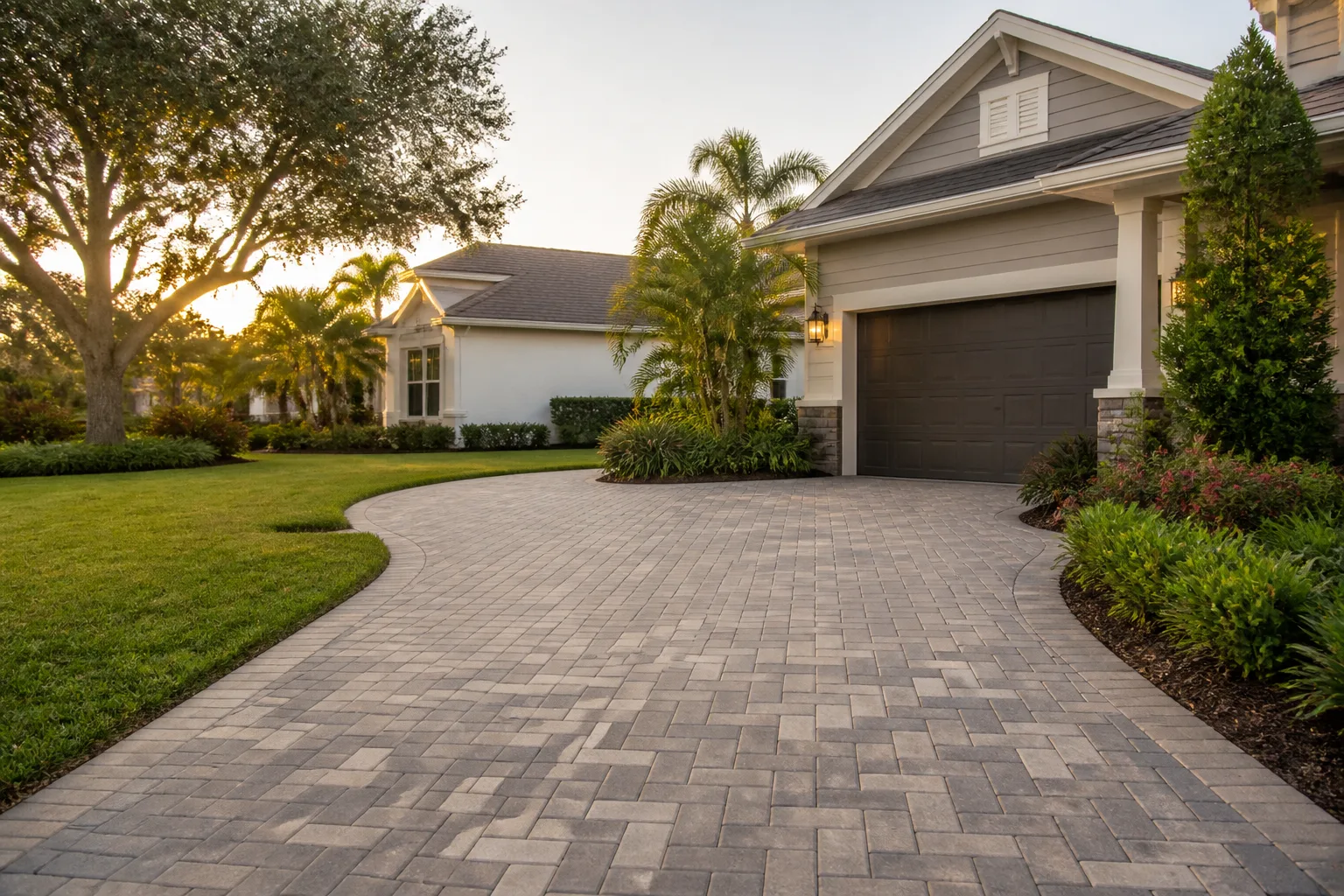
Installed driveway pavers in North Miami Beach typically run $14 to $28 per square foot for a standard concrete paver and $20 to $40 per square foot for travertine, porcelain, or clay brick, depending on material and site prep. The number that matters more than the price tag is base depth: in North Miami Beach, a proper base runs 6 to 8 inches of compacted lime rock over a geotextile separator, deeper than the 4-inch base most national guides recommend, because the sandy limestone and seasonal high water table will pump a shallow base apart within a couple of seasons. Permits come through Miami-Dade County, and any driveway work that changes the footprint or affects drainage needs one.
Styles & brands we work with
- Kitchen remodeling
- Bathroom remodeling
- Home additions & ADU
- Roofing
- Windows & doors
- Driveway & pavers
- Fence
Table of Contents
- Why North Miami Beach Soil Changes Everything
- The Base Depth and Spec That Survives Here
- Which Paver Materials Hold Up in South Florida
- Miami-Dade County Permits for Driveway Work
- Drainage Compliance Without Sacrificing Curb Appeal
- What Installed Pavers Cost in North Miami Beach
- How a Proper Installation Works, Step by Step
- Maintaining Pavers in Salt Air and Heat
Why North Miami Beach Soil Changes Everything
Dig a test hole almost anywhere in North Miami Beach and you’ll hit the water table sooner than you’d expect. In low-lying neighborhoods off the Intracoastal, groundwater can sit 24 to 36 inches below grade during the wet season. That means the subgrade under your driveway is saturated for months at a time, and saturated sand loses bearing capacity fast. Load a car on top of it without the right base and the soil moves.
The native material here is mostly sandy limestone and shell hash, which drains better than clay but compacts unevenly. National guides assume you’re building over stable, well-drained subgrade with a low water table. That assumption fails in North Miami Beach, and it’s why so many imported paver driveways look flawless at handoff and fail within two years.
Here’s what we’ve seen across jobs in this city and what it changes:
- Reactive soil movement: seasonal wetting and drying causes expansion and contraction that a shallow base can’t absorb, so joints open and pavers rock.
- Pumping: tire loads push water through saturated fines, pumping soil up between pavers and eroding the base from below.
- Salt intrusion: salt spray and salt-laden groundwater attack low-grade cement in the base and accelerate efflorescence and spalling.
- Root pressure: mature ficus and palm roots in established North Miami Beach lots buckle driveways that were laid with too little edge restraint.
None of this is a reason to skip pavers. It’s a reason to spec the base for the site instead of copying a formula from a coast with different weather.
The Base Depth and Spec That Survives Here
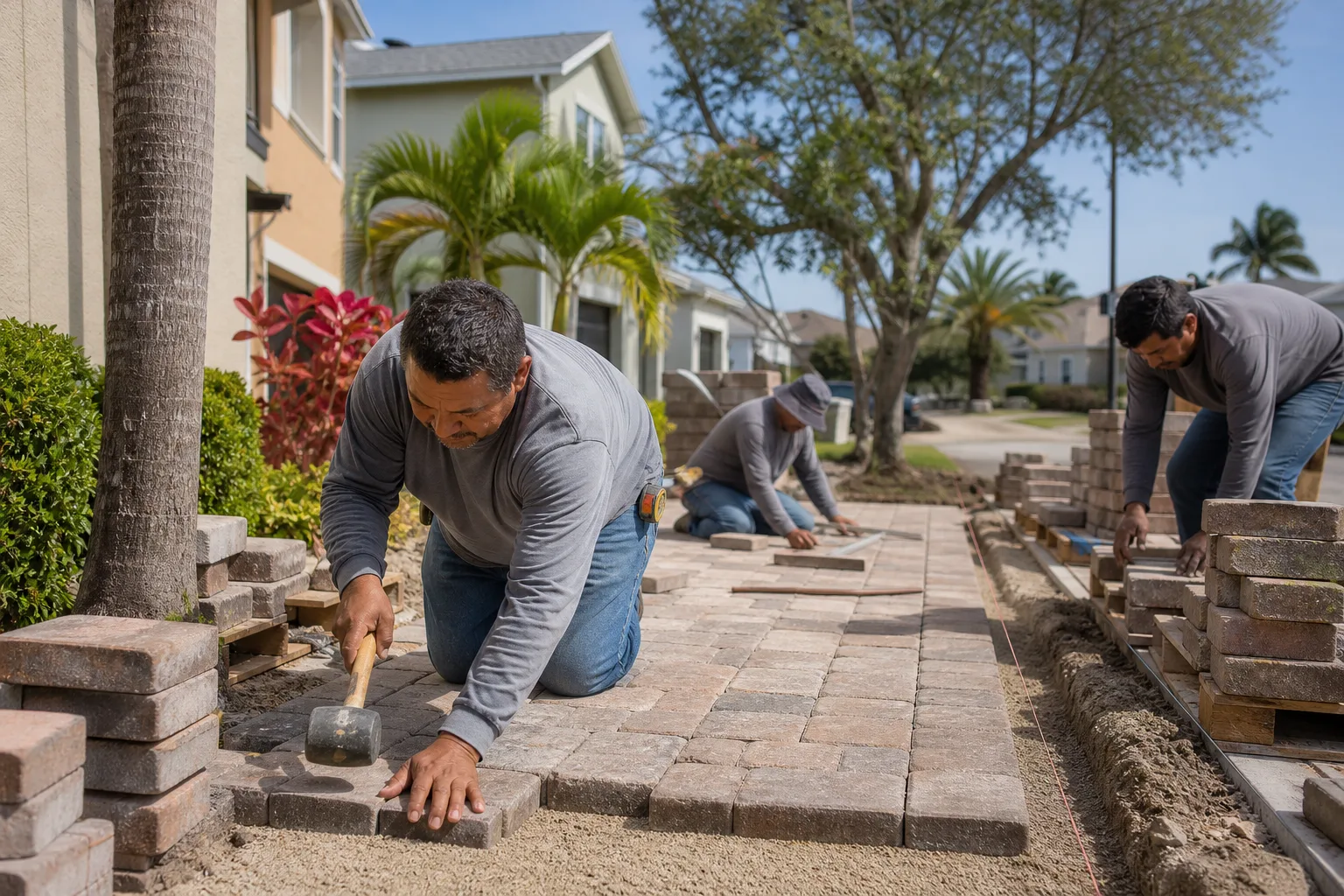
In our experience, a paver driveway in North Miami Beach needs a base of 6 to 8 inches of compacted limerock, not the 4 inches you’ll see in most national guides. On lots with poor drainage or heavy vehicle traffic, like an RV or boat trailer, we go to 8 inches with a geotextile separator fabric between the subgrade and the rock. That membrane is the cheapest insurance on the entire job. It keeps fine sand from migrating up into the base and keeps the base from punching down into soft soil.
Base material matters as much as depth. We use a graded limerock that compacts to a dense, stable surface, not cheap fill. The subgrade is proof-rolled and any soft spots are dug out and replaced before any rock is placed. Skipping that step is where a lot of driveway problems start.
Compaction happens in lifts. A proper install looks like this:
- Excavate to the specified depth and proof-roll the exposed subgrade to expose soft spots.
- Place geotextile separator fabric over the entire excavated footprint.
- Lay limerock base in 3- to 4-inch lifts, compacting each lift with a plate or vibratory roller.
- Check for density and level after each lift before adding the next one.
- Install edge restraint that’s pinned into the base, not just butted against the pavers.
- Lay a 1-inch bedding sand course.
- Set pavers, cut edge pieces, and sweep polymeric joint sand into the joints.
- Compact the finished surface and top off the joints with more polymeric sand.
The edge restraint step is non-negotiable in North Miami Beach. Heat expansion pushes pavers outward, and an unsecured edge is the first thing to fail in the first summer.
Which Paver Materials Hold Up in South Florida
UV exposure, salt air, daily thunderstorms, and pressure washing every season put different demands on pavers than a Midwest freeze-thaw cycle does. Some materials thrive here. Others fade, spall, or grow mildew in ways that look rough within a few years. Here’s how the main options stack up in North Miami Beach conditions.
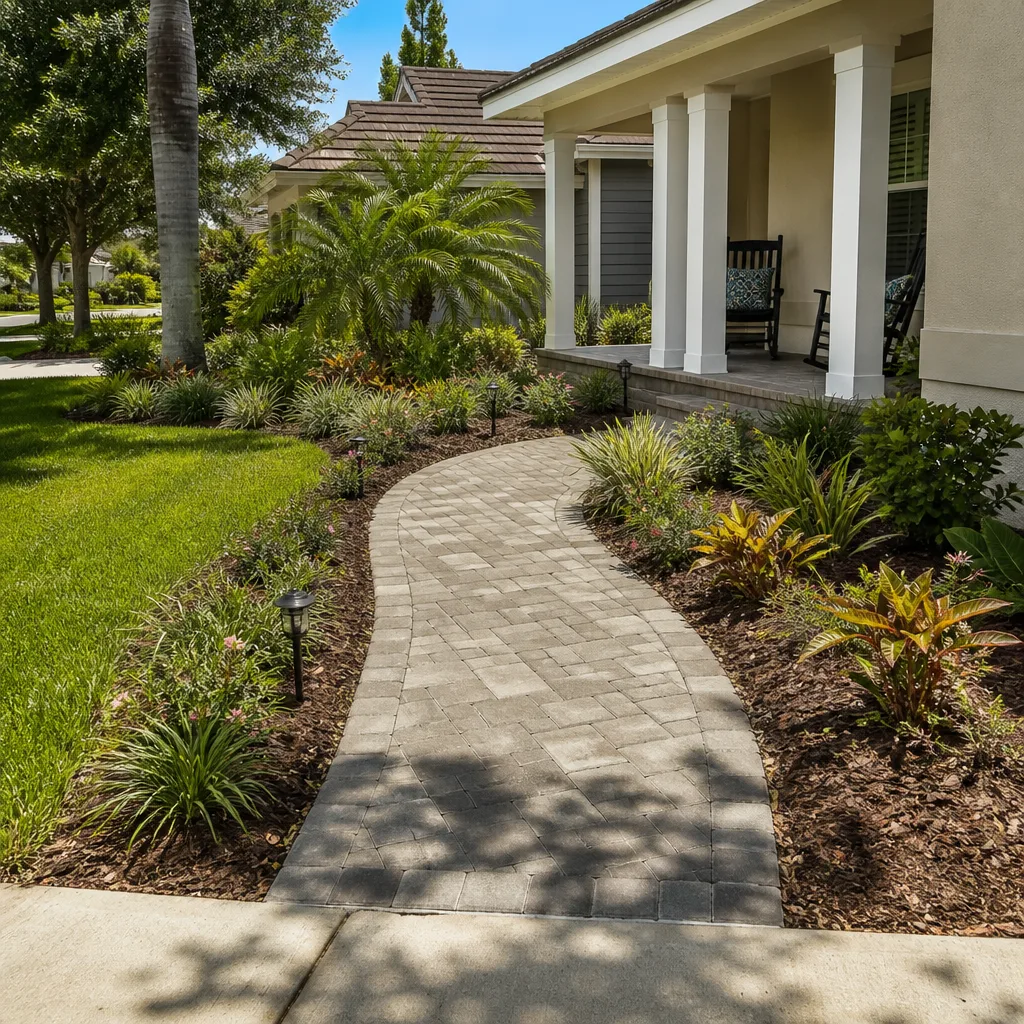
- Concrete pavers: the workhorse choice. Modern interlocking pavers from reputable manufacturers hold color and strength well, resist salt damage when the mix is right, and handle pressure washing without breaking down. The wide color range works with almost any home style. Expect to reseal periodically to slow fading.
- Travertine: the premium pick for driveways where curb appeal is the point. Genuine travertine handles heat better than almost any other surface and stays cooler underfoot, which matters in a South Florida summer. Wet-look finishes stay grippy when wet. The trade-off is cost and the need for a proper installation to avoid chipping at edges.
- Clay brick: classic and durable. Brick pavers resist UV fading about as well as anything, and salt air doesn’t degrade fired clay. The catch is that brick is less forgiving of a marginal base, so the install has to be tight.
- Porcelain: the newest option and one we specify more each year. Density is high, water absorption is near zero, and the color won’t fade in the sun. Porcelain requires a rigid base and careful handling, so material cost and install cost both run higher.
For homes undergoing a larger exterior refresh, upgrading the driveway is often scheduled alongside roofing or fencing. If you’re coordinating multiple trades, our Groundwork Construction Co. of North Miami Beach home page walks through how we sequence exterior work so the driveway isn’t being torn up after it’s finished.
Miami-Dade County Permits for Driveway Work
Homeowners are regularly caught off guard by Miami-Dade County permitting for driveway work in North Miami Beach. The county, not the city, issues the permits for most residential driveway projects in this area, and the type of permit you need depends on the scope. A simple paver overlay of a driveway in the same footprint usually moves through as a paving permit. Any project that changes the driveway’s profile, width, or connection to the swale or sidewalk has a longer road.
Projects that almost always require a permit and plan review:
- New driveway construction on a lot that didn’t have one.
- Widening an existing driveway or reconfiguring its curb cut.
- Any work within a public right-of-way, swale, or sidewalk buffer.
- Changes that alter drainage flow off the property, which affects low-lying North Miami Beach lots frequently.
Plan review timelines vary, and many projects are held up because the contractor didn’t pull the permit or because the plan didn’t address drainage. We pull the permits, coordinate inspections, and get the sign-off in writing. That matters when you go to sell and the title review asks for documentation of improvements. Skipping the permit might save a few hundred dollars on day one and cost thousands to make right at closing.
Want to see how permitting and sequencing play out on a driveway project? Our Driveway & Pavers in North Miami Beach page covers the step-by-step, from permit application to final walkthrough.
Drainage Compliance Without Sacrificing Curb Appeal
North Miami Beach has flood zone designations in parts of the city that shape how a driveway has to drain. If your property sits within one of those designations, a solid, sloped-to-the-street concrete slab can actually make an existing drainage problem worse, push water toward the house, or fail inspection. Pavers aren’t a get-out-of-jail card either, but they give you options a solid slab can’t match.
Designs we specify for North Miami Beach that work within drainage requirements:
- Permeable patterns: wider joints and a permeable joint fill let water move through the surface during a hard rain instead of sheeting to the street.
- Subsurface storage: a gravel-filled reservoir under the pavers holds stormwater long enough for it to drain into the soil.
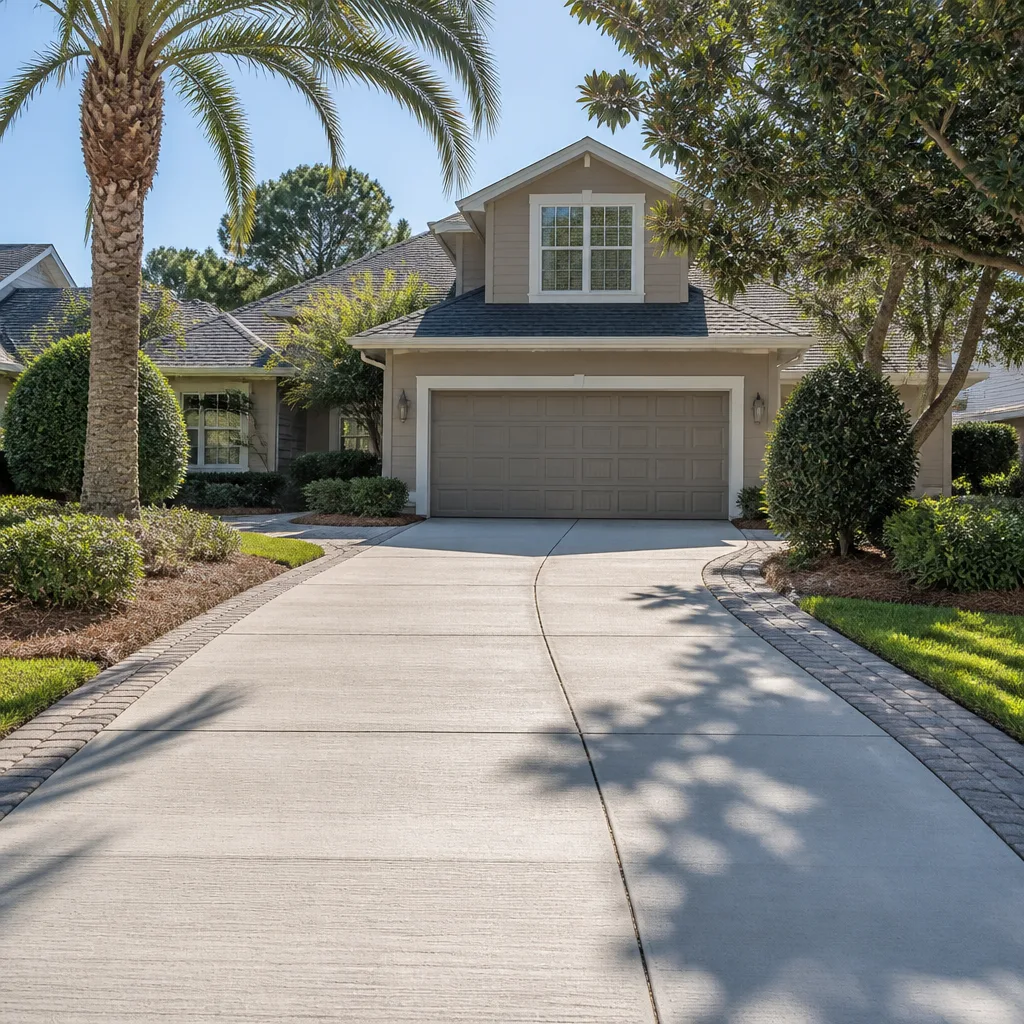
- Grading that sheds away from the house: a subtle 1.5 to 2 percent slope keeps water moving off the driveway without creating a visible uphill at the garage door.
- Channel drains at the apron: a linear drain at the driveway-to-street transition handles surges that the ground can’t absorb fast enough during a summer thunderstorm.
There’s no drainage design that works for every lot in North Miami Beach, and a contractor who tells you there is hasn’t looked at your lot. The eastern, lower-lying neighborhoods near the Intracoastal behave differently than the higher sections of North Miami Beach, and the engineer’s stormwater calculation tells us which approach actually passes.
What Installed Pavers Cost in North Miami Beach
Pricing here is higher than the national averages, and the honest reason is site prep: on most North Miami Beach lots you’re excavating deeper, adding geotextile, and hauling more rock than a contractor in Atlanta or Phoenix would. Add the permit and inspection costs and the real number settles in the range below. We give every homeowner a written line-item quote, and the number you see is the number you pay.
- Concrete pavers, standard installation: $14 to $21 per square foot installed.
- Concrete pavers with reinforced base for poor soils: $18 to $25 per square foot installed.
- Clay brick pavers: $20 to $30 per square foot installed.
- Travertine pavers: $22 to $36 per square foot installed.
- Porcelain pavers: $25 to $40 per square foot installed.
- Permit and plan review: $350 to $800 depending on scope and required review.
- Drainage additions (channel drain, subsurface storage): $800 to $2,500 per project.
- Old driveway demolition and haul-off: $2 to $4 per square foot.
A standard two-car driveway of roughly 500 square feet in North Miami Beach lands around $9,000 to $14,000 in concrete pavers with code-compliant base and drainage. Travertine on the same footprint runs closer to $13,000 to $18,000. Front-drive circular driveways, tight side-yard access, or existing driveways with failed subgrade push the number up because of demolition and haul-off cost.
Two current offers help with the budget: 0% financing for 18 months on approved credit, and $1,000 off projects over $10,000. Stacked with an upfront, fixed-price quote, that turns a five-figure project into a manageable monthly number without a hidden fee.
How a Proper Installation Works, Step by Step
If you’re comparing bids, the biggest differences between contractors in North Miami Beach show up in what happens before the first paver goes down. Here’s the process we follow on every driveway, and what you should see behind the scenes if you’re paying for it.
- Site walk and soil test. We flag the drainage pattern, photograph the existing curb and apron, and dig test holes to see how deep and wet the subgrade runs.
- Written quote with line items. Material, base spec, drainage, demolition, and permit all show up as separate lines. No open-ended lump sum.
- Permit pulled through Miami-Dade County. We handle the application, plan review, and inspections. You get the paperwork at the end.
- Demo and haul-off. We remove the old surface, channel-drain trench, and any unserviceable base, and haul the rubble to the county-approved facility.
- Subgrade prep and geotextile. Proof-roll the subgrade, repair soft spots, lay the separator fabric.
- Base installation and compaction in lifts. Each 3- to 4-inch lift gets compacted before the next goes down.
- Bedding sand and pavers. Pavers laid to a string line, cut edge pieces fitted, polymeric joint sand swept and compacted.
- Drainage verification and cleanup. We run a hose over the finished surface to confirm water moves the way it should.
- Final walkthrough and written guarantee. Every project is covered by the 730-Day Done Right Promise.
The single biggest difference between a ten-year driveway and a two-year driveway in North Miami Beach is steps 5 and 6. Good pavers laid on a bad base will fail. Great pavers laid on a great base will hold up for decades.
Maintaining Pavers in Salt Air and Heat
A paver driveway in North Miami Beach needs less maintenance than a concrete slab, but it does need some. The combination of salt air, intense UV, and summer pressure washing means the finish ages faster than it would in a milder climate if you ignore it. Here’s the routine we recommend to homeowners after the install walkthrough.
- Rinse the surface every few weeks. A simple hose-off clears salt and dust before it settles into joints.
- Top off polymeric joint sand once a year. Joint sand erodes over a season of rain, and refilling it keeps the pavers locked and weeds out.
- Pressure wash at low setting, once or twice a year. High pressure will erode the sand and chip edges. Low-pressure with a surface cleaner is safe on concrete and brick, and even lower on travertine and porcelain.
- Reseal every two to three years. A penetrating sealer slows UV fade and blocks water absorption. Skip it and concrete pavers will show fading sooner, though travertine and porcelain handle sun better.
- Watch the edges. If you see pavers moving at the driveway’s edge restraint, call before the whole field starts to shift. Repairing one edge is a small job. Repairing a settle is not.
Cooler-surface materials like travertine stay noticeably more comfortable barefoot in July, which is worth factoring in if your driveway doubles as a patio or kids’ play area. If you’re also considering a fence or gate at the end of the driveway, our Fence Installation in North Miami Beach page covers how fencing and driveway work should be sequenced so neither trades against the other.
Common Mistakes to Avoid
After enough North Miami Beach jobs, the failure patterns are predictable. Here are the ones we see most often and how to avoid them.
- Copying the national base spec. A 4-inch base in this soil will pump and settle. Insist on 6 to 8 inches of compacted limerock with a geotextile separator.
- Skipping the geotextile fabric. Omitting the fabric saves a few hundred dollars and shortens the driveway’s life by years in sandy limestone subgrade.
- No edge restraint anchored into the base. Heat expansion moves pavers outward. If the edge is just butted against the concrete or curb, the field will open up within the first summer.
- Not pulling a Miami-Dade County permit. Homeowners often discover after the fact that a permit was required for a driveway change that touched the swale. That can cost real money at sale.
- Picking the material from a Pinterest board without checking drainage. A gorgeous travertine layout on a lot that holds water through August will pool and stain if the drainage wasn’t planned first.
- Hiring on price alone. In this market, an unusually low quote usually means a shallow base, no geotextile, and no permit. The savings get paid back with interest after the first hurricane season.
- Ignoring the apron-to-street transition. The most common failure point on North Miami Beach driveways is where the pavers meet the street. Without a proper channel drain or transition detail, water and traffic eat that edge first.
See the difference
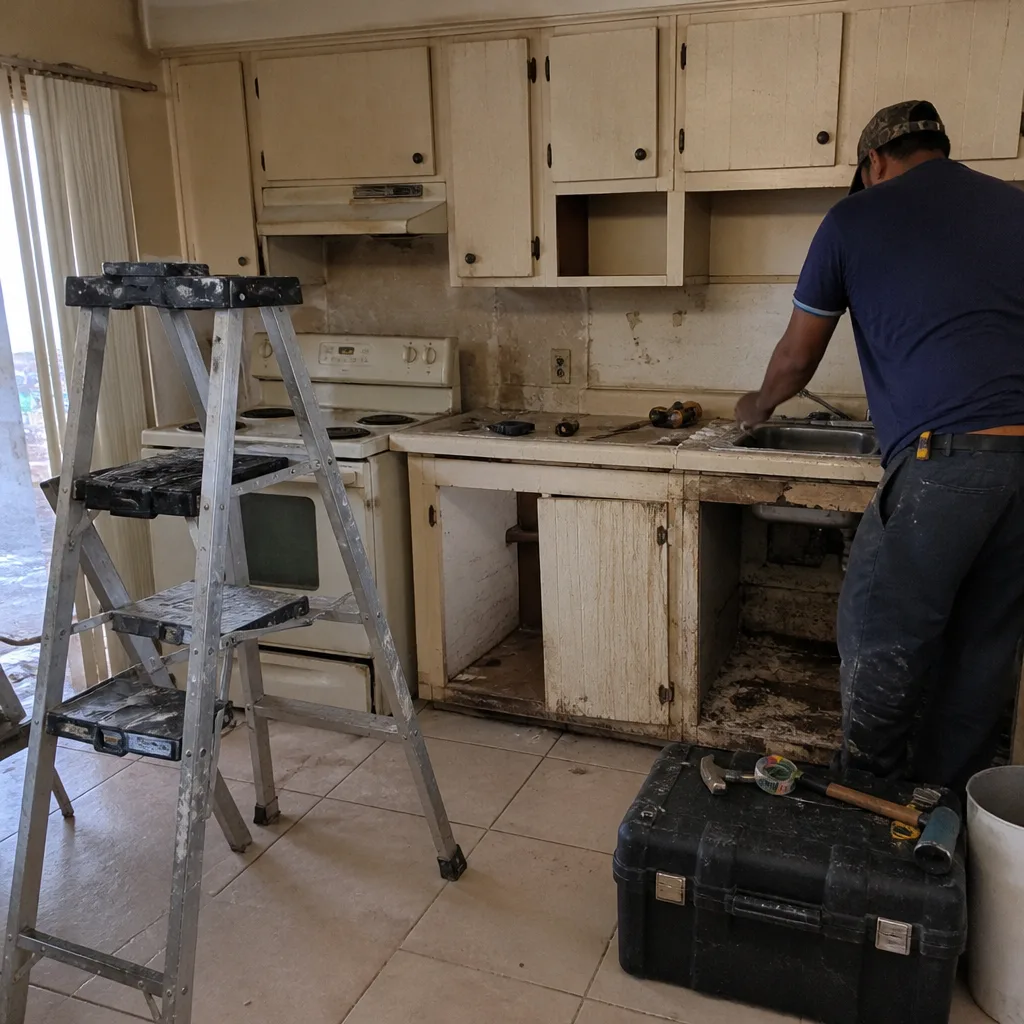 Before
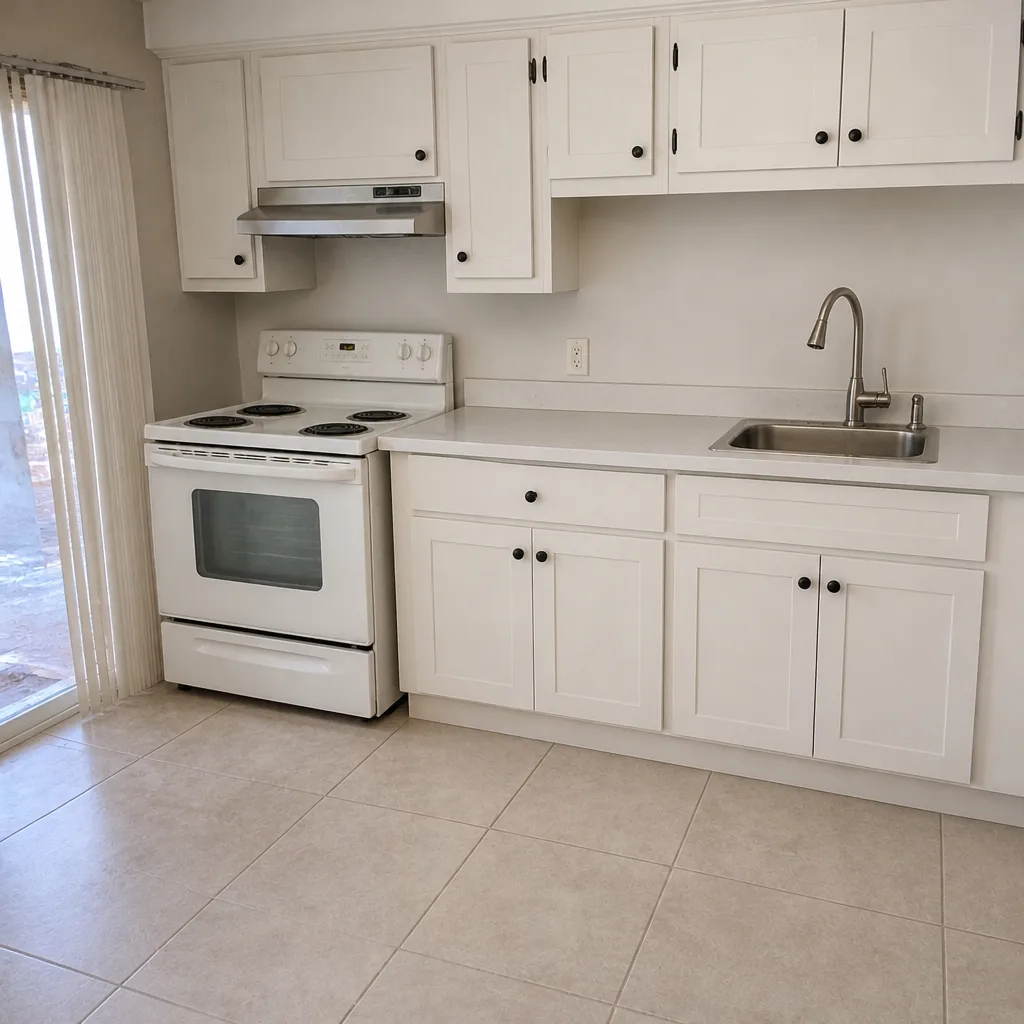 After
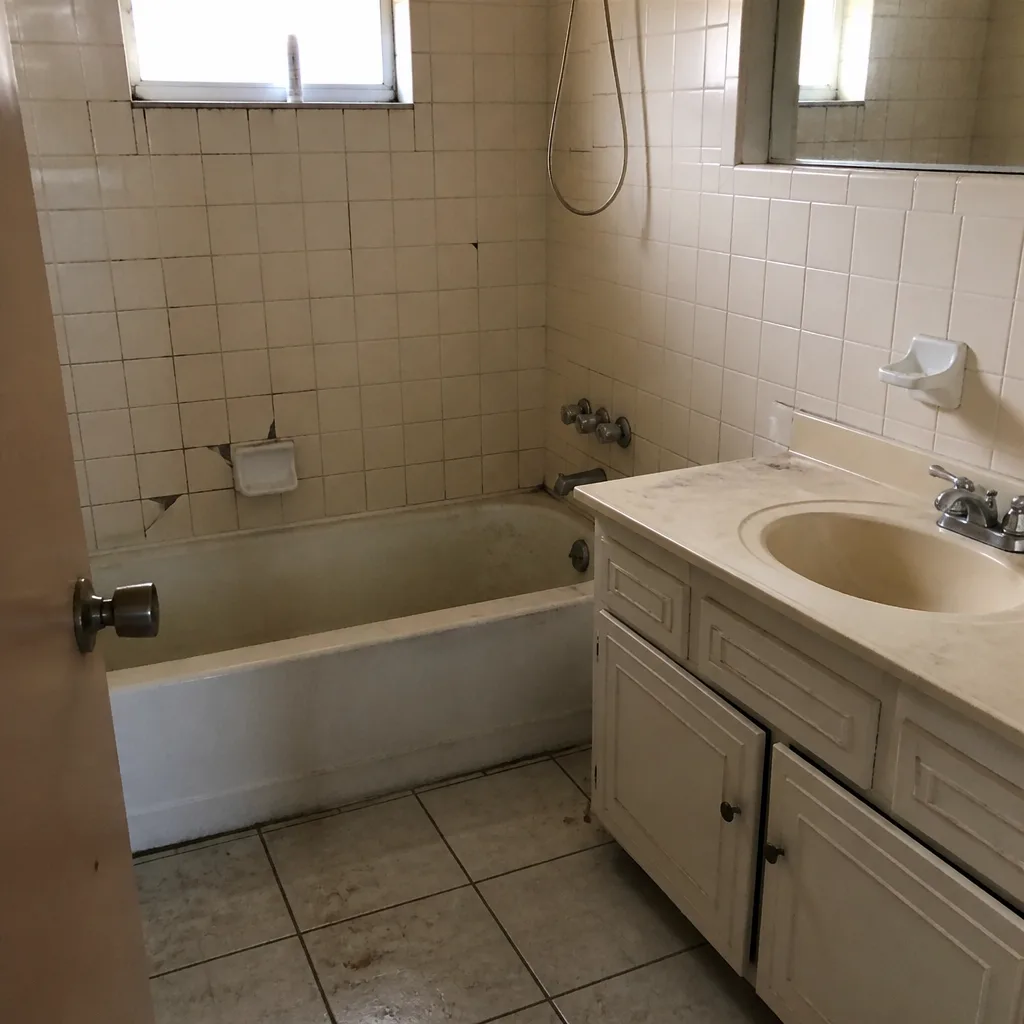 Before
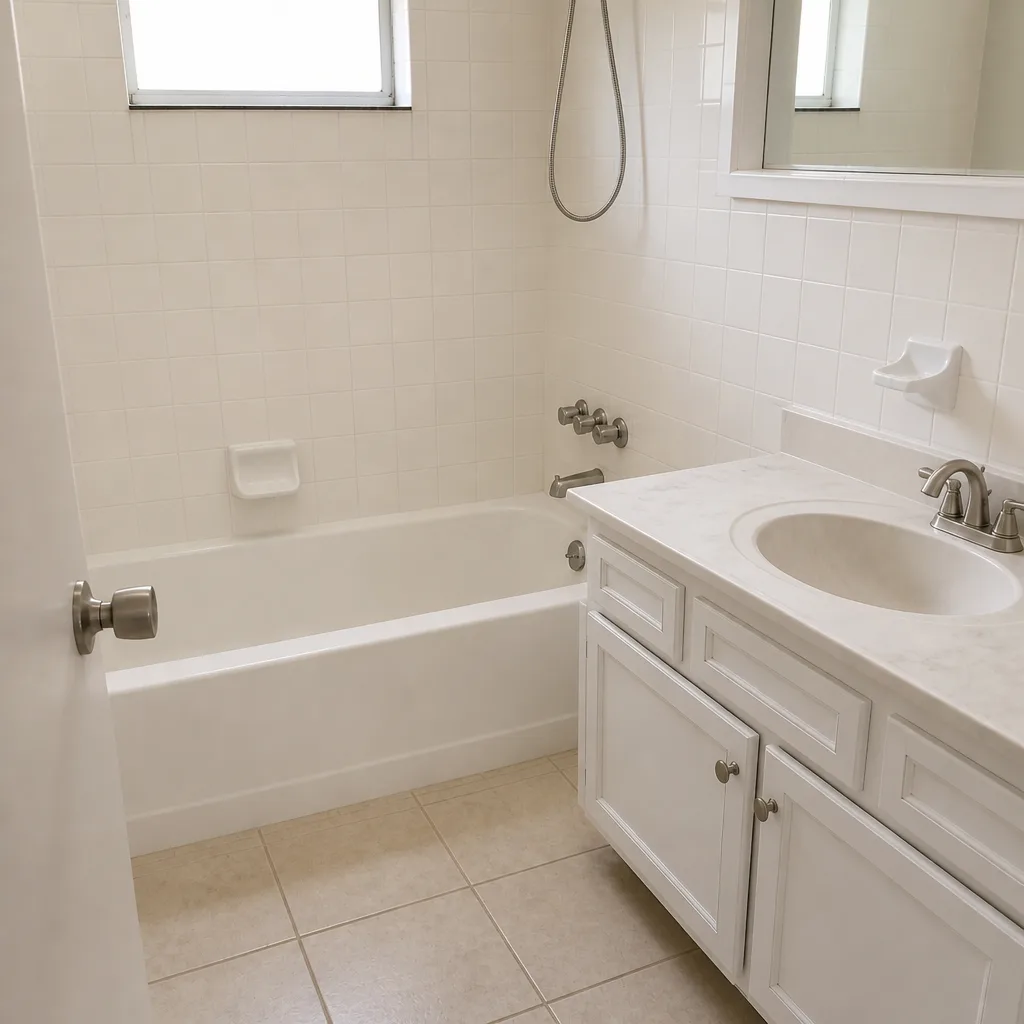 After
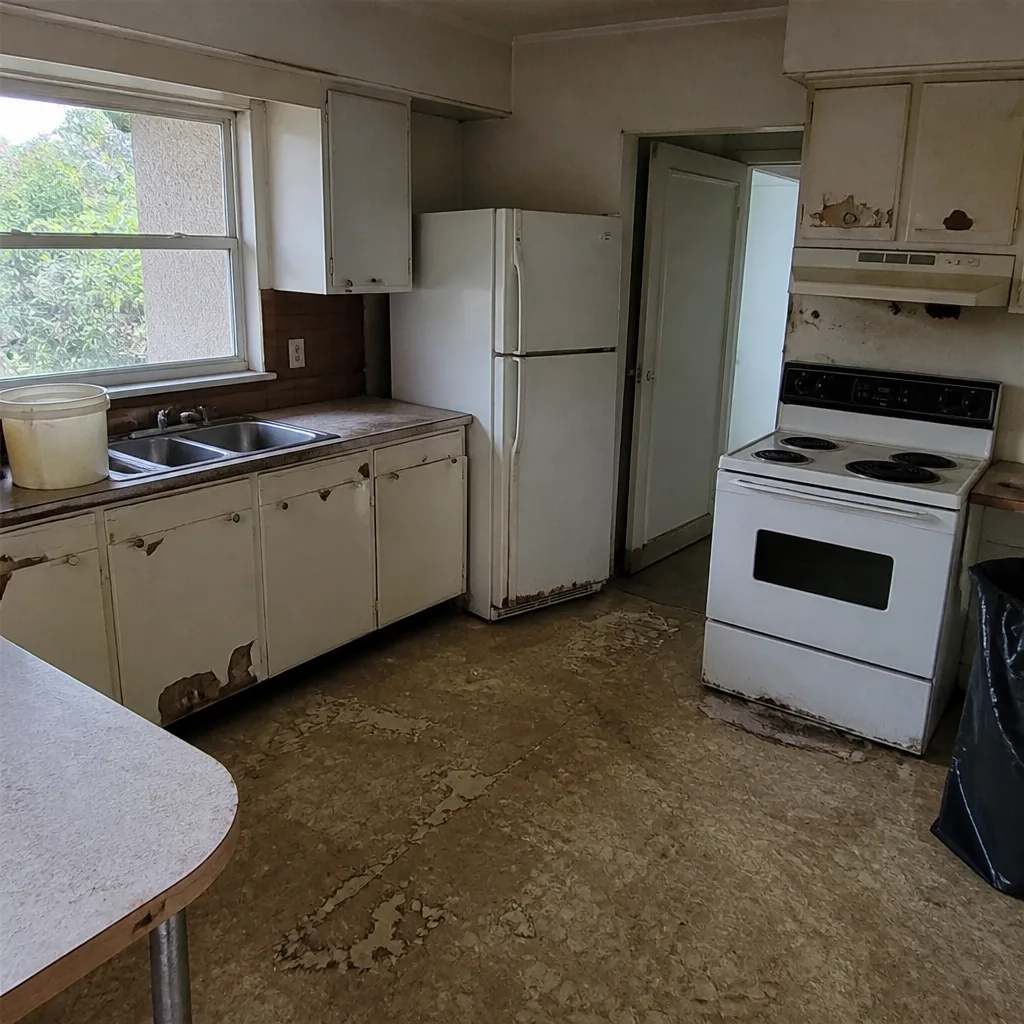 Before
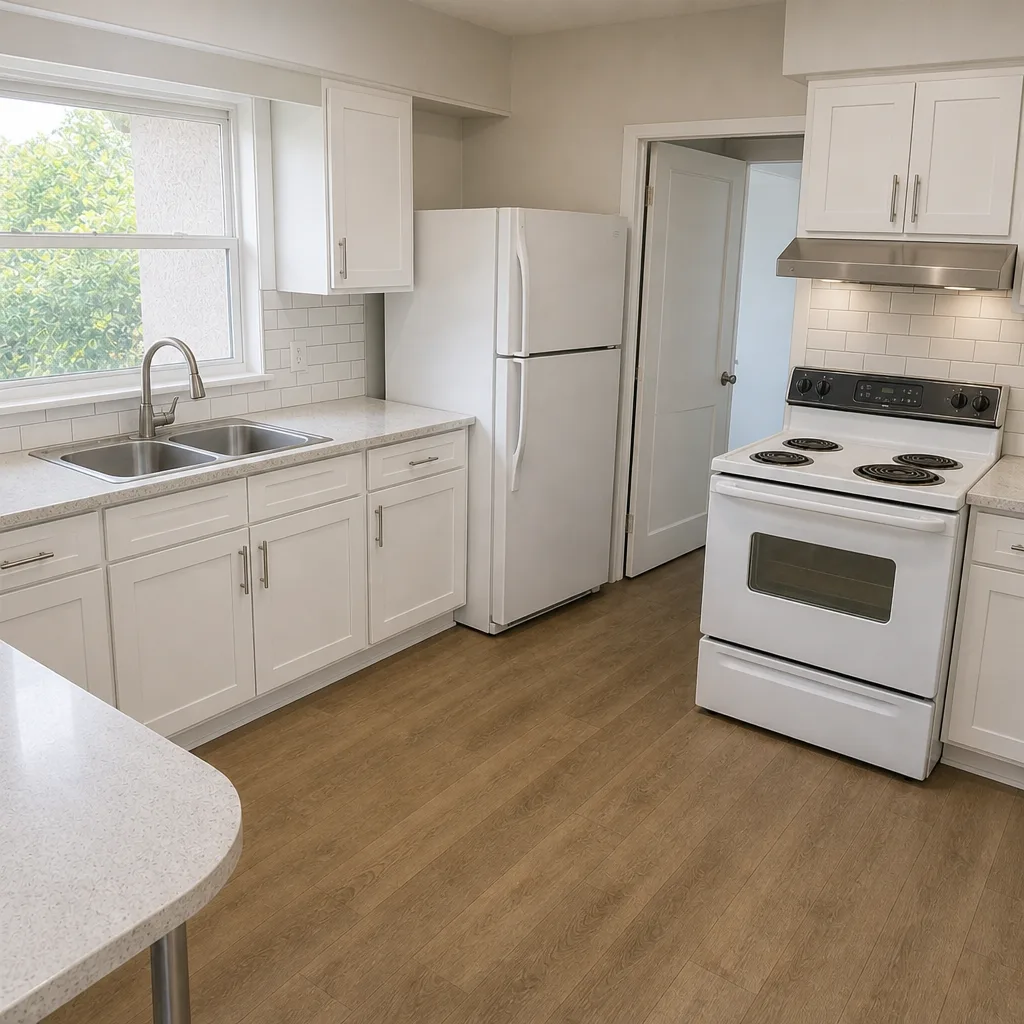 After
When to Call a Professional
Some driveway work is manageable for a weekend project. Paver installation on North Miami Beach subgrade is not, for the same reason you wouldn’t try to re-shingle a roof alone: the base work is what makes the whole thing last, and one bad compaction lift means dismantling the driveway in two years. Call a professional if you’re seeing any of these signs.
Your existing driveway is heaving, cracking, or settling unevenly. Pavers are rocking underfoot or joints are opening. Water sits on the surface or runs toward the house after a storm. You want to change the footprint or curb cut on your driveway. You’re considering travertine or porcelain, which demand a rigid base and careful install to survive our climate. You want a permit pulled and inspection passed so the sale of the house goes smoothly.
Groundwork Construction Co. of North Miami Beach offers free estimates in North Miami Beach. Call (844) 797-4868 to schedule yours. Every estimate is a written, line-item quote with the base spec, material, drainage, permit, and timeline spelled out, and every project carries the 730-Day Done Right Promise. If you’re planning a larger exterior project around the driveway, our Home Additions & ADU in North Miami Beach team can help coordinate the sequencing so the whole property comes together, not one trade at a time.
Frequently Asked Questions
Installed paver driveways in North Miami Beach run roughly $14 to $28 per square foot for concrete pavers and $20 to $40 per square foot for travertine, porcelain, or clay brick, depending on material and site conditions. A typical 500-square-foot two-car driveway lands around $9,000 to $14,000 in concrete pavers. Deeper base work on a wet lot or added drainage pushes the number up. Call (844) 797-4868 for an exact quote on your driveway; estimates are free and written line-item.
Most paver driveway failures in North Miami Beach come from a base that was built for a climate where the water table sits lower. The combination of sandy limestone subgrade, a water table sitting 24 to 36 inches below grade during the wet season, and heavy summer rain pumps a shallow base apart within a couple of seasons. Six to 8 inches of compacted limerock with a geotextile separator is the base spec that survives here. Call (844) 797-4868 to have your existing driveway evaluated before the failure gets worse.
Most new driveway installs and any project that changes the footprint, curb cut, or drainage connection in North Miami Beach needs a Miami-Dade County permit. A straight overlay of the same footprint in the same material is sometimes exempt, but it’s worth confirming before work starts. We pull the permit, handle plan review, and schedule the inspections so the paperwork is clean when you go to sell. Call (844) 797-4868 to talk through permit scope for your project.
Concrete pavers are the most cost-effective material that holds up to UV, salt air, and pressure washing in North Miami Beach. Travertine is the premium pick because it stays cooler underfoot and resists UV fading, and porcelain is close behind on durability with a higher material cost. Clay brick also performs well here. The material matters less than the base spec and drainage design. Call (844) 797-4868 to talk through which material fits your lot and budget.
No. We quote every driveway project as a written, line-item price with the base spec, material, drainage, permit, and demolition spelled out, and that number is the number you pay. Change orders only happen if the homeowner asks for a scope change mid-project. Soft spots discovered in the subgrade at demo are the one exception, and we photograph and price any repair before proceeding. Call (844) 797-4868 for a fixed-price written quote.
A typical 500-square-foot concrete paver driveway takes 3 to 5 working days from demolition to final walkthrough, weather permitting. Travertine and porcelain add a day or two because of handling and curing time. Permit review through Miami-Dade County happens before work starts and can add several weeks depending on the scope. We schedule around the permit calendar so you know the start date before you sign. Call (844) 797-4868 for a timeline on your specific project.
The Bottom Line
A paver driveway in North Miami Beach is a decades-long investment if it’s built for this soil, this climate, and this county’s permitting rules, and it’s a two-year headache if it isn’t. The decisions that matter most happen before the first paver goes down: 6 to 8 inches of compacted limerock, a geotextile separator, engineered drainage, and a permit pulled through Miami-Dade County. The material you choose matters second, whether it’s concrete for value, travertine for comfort and looks, porcelain for durability, or brick for tradition. Get the base right and the driveway pays you back every time you pull in. Get it wrong and the settlement starts showing up the first summer after a hard hurricane season.
If your driveway is settling, if you’re tired of patching concrete cracks every season, or if you want a proper paver driveway designed for North Miami Beach conditions, call (844) 797-4868 for a free estimate. We’ll bring the base spec, the material options, and the written pricing to the first visit, and every project carries the 730-Day Done Right Promise. Live person, 24/7. Upfront pricing, no surprises.
Written by the team at Groundwork Construction Co. of North Miami Beach.