Last updated November 17, 2026




Free written scope consultation - allowances, timeline, and change-order rules on paper before a single trade is scheduled
DIY vs Professional Driveway & Pavers: What’s Safe to Do Yourself
Here’s the part nobody tells you: the pavers themselves are the least important thing you’ll touch. Laying them is honest, low-risk work a careful homeowner can learn in a weekend. What wrecks driveways in North Miami Beach isn’t crooked pavers – it’s the layer you can’t see once the job is done. The excavation, the base depth, the compaction, the drainage fall. Get those wrong and the prettiest paver pattern you’ve ever laid will heave, sink, and shift within two rainy seasons. This guide breaks the whole job down step by step, rates each task for real DIY risk in South Florida soil, and tells you exactly where the line sits.
Quick Answer
Cleaning, sealing, refilling joint sand, and resetting a single sunken paver are safe DIY jobs for a handy homeowner. Excavation, base prep, compaction, grading, and cutting are not – in North Miami Beach’s sandy, high-water-table soil, those steps fail silently and cost two to three times a professional install to fix. If your project involves new pavers, a full driveway replacement, or anything that changes the drainage, hire it out and get permits pulled.
Styles & brands we work with
- Kitchen remodeling
- Bathroom remodeling
- Home additions & ADU
- Roofing
- Windows & doors
- Driveway & pavers
- Fence
Table of Contents
- The Full Process, Task by Task, With an Honest Risk Rating
- Why Compaction Isn’t Optional in Sandy South Florida Soil
- The Four Jobs That Are Genuinely Safe to DIY
- The Permit Reality in North Miami Beach
- How to Vet a Contractor’s Base Prep Before You Sign
- What Actually Goes Wrong When the Base Is Skipped
- Common Mistakes to Avoid
- When to Call a Professional
The Full Process, Task by Task, With an Honest Risk Rating
A paver driveway is built in layers, and each layer has a different failure mode. We’re breaking the job into nine steps, in the order a crew actually does them, and rating each one for how badly a mistake hurts you in North Miami Beach specifically – not in Ohio, not in Arizona. The rating is about structure and drainage, not about how hard the work feels.
- Layout and utility marking – HIGH RISK. You must call 811 to have buried utilities marked before anything is dug, and you must understand where your water, sewer, irrigation, and electrical lines run. Cutting a sewer lateral or a sprinkler main is a five-figure mistake. This step is not a YouTube lesson.
- Excavation – HIGH RISK. North Miami Beach sits on limestone-adjacent ground under a shallow water table, and a shovel-quick “I’ll just grade it by eye” dig almost never reaches the depth you need. Remove too little and your pavers sit proud of the grass; remove too much and you’ll backfill with the wrong material and watch it settle.
- Base stone installation – HIGH RISK. This is the step that determines whether your driveway lasts. It requires the right aggregate, mixed and spread to a compacted depth of six to eight inches for a residential driveway. Sandy soil here drains fast, which sounds great until the base shifts.
- Compaction – HIGH RISK. See the next section. A plate compactor rental runs $70-$120 a day, but a homeowner with a plate compactor on sandy soil is not the same as a crew with a vibratory roller and a moisture-management plan.
- Setting bed and screeding – HIGH RISK. A 1-inch bed of coarse bedding sand, screeded dead flat. If you screed it by eye, you get high and low spots that show up as rocking pavers in month three.
- Grading for drainage – HIGH RISK. Driveways must slope away from the house at roughly 1/8 to 1/4 inch per foot, no exceptions. North Miami Beach gets intense summer downpours, and a driveway graded wrong pushes water against your slab, your garage door, or your neighbor’s lot. That’s a code and insurance problem, not a cosmetic one.
- Paver laying and cutting – MEDIUM RISK. The laying pattern is forgiving. The cutting is where people get hurt or ruin material. A wet saw for concrete pavers is not the same as a tile saw.
- Edge restraint and joint sand – MEDIUM RISK. Edge restraint holds the whole field together. Skipping it and using a “sand edge” is the single most common reason a DIY paver edge spreads.
- Cleaning and sealing – LOW RISK. This is the safe zone, and we’ll come back to it.
Six of the nine steps are high risk in this climate, and every one of those six is invisible when the job is finished. That’s the trap. You can’t inspect your own base prep six months later and see what went wrong – you just see the pavers, and by then the cost to fix it is the whole driveway.
Why Compaction Isn’t Optional in Sandy South Florida Soil
Compaction is the step most often skipped by DIY installers, and in North Miami Beach it’s also the step most likely to fail silently. Here’s why the local soil matters. Much of coastal Miami-Dade sits over sandy, fast-draining soils with a water table that can rise close to the surface during the wet season. Sand doesn’t hold a load the way clay does; it shifts. Add vibration from a car, and the whole assembly moves unless the base was compacted in lifts, with the correct moisture content, and tested as it went.
A proper base is built in two- to three-inch lifts. Each lift gets watered to a specific moisture level and run over with a vibratory plate or roller until it stops settling. Skip a lift, over-water it, or compact once at the end, and the base compacts unevenly – dense under the drive, loose at the edges. That’s exactly the pattern you see in DIY driveways six months later: pavers that look fine until the first big rain, then a low spot in the middle and a lip at the edge.
Compaction equipment rental is not the barrier most homeowners think. A plate compactor is $70-$120 a day at most Miami rental yards. The real barrier is the knowledge of how many lifts, at what moisture, and to what depth – which is why we’ve pulled pavers out of North Miami Beach driveways where the homeowner did buy the right tool and still ended up with a base three inches too shallow. The tool was never the problem.
The Four Jobs That Are Genuinely Safe to DIY
We’ll be direct here because most “DIY vs pro” articles tell you absolutely everything is dangerous, which is not true and it’s not useful. There are four paver jobs where a careful homeowner saves real money with no structural downside. These are the ones we’d do ourselves.
- Paver cleaning. A stiff broom, a low-pressure washer (under 2,000 PSI – higher strips the surface), and an efflorescence remover for white haze. Do it in the dry season, never right before a rain, and never with a high-pressure wand close to the surface.
- Sealing. A quality penetrating or film-forming sealer applied per the label, in early morning or evening, on a dry driveway, protects the surface from UV and staining. North Miami Beach sun is brutal, and a sealer every two to three years measurably lengthens the life of the color. This is the highest-return DIY task on the list.
- Joint sand replenishment. After sealing, sand the joints every year or two with a polymeric joint sand. It’s a broom-and-tamp job. It costs about $25-$40 per hundred square feet in material and it’s the single best defense against weeds and ant mounds between the joints.
- Resetting isolated sunken units. One or two pavers sitting low because the base beneath them settled. You can lift them, add and compact a small amount of base stone, and reset them. Do this once. If the same pavers settle again within a year, it isn’t those pavers – it’s the base under the whole field, and that’s not a DIY conversation anymore.
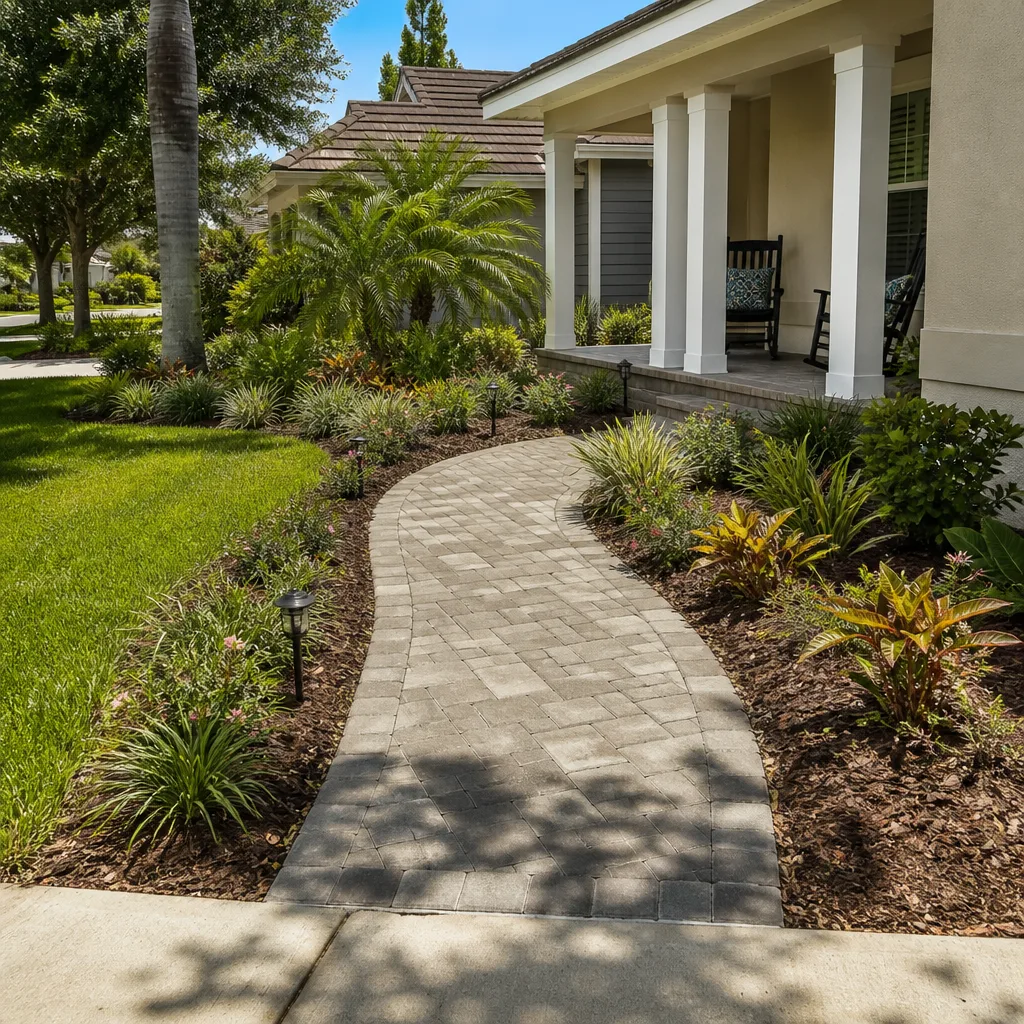
What these four tasks have in common: none of them touch the layer that carries the load. The moment you’re lifting more than a couple of pavers, adding or cutting base stone, or changing the grade, you’ve crossed into the high-risk zone. Our Driveway & Pavers in North Miami Beach team handles that zone every week, and it’s not because we don’t trust homeowners – it’s because that layer rewards equipment and testing a homeowner rarely has.
The Permit Reality in North Miami Beach
New paver installation, replacement of an existing driveway, and any change to the grade that affects drainage typically require a permit from the City of North Miami Beach Building Department. Do the phone call before you dig. The inspector will look at base depth, drainage fall, and in some cases sight lines and right-of-way setbacks, because the driveway connects to the street. If your project moves the apron at the roadway, there’s a separate right-of-way review involved in most South Florida cities.
Here’s why this matters beyond the fine print. Unpermitted structural work can void coverage when there’s a claim. If a badly graded DIY driveway pushes water into your garage during a tropical storm, and the adjuster discovers the work was done without a permit, you can be looking at a denial or a settlement reduced to nothing. If a paver edge fails and someone trips, you’re exposing yourself as the person who did the work. And if you ever sell, unpermitted work shows up in title search and buyer inspection and stalls the deal – which is expensive in a North Miami Beach market where buyers are thorough and have plenty of homes to choose from.
Permits also buy you the inspection that catches what you can’t see. An inspector who checks base depth and compaction before the setting bed goes down is the last line of defense on the layer that matters. That’s a real benefit of the professional route, and it’s why we pull permits on every paver job and pass inspection before we’re done.
How to Vet a Contractor’s Base Prep Before You Sign
The gap between a driveway that lasts 20 years and one that fails in two usually isn’t the pavers. It’s what the crew said about base prep – and whether the person signing the proposal had a real answer. Ask these three questions before you sign anything. If any answer is vague, walk.
- “How deep is the compacted base, and how many lifts are you building it in?” A real answer names a compacted depth (six to eight inches for a residential driveway is the standard range) and names the number of lifts. A bad answer is “whatever it takes” or “we go deep enough.”
- “How are you testing compaction?” A professional crew talks about moisture, a vibratory roller or plate, and how it verifies density – because settling pavers mean the base was never dense enough to carry load. If the crew can’t tell you how they know the base passed, they don’t know.
- “What’s the drainage plan, and does the permit reflect it?” The answer should reference the slope away from the structure, the direction of runoff, and a permit that includes the plan. If the answer is “water runs toward the street,” ask where it actually goes – North Miami Beach lots sit close together and drainage doesn’t always have an obvious outlet.
Three more signals, quick: ask whether they use a proper geotextile separation fabric under the base (it stops the sand subgrade from pumping into the stone), ask for the written quote to name the base depth, and ask what happens to your paver warranty if a future crew cuts into the field for a utility repair. If they name a warranty and back it in writing, that’s the one you want. It’s the same reason we anchor every project with our 730-Day Done Right Promise – a warranty is only worth what the contractor will do to honor it. For the neighboring trade, our Fence Installation in North Miami Beach team gets asked the same base-prep questions because fence posts hit the same soil and the same water table.
You’ll also want to see the material options. Good contractors bring paver samples from brands like Belgard alongside their own stone options – pick a color and a thickness, not just “whatever’s available.” Our Groundwork Construction Co. of North Miami Beach home page lays out how we cover paver work across the trade.
What Actually Goes Wrong When the Base Is Skipped
We’ve been called to North Miami Beach addresses near the Intracoastal and off Biscayne Boulevard where the pavers looked brand new when the homeowner moved in and started rocking eight months later. Here are the failure patterns we see, and why each one traces back to base prep, not the pavers.
- Edge spread. The pavers at the driveway edge creep outward. Edge restraint was skipped, or the base didn’t reach far enough to lock the edge. Cost to fix the edge properly starts around $600-$1,200 for a typical driveway; doing it with a proper base under it costs more.
- Settlement bowls. A low spot appears where a car parks. That’s uneven compaction or a shallow base. Fixing it means lifting the field, rebuilding the base, and relaying – and on sandy soil, it’ll return if the underlying drainage issue isn’t solved.
- Heaving and rocking. Wet-season water gets trapped under the base because the grade didn’t send it anywhere. In North Miami Beach’s wet season, the water table can sit close to the surface and the trapped water lifts pavers. This one is a drainage plan failure.
- Weed and ant invasion. Missing polymeric joint sand lets water and seed in. Cheaper than the others – $25-$40 per hundred square feet – and this one is yours to fix.
- Efflorescence haze. White powdery mineral bloom on the surface, usually from moisture moving through the pavers. A sign the base or drainage is holding water. Cleaning and sealing helps; fixing the underlying base doesn’t come in a bottle.
The structural repairs run $3,000-$9,000 on a typical residential driveway once you’re lifting and rebuilding. That’s not a paver problem. That’s the layer you didn’t see, and it’s why our experience is that the paver layer itself is the least risky part to get wrong in a paver driveway. Nobody gets called back for a crooked paver. We get called back for base prep.
Common Mistakes to Avoid
- Digging without calling 811. Two business days’ notice, no cost, and it’s the law. A severed sewer lateral in a North Miami Beach lot is an emergency repair with a price tag that dwarfs the cost of hiring a paver crew.
- Compacting once at the end. The base needs lifts. One pass at the finish doesn’t reach the bottom layer, and the bottom layer is what carries your car.
- Skipping edge restraint in favor of a sand edge. It looks fine on day one. By the first wet season, the edge spreads and the whole field loosens.
- Grading by eye instead of measuring the fall. 1/8 to 1/4 inch per foot away from the house. A bubble level and a string will tell you the truth. Your gut won’t.
- Using a tile saw to cut concrete pavers. It overheats, it throws a cloud of silica dust, and it’s a respiratory hazard without a proper respirator and water feed. Rent a wet saw or let the crew do it.
- Skipping the permit to save money. A denied insurance claim or a stalled sale costs more than the permit fee every time. The permit is the paper trail that protects you.
- Sealing too soon or too often. Sealer over wet pavers traps moisture; sealing every year is wasted money. Two to three years with a good sealer is the right rhythm in this climate.
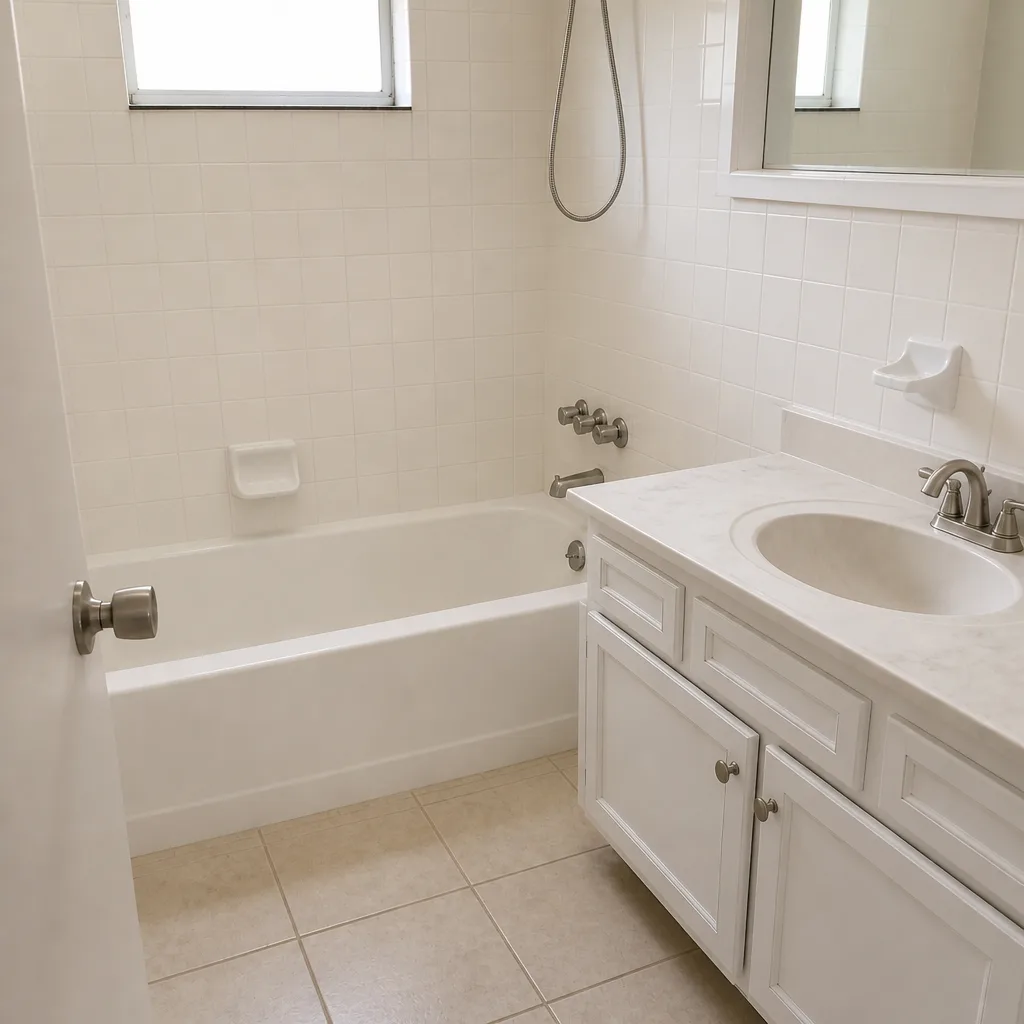
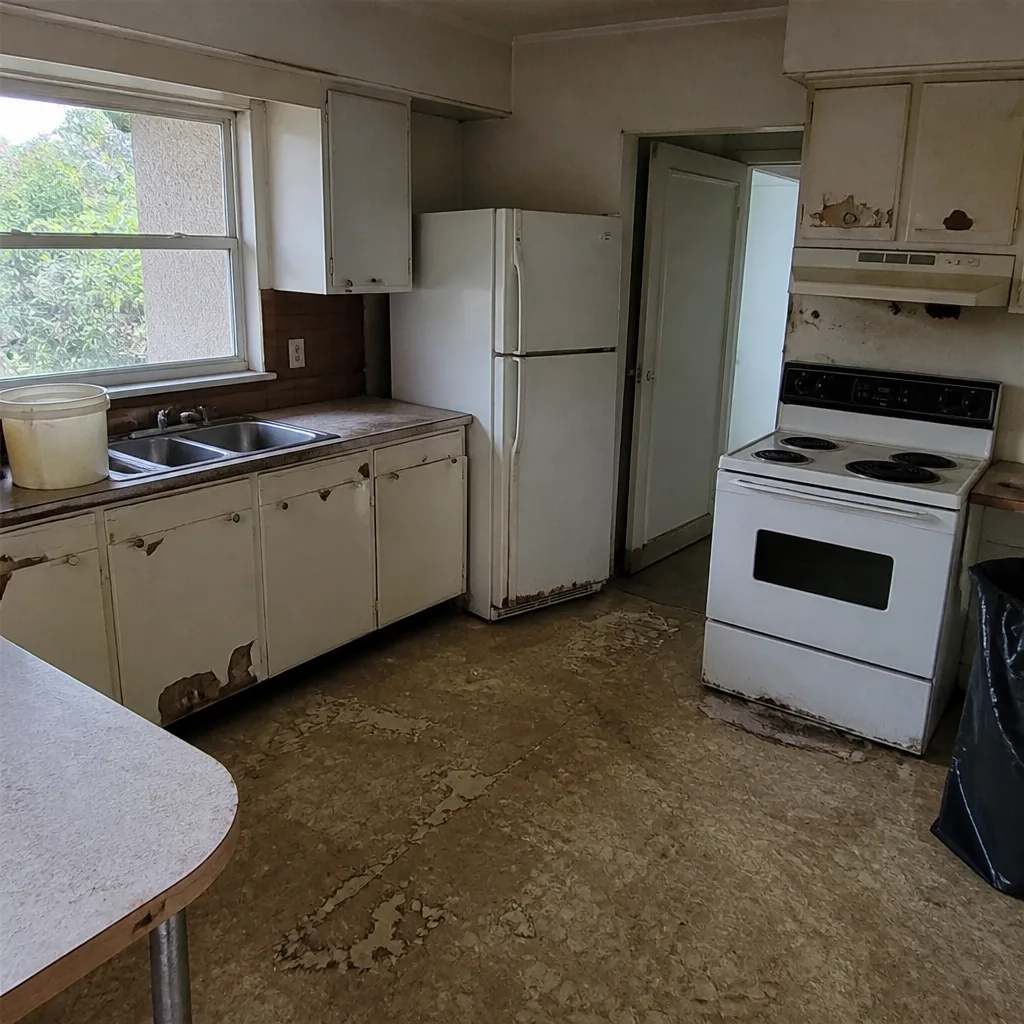
See the difference
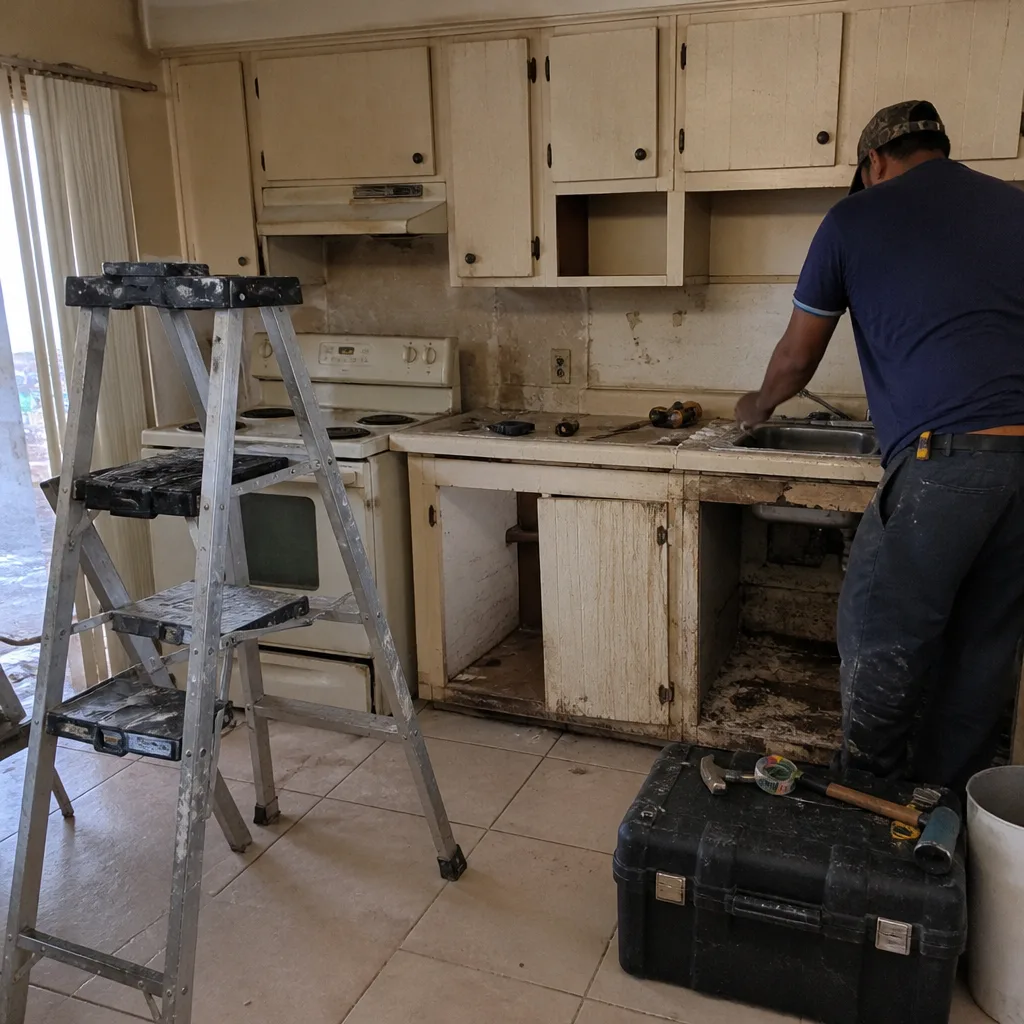 Before
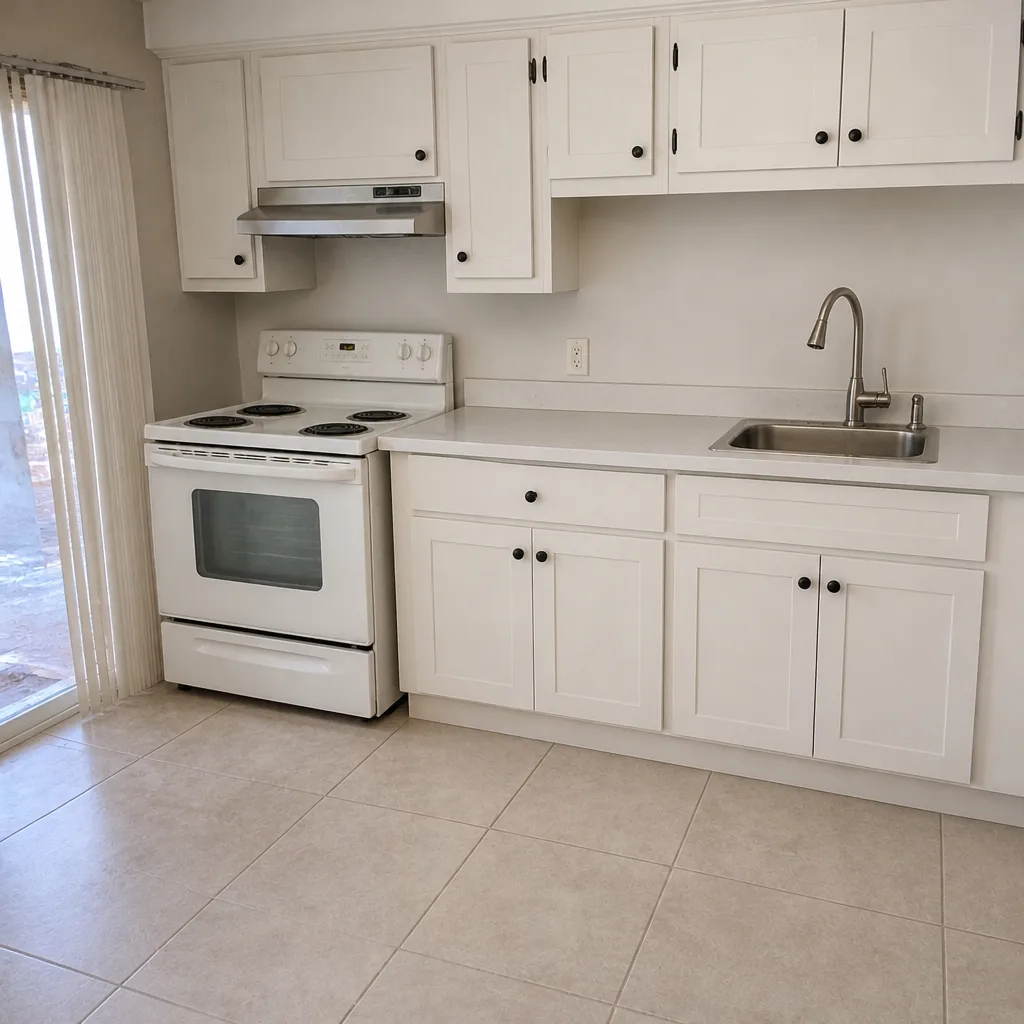 After
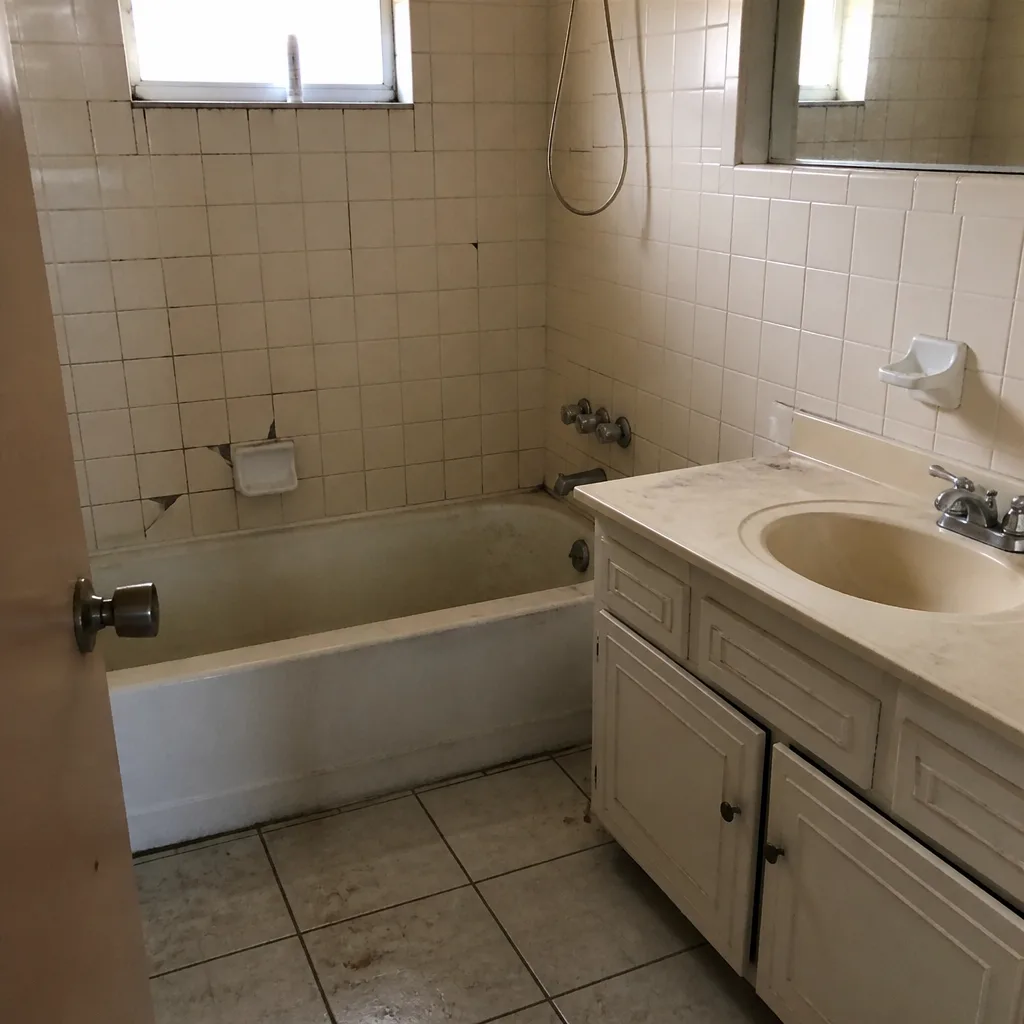 Before
 After
 Before
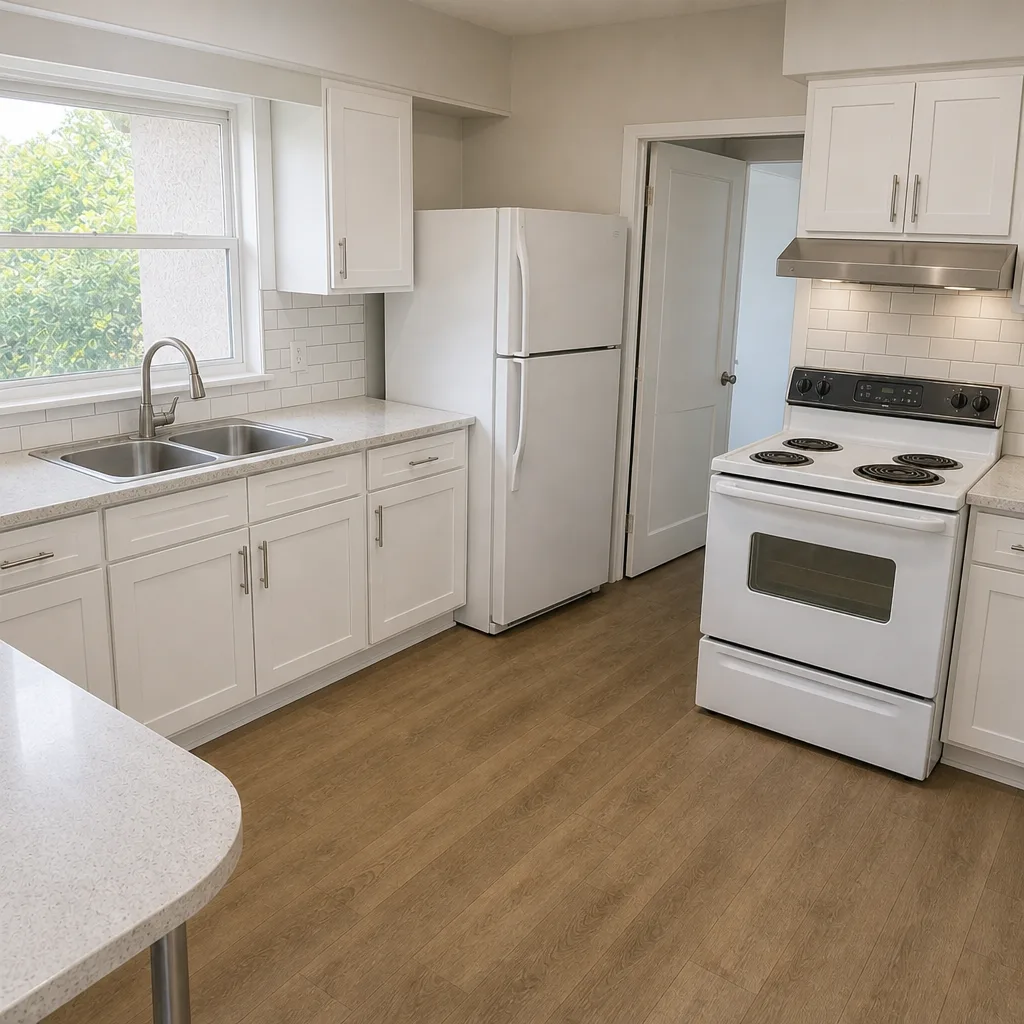 After
When to Call a Professional
Call a professional the moment your project involves new pavers, full replacement, excavation, base stone, grading, drainage changes, or anything you’d need a permit for. Those are the tasks where the local soil and the water table work against a DIY install. Also call us when a small settlement issue becomes a pattern – if the same two or three pavers keep sinking, the base under the whole field is failing and patching it yourself just delays the larger bill.
Groundwork Construction Co. of North Miami Beach offers free estimates in North Miami Beach – call (844) 797-4868. Every project comes with an upfront written quote, permits pulled and inspections passed, and our 730-Day Done Right Promise. If it’s not done right, we make it right. For larger scopes where the driveway connects to a new addition or an ADU, our Home Additions & ADU in North Miami Beach team coordinates the paver work as part of the larger build, from foundation to finish line.
Frequently Asked Questions
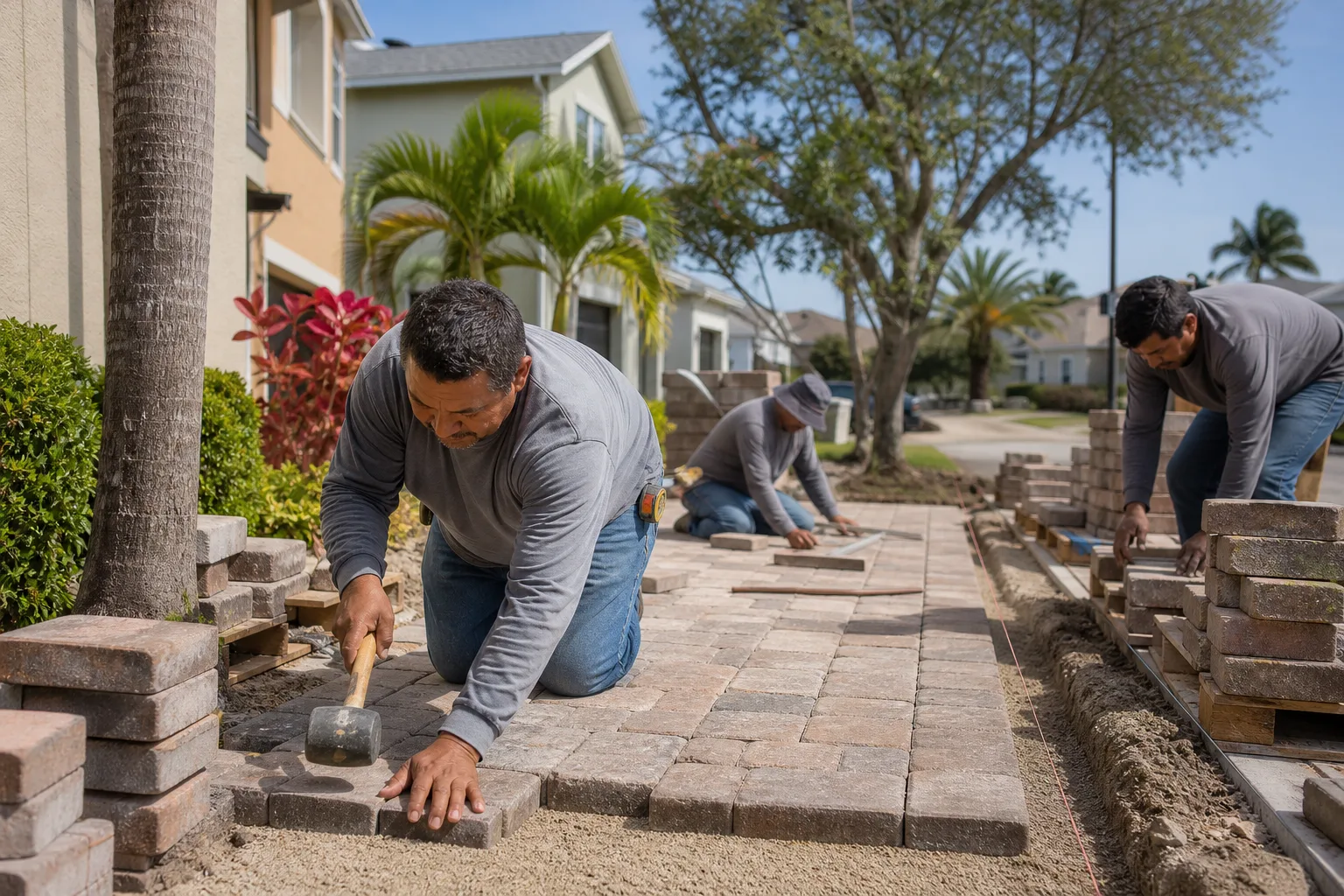
You can lay pavers yourself, but the base prep is where DIY installs fail in North Miami Beach’s sandy, high-water-table soil. Excavation, base depth, compaction, and grading are high-risk steps in this climate – if your project requires them, hire a professional and get the permit. Cleaning, sealing, and joint sand you can absolutely do yourself.
Yes, in most cases. New installation, replacement, and any change to the grade that affects drainage typically require a permit from the City of North Miami Beach Building Department. Unpermitted work can void homeowner’s insurance coverage on a related claim and stall a future sale. Call the Building Department before you dig to confirm what your specific project needs.
Material and rental costs for a DIY paver driveway often land within $2,000-$4,000 of a professional install for a typical residential driveway, before any mistakes. The real difference shows up in repairs: a base that fails costs $3,000-$9,000 to rebuild, so a “savings” of a couple thousand dollars on the front end can become a loss of several thousand more within two wet seasons.
Repeated settlement almost always means the base wasn’t compacted correctly or is too shallow – not that the pavers themselves are bad. In North Miami Beach, sandy soil and the wet season make a shallow base settle fast. Resetting the same pavers repeatedly treats a symptom; the repair is rebuilding the base.
Professional sealing typically runs $1.50-$3.00 per square foot in the North Miami Beach area, including cleaning and joint sand. Doing it yourself costs roughly 30-40% of that in materials, but only if the pavers are already structurally sound. Call (844) 797-4868 for an exact quote – estimates are free.
It shouldn’t. A professional paver quote names the base depth, the lift count, edge restraint, joint sand, and permits in writing before you sign. If the quote leaves any of those vague, expect a change order. At Groundwork Construction Co. of North Miami Beach, the number you see on the estimate is the number you pay, and every project is covered by our 730-Day Done Right Promise.
The Bottom Line
The honest answer on DIY driveway pavers is that the visible work – laying, cleaning, sealing, resetting a paver – isn’t where projects fail. The invisible work is. Excavation, base depth, compaction, and drainage fall are the steps that decide whether your North Miami Beach driveway lasts 20 years or needs rebuilding in two, and in local sandy soil they punish shortcuts faster than most homeowners expect. Do the four safe jobs yourself: clean, seal, replenish joint sand, and reset isolated sunken units. Hire the structural work, get the permit, and ask the three base-prep questions before you sign anything. That’s the line, and it’s the difference between saving money and paying twice. Call (844) 797-4868 to schedule your free estimate.
Written by the team at Groundwork Construction Co. of North Miami Beach.