Last updated November 17, 2026
Free written scope consultation - allowances, timeline, and change-order rules on paper before a single trade is scheduled
DIY vs Professional Windows & Doors: What’s Safe to Do Yourself
Homeowners in Miami-Dade who self-install windows without a permit aren’t just risking a fine. They’re installing a product that cannot be verified as compliant, which means their insurer can deny a storm damage claim after the fact. That’s the part almost nobody explains before the YouTube tutorials start. We’ve walked into North Miami Beach homes where a well-meaning weekend replacement turned into a wind mitigation credit loss and a denied claim after Hurricane season. This guide draws the line honestly: what you can safely do yourself, what the county won’t let you touch, and what a failed inspection actually costs. You’ll learn exactly where DIY stops being a money-saver and starts being a liability on your biggest asset.
Quick Answer
In most states, swapping a window is a reasonable DIY project. In Miami-Dade County, it is not. Replacing a window or exterior door here is a permitted, inspected, code-driven installation under the Florida Building Code and the High Velocity Hurricane Zone (HVHZ) requirements, and a single error in flashing or anchor spacing can fail a wind load inspection and void the wind coverage on your homeowner’s policy. Weatherstripping, hardware replacement, screen repair, and caulk touch-ups are genuinely safe to handle yourself. Full unit replacement, door slab swaps on exterior openings, and any work that changes the opening size are jobs for a licensed, insured contractor who pulls the permit and stands behind the installation.
Styles & brands we work with
- Kitchen remodeling
- Bathroom remodeling
- Home additions & ADU
- Roofing
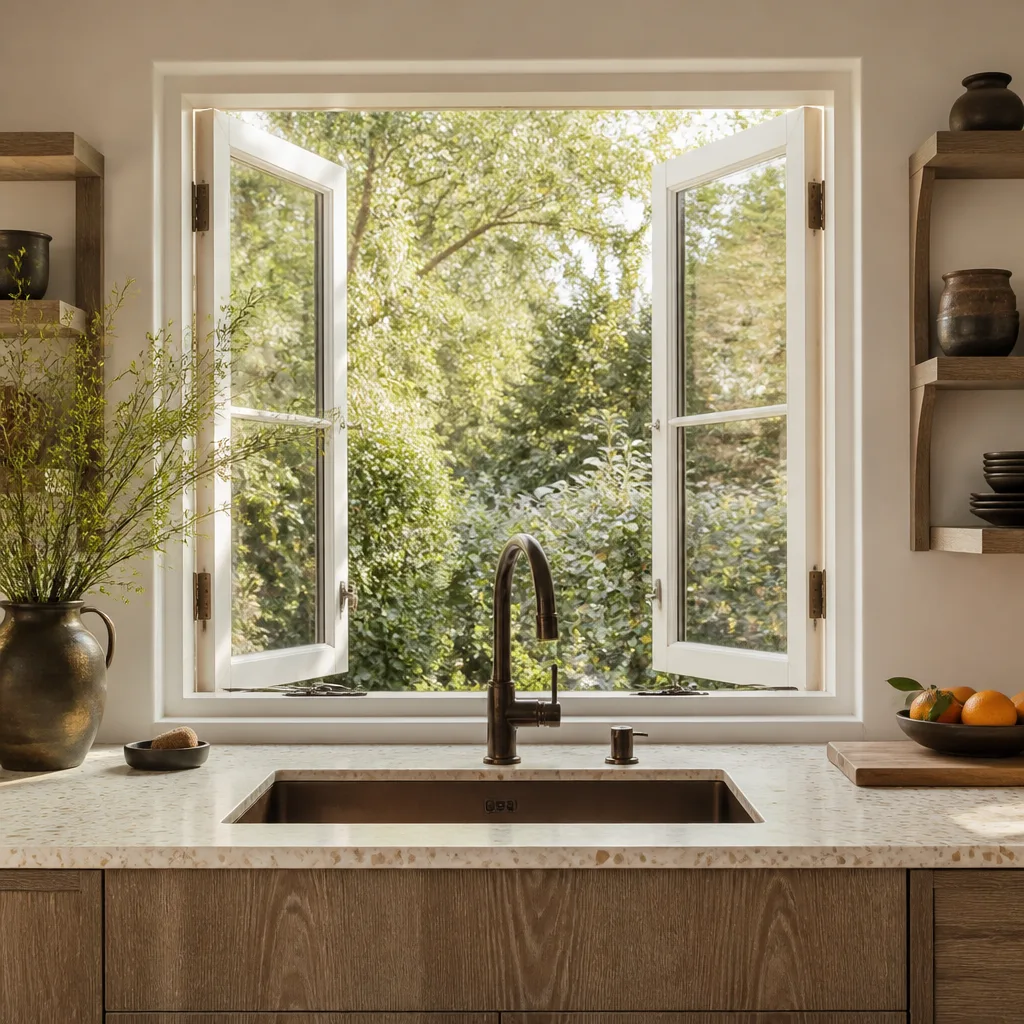
- Windows & doors
- Driveway & pavers
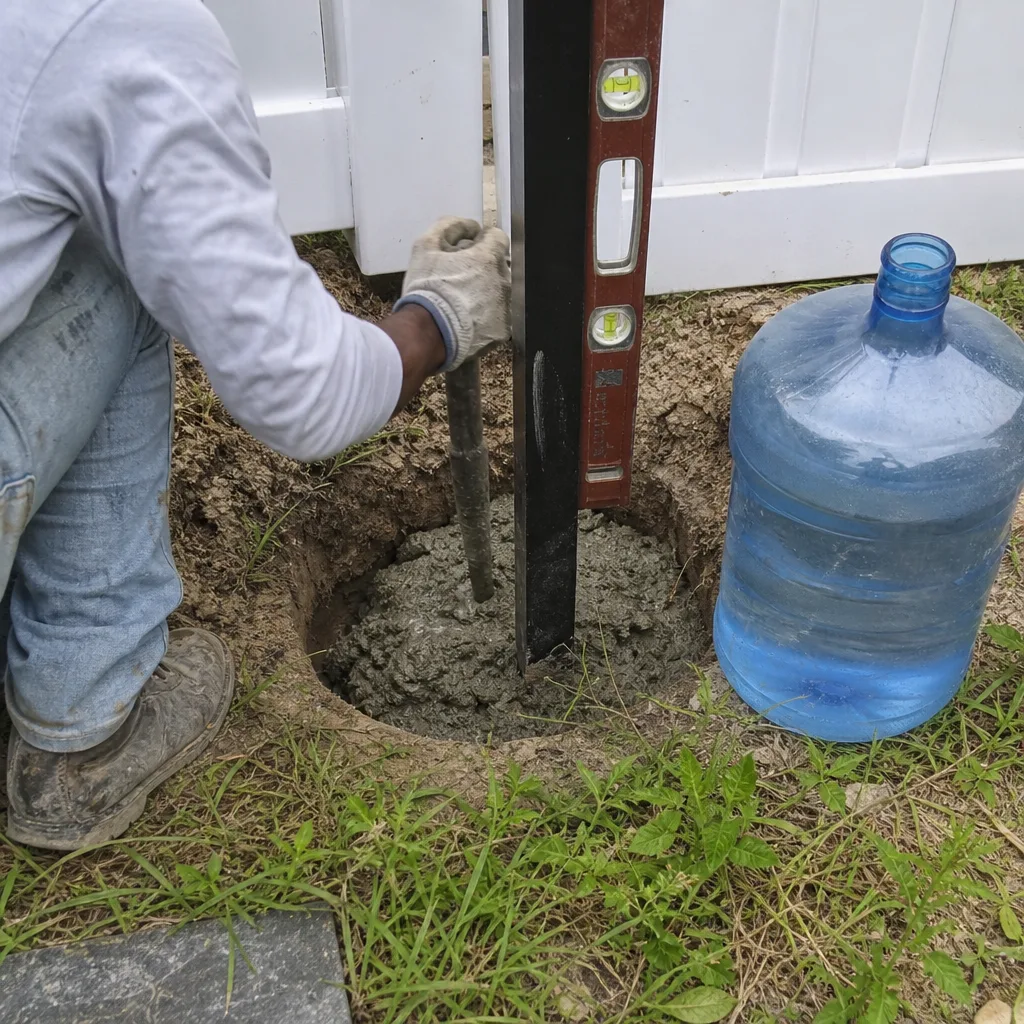
- Fence
Table of Contents
- What Miami-Dade Permit Law Actually Requires
- Anchor Patterns and Buck Framing: Why They Can’t Be Eyeballed
- What’s Genuinely Safe to DIY
- How DIY Installation Affects Your Wind Mitigation Credit
- DIY vs Professional: The Honest Cost Comparison
- Doors Are a Different Animal
- How to Choose the Right Window and Door Contractor in North Miami Beach
What Miami-Dade Permit Law Actually Requires
Miami-Dade County requires a building permit for window and exterior door replacement, and the work must be performed by a licensed contractor or by a homeowner under the owner-builder exemption. That exemption sounds like a loophole until you learn what it involves: the homeowner takes full legal and financial responsibility for code compliance, cannot sell the property for a year without disclosing the unpermitted work, and cannot hire anyone to help who isn’t licensed. In practical terms, the owner-builder path exists for people building or renovating their own primary residence, not for someone looking to skip a contractor to save money.
What the county actually inspects on a window or door permit in South Florida:
- Product approval numbers that match the Florida Product Approval database or Miami-Dade NOA (Notice of Acceptance) for the specific opening
- Anchor type, size, spacing, and embedment depth verified against the approved installation instructions, not against what looks solid
- Flashing details at the sill, jambs, and head, including integration with the WRB (weather-resistive barrier)
- Buck or frame material and condition, since deteriorated framing will fail the inspection even if the window itself is compliant
- Final inspection sign-off, which you’ll need for your certificate of completion and, critically, for the wind mitigation report your insurer will ask for
Fines for unpermitted work in Miami-Dade can run into the thousands and often double the cost of simply doing it right the first time, because you eventually have to remove the unit, expose the framing, get it permitted after the fact, and pass an inspection on work that may already be ruined. In North Miami Beach, we’ve seen homeowners pull units out of an east-facing wall on a Saturday afternoon just to make the ceiling stop leaking into a garage, then learn on Monday that the homeowner’s insurance adjuster won’t touch the claim because there’s no permit on file.
Anchor Patterns and Buck Framing: Why They Can’t Be Eyeballed
Here’s the part where a confident handyman becomes a liability. Impact-rated windows and doors are certified as a system, which means the window, the fasteners, the substrate, and the installation instructions all work together. The product approval specifies an anchor pattern: a specific number of anchors, in specific locations, at specific spacing, driven into a specific substrate at a specific depth. Change one variable and the system no longer matches the approval, which means it no longer passes inspection, which means it isn’t actually certified for hurricane loading no matter how solid it feels.
Why this can’t be eyeballed:
- Substrate matters. Anchoring into concrete block, poured concrete, wood stud, or steel is a different fastener and a different spacing. We’ve opened walls in North Miami Beach homes built in the 1950s and 1960s and found block that had been patched with wood, or wood framing sistered over stucco. That patch work changes the entire installation plan.
- Buck framing condition determines the outcome. A buck is the rough frame surrounding the opening. If it’s rotted, undersized, or out of plumb, the new window’s anchor pattern won’t hold, and no amount of caulk or expanding foam makes up for it.
- Flashing sequence is code, not craftsmanship. Sill first, then jambs, then head, lapped so water runs downhill and out. Getting the order wrong means water intrusion during a hurricane, which is when it matters most. Stucco repair and finish coats happen after the flashing inspection, not before.
- Anchor embedment has a tolerance, not a guess. Too shallow and the anchor pulls. Too deep into a hollow block run and it grabs nothing. There’s a reason installers carry a torque wrench and a depth gauge on impact jobs.
In our experience with impact window installation across North Miami Beach, the inspection failures we see on homes that were previously self-installed almost never come from a bad window. They come from the substrate and anchor decisions made in the first hour of the job. The window itself is usually fine. The installation around it is not.
What’s Genuinely Safe to DIY
Not every window and door problem needs a permit, a contractor, or a crew. Plenty of the things that make a home feel drafty or look tired are straightforward weekend tasks. The test is simple: if the work touches the structural attachment, the water barrier, or the product approval, it’s not DIY. If it only touches the finish, the weatherseal, or a component that ships as a replaceable part, it usually is.
Safe DIY jobs:
- Weatherstripping replacement on doors and operable windows. Pick the right product for the gap and the material: silicone bulb for most exterior doors, foam tape only for indoor gaps. The adhesive-backed foam that comes in every hardware store breaks down under South Florida humidity inside a season.
- Hardware replacement like handles, locks, hinges, and rollers. Bring the original part to the store if you can. Window hardware from Andersen and Pella is often still available, and replacing a stripped casement operator takes twenty minutes.
- Screen repair and rescreening. Replacing the mesh in a screen panel or a sliding door screen is one of the highest-value DIY repairs out there. Use a spline roller and pick fiberglass mesh for durability or pet screen if you have clawed animals.
- Caulk touch-ups around interior trim and non-critical exterior joints. Use a paintable exterior-grade siliconized acrylic, scrape the old bead out first, and let it cure before painting. Do NOT caulk over the weep holes in a window sill or the drainage channels in a sliding door track. Trapping water inside the frame is how you get rot and a mold problem.
- Painting trim and frames, and re-sealing the paint after.
Not safe DIY:
- Replacing an exterior door or window unit, in any size, in any wall
- Changing the rough opening size for a new unit
- Cutting a new opening in any exterior wall
- Re-sealing flashing at the sill, head, or jambs after storm damage
- Any work where you need to move or verify the structural buck framing
Those last five will require a permit regardless of who does them, and there’s no homeowner shortcut that keeps your wind mitigation credit and your insurer happy.
How DIY Installation Affects Your Wind Mitigation Credit
This is the direct, annual financial consequence most guides skip. Homeowners insurance in Florida is heavily discounted by wind mitigation credits, and window and door impact rating is a scored category in the Uniform Mitigation Verification Inspection (UMVI) report. The credit is based on documented, verified compliance, and the report is only valid for a set number of years before it needs to be renewed. If a storm comes through and the unpermitted unit fails, or if the insurer pulls the permit records and finds none, the credit can be revoked, or worse, the claim can be denied entirely.
Here’s how it plays out in practice:
- Closing a permit correctly creates a paper trail that an inspector can verify against the Florida Product Approval database.
- The completed UMVI report becomes the documentation your insurer accepts for the discount.
- Years of annual premium savings follow, often several hundred dollars per year on a typical North Miami Beach property.
- If an unpermitted DIY install fails an inspection after a storm, you may lose both the claim and the credit.
- If you sold the home without disclosing an unpermitted install, you may be buying back the problem at closing time.
The math tends to be simple. A $300 to $600 installation cost premium, amortized over even a few years of wind mitigation credits, is often less than the premium increase for a policy without the credit. Add in a failed claim denial after a real weather event and the equation isn’t close. For a deeper look at how new openings and structural changes fit into a larger home improvement plan, our guide to Home Additions & ADU in North Miami Beach covers how additions interact with window and door scheduling.
DIY vs Professional: The Honest Cost Comparison
We’ve priced both sides. DIY material savings on a standard impact window are real, and we’re not going to pretend otherwise. What most cost comparisons leave out are the line items that don’t show up in the price of a unit. Here’s an honest breakdown, using typical North Miami Beach pricing on a single standard-size impact single-hung window, professionally installed, so you can see the real numbers:
- Impact unit (per window, standard size): $450 to $900, depending on brand tier and glass package
- Professional installation labor: $250 to $450 per opening, including anchor and flashing work
- Permit and inspection fees: $150 to $400 per permit, usually covering multiple windows in a single application
- Stucco patching and paint touch-up: $75 to $175 per opening after install
- Total professional job, one window: roughly $925 to $1,925
- Same window, DIY with permit: roughly $750 to $1,300 (you’re still paying for the permit and the inspection)
- Cost to correct a failed inspection and re-permit after DIY: $500 to $1,500, sometimes higher if the unit has to come out
- Cost to remove and reinstall a unit after a claim denial: often the full replacement cost, plus the claim
- Annual wind mitigation credit at risk: typically several hundred dollars per year
On paper, DIY saves the labor line, which is real money. What it doesn’t save is the permit line (you still need one), the inspection risk, the flashing and anchor responsibility, and the insurance consequence. Add the financing and upfront-pricing advantage most established contractors offer – Groundwork Construction Co. of North Miami Beach, for example, publishes a locked price before the job and pairs that with 0% financing for 18 months and $1,000 off projects over $10,000 – and the gap between DIY and professional closes faster than most homeowners expect. The line you’re really buying with professional installation is the one that matters after the storm: the one that says the job is verified, inspected, and covered by a written guarantee.
| Scenario | Typical Cost in North Miami Beach | What It Covers |
|---|---|---|
| DIY with permit, one window | $750 to $1,300 | Unit, permit, inspection |
| Professional install, one window | $925 to $1,925 | Unit, labor, permit, flashing, stucco patch, guarantee |
| Correct a failed DIY inspection | $500 to $1,500 | Removal, re-frame, re-permit, re-inspect |
| Denied claim after unpermitted install | Full replacement, plus claim | Not applicable |
Doors Are a Different Animal
Windows generate most of the DIY questions. Doors are where the consequences get worse, faster. Exterior doors in the HVHZ carry impact ratings, and a door that isn’t correctly anchored, shimmed, and flashed is a hurricane entry point with a catastrophic failure mode, especially in a wind event where the pressure differential can blow a door out of its frame. A swinging entry door, sliding glass door, or French door is a structural opening, not a trim swap.
Doors that are genuinely safe to DIY:
- Interior door slab swaps on standard hinges, as long as the rough opening fits the new slab
- Handles, locksets, and deadbolts, including replacement of a smart lock on the same bore
- Weatherstripping on an interior or exterior door, and door sweeps
- Interior sliding closet door tracks and rollers
Doors that are not:
- Any exterior unit that carries an impact rating
- Sliding glass doors (structural opening, heavy unit, strict anchor and track requirements)
- French doors and any glazed exterior door pair
- Garage door opening entry doors, which often sit inside a hurricane-rated system
In Miami-Dade, sliding glass door replacement is one of the most tightly inspected items on the residential permit list. We’ve seen cases where the door itself was compliant and the installation failed during the final because the anchors were spaced 36 inches apart on a run that required 12. The homeowner had bought the right door and lost the credit anyway. Windows and doors pair naturally with our Driveway & Pavers in North Miami Beach work when a remodel touches how a home meets the ground, and we treat the exterior envelope as a single system rather than a series of unrelated trades.
How to Choose the Right Window and Door Contractor in North Miami Beach
The contractor you choose is more important than the window brand, because the installation is what makes the brand matter. A premium unit installed wrong is a problem; a mid-grade unit installed right and permitted correctly is a solid investment. Here’s what to check, in order:
- Verify the license and the insurance. Ask for the state license number and proof of general liability and workers’ compensation coverage. A contractor without workers’ comp on an HVHZ job is a homeowner’s liability problem waiting to happen.
- Confirm they pull the permit. If they suggest you pull it as the owner-builder to save money, walk away. That shifts the entire code responsibility to you, and it comes up at sale and at claim time.
- Ask for the product approval numbers before signing. A real window contractor will know the NOA number for every unit going into your home. If they have to look it up later, that’s fine; if they can’t produce it, that’s not fine.
- Get a written, line-item scope. Unit brand and series, glass package, anchor type and spacing reference, flashing method, stucco patch, paint finish, inspection responsibility, and warranty terms. If the phrase “upfront pricing, no surprises” isn’t actually true, the line-item quote will reveal it fast.
- Read the workmanship guarantee. The materials warranty on the window protects the product. You need a separate, ironclad workmanship guarantee on the installation, because that’s where failures actually happen. Groundwork Construction Co. backs window and door installation with our 730-Day Done Right Promise, and if it isn’t done right, we make it right.
- Check brand partnerships. A contractor with established relationships with Andersen, Pella, and James Hardie can get the specific unit and glass package the job calls for, not just whatever’s in stock. For exterior trim and siding work around the openings, James Hardie fiber cement holds up to South Florida sun and humidity the way other materials often don’t.
Our team at North Miami Beach is phone-answered by a live person, 24 hours a day, seven days a week, and every technician who walks into your home is background-checked and arrives in uniform. If those details sound small, they’re the ones that show you how a company treats the site two weeks into the job, not the first day.
Common Mistakes to Avoid
- Skipping the permit to “move fast” before storm season. The permit is the only paper trail your insurer will accept. Without it, an unpermitted install sits on your home as an unverified product no matter how good it looked.
- Caulking over the flashing instead of fixing the flashing. Caulk fails in a season under Miami sun. Flashing lasts decades when it’s done right, and no bead of sealant is a substitute. In North Miami Beach humidity, trapped water behind a caulk line is the start of rot.
- Assuming a compliant window equals a compliant installation. The unit is one part of a system. Anchors, substrate, spacing, and flashing are the rest. Buyers routinely get a good window and a bad install.
- Using the wrong fastener for the substrate. Concrete block, poured concrete, and wood stud walls each take a different anchor. Self-installing with what’s on the truck is how inspections fail on the first punch list.
- Ignoring stucco and finish prep before the window goes in. In South Florida, stucco around the opening is often 50+ years old and cracked. Patching after installation is normal; patching after installation when the stucco was already failing is how water finds the sheathing. In North Miami Beach, we regularly strip and inspect the stucco band around openings before installation for exactly this reason.
- Choosing a contractor on price alone and skipping the workmanship guarantee. A low bid without a written workmanship guarantee means any failure is your problem. Read the guarantee before you sign, not after.
- Underestimating the wind mitigation credit loss. The premium savings from a properly documented impact installation often exceed the installation premium over a few years. Skipping documentation to save a few hundred dollars up front can cost you that credit year after year.
For a broader look at how the full exterior envelope holds up – fencing, drains, and site work around the home – our Fence Installation in North Miami Beach page explains how the same wind-and-water logic applies to every perimeter element on the property.
See the difference
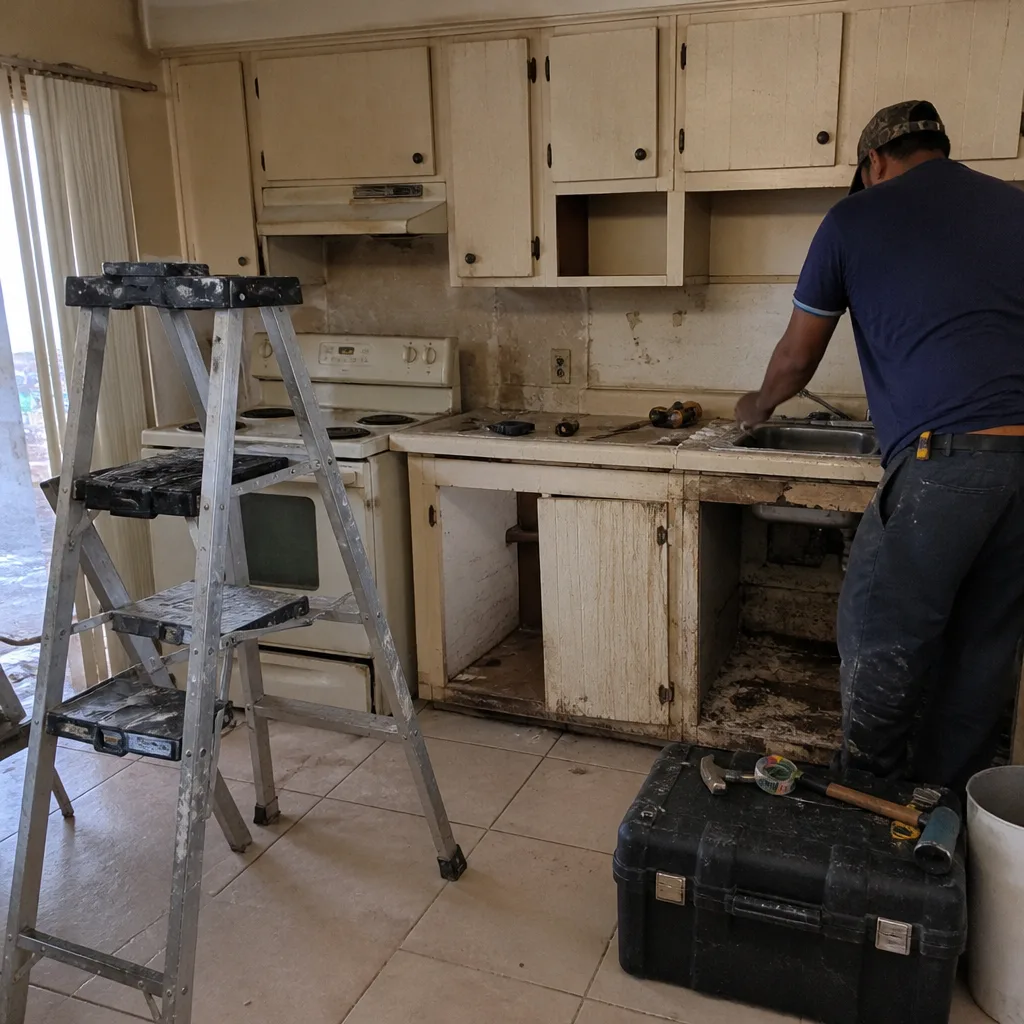 Before
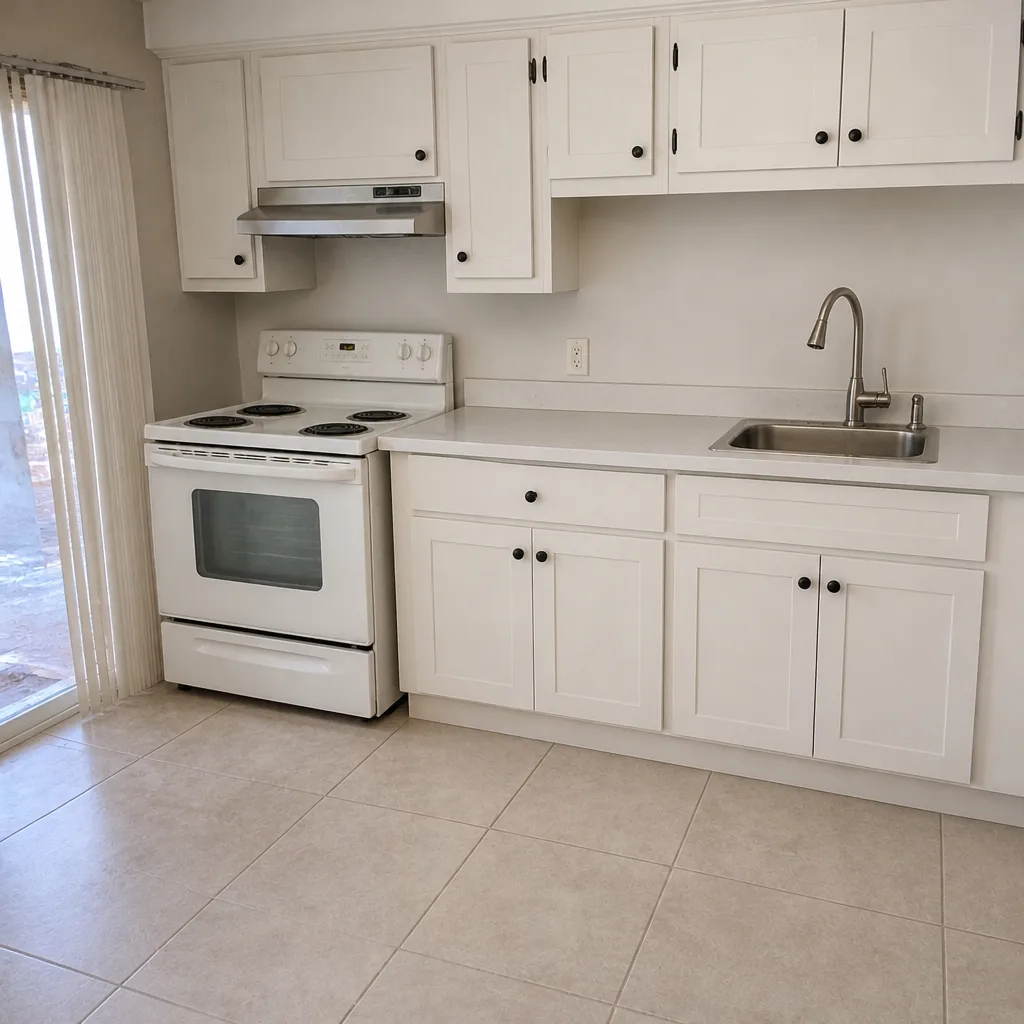 After
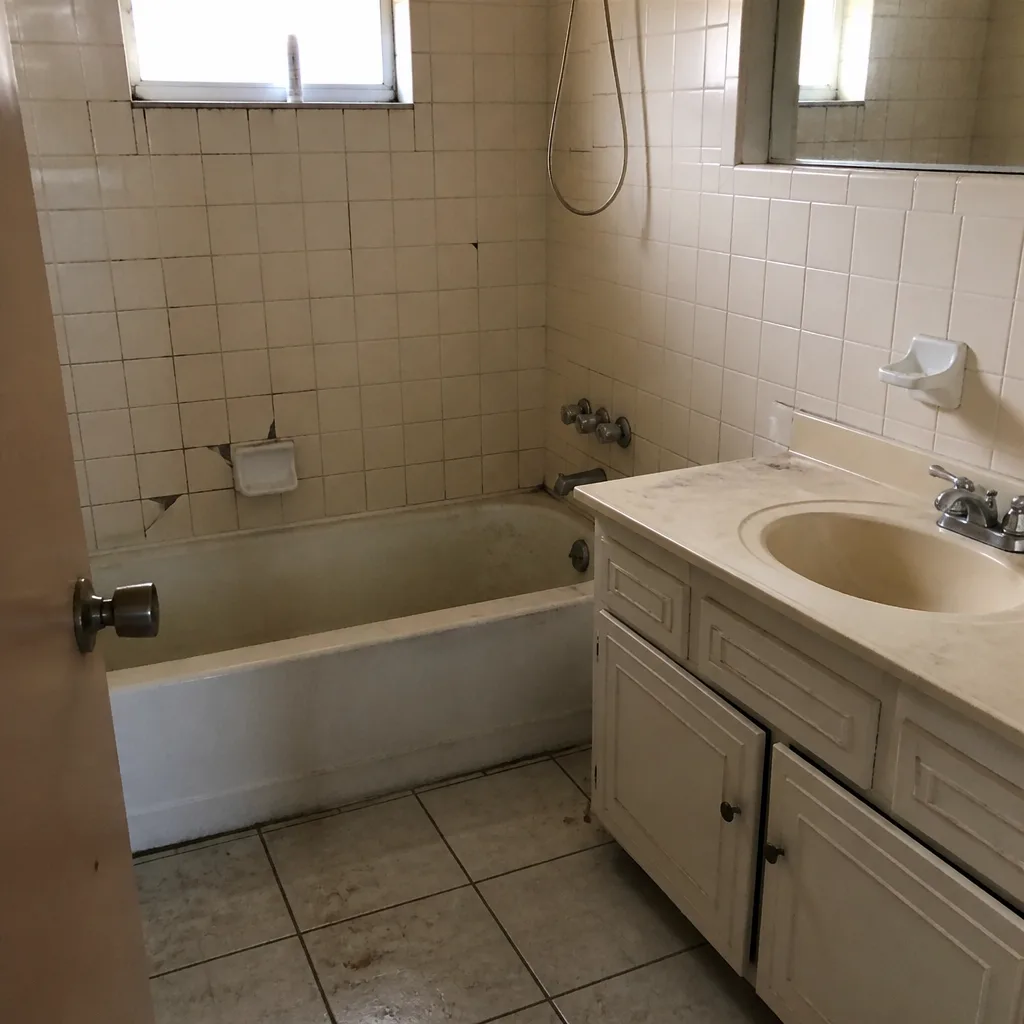 Before
 After
 Before
 After
When to Call a Professional
Call a licensed contractor any time the work touches a permitted opening, the structural attachment, or the water barrier. In practice, that means every full window or door replacement in Miami-Dade County, every opening size change, every sliding glass door, and every exterior door with an impact rating. It also means any work after storm damage, because re-flashing and re-securing an existing opening is a permit and inspection event even if the window itself is intact. If you have rot around an opening, cracked stucco at the corners, or water stains inside around a frame, the problem isn’t cosmetic. Bringing in a contractor who pulls the permit and passes the inspection is how you stop the leak, protect your wind mitigation credit, and get a written guarantee on the work. Groundwork Construction Co. of North Miami Beach offers free estimates in North Miami Beach and across the surrounding communities – call (844) 797-4868 to schedule yours, and get a written, line-item proposal with the brand partners, permit and inspection plan, and the 730-Day Done Right Promise spelled out before you commit.
Frequently Asked Questions

Technically, yes, but only as an owner-builder on your own primary residence, and you take full legal and code responsibility for the installation. There is no insurance coverage on a self-installed unpermitted window, no wind mitigation documentation your insurer will accept, and the disclosure obligation at sale is real. For most North Miami Beach homeowners, the honest answer is no – window replacement is a permitted, inspected job for a licensed contractor. Call (844) 797-4868 for a free estimate – permits and inspections are handled by our team.
Both are evidence that a window or door product has been certified for a specific wind zone, but the Miami-Dade Notice of Acceptance is the stricter standard used inside the High Velocity Hurricane Zone. A unit with a valid NOA is approved for worst-case wind loading in Miami-Dade, and the approved installation instructions embedded in the NOA are what inspectors check against. If a contractor can’t produce the NOA for your installation, you don’t have a compliant product. Call (844) 797-4868 to talk through which certified units fit your openings.
Yes. Wind mitigation credits for impact-rated windows and doors depend on documented, inspected compliance. An unpermitted install can’t be verified, which can cost you the credit and, in a worst case, lead to a denied claim after storm damage. The annual premium difference is usually several hundred dollars per year, which adds up quickly. Call (844) 797-4868 for a free estimate – a permitted, inspected installation is what keeps the credit and the coverage intact.
Weatherstripping, screen repair or rescreening, hardware replacement like handles and lock sets, and caulk touch-ups around trim and non-critical joints are all reasonable DIY projects. Painting trim and re-sealing paint is fine, too. Anything that touches the structural attachment, the flashing, or the rough opening is not, because those are the parts an inspector verifies and an insurer relies on. Call (844) 797-4868 if you’re unsure whether your project needs a permit – we’ll tell you straight.
A single impact window with professional installation typically runs $925 to $1,925, including unit, labor, permit and inspection, and stucco patch and paint finish. A permitted DIY install on the same window is roughly $750 to $1,300, and correcting a failed inspection on DIY work is $500 to $1,500 on top of that. Full-project pricing varies by unit count and brand tier, and we publish the number we stand behind before any work starts. Call (844) 797-4868 for a free estimate with a line-item scope.
Not with us. Groundwork Construction Co. of North Miami Beach quotes projects with no-hassle upfront pricing – the number we give you is the number you pay, and change orders only happen when the scope changes with your written approval. That structure is what removes the surprise line items that show up mid-job when something like an unexpected stucco or bucks issue turns out to be bigger than the original quote assumed. Call (844) 797-4868 to schedule a free estimate and a design consult, and to lock in current promotional offers: $1,000 off projects over $10,000, and 0% financing for 18 months.
For the bigger picture on how windows and doors, roofing, siding, and site work fit into a single-project plan, our Groundwork Construction Co. of North Miami Beach home page lays out the full scope.
The Bottom Line
In Miami-Dade, a window or door replacement is not a normal DIY project. It’s a permitted, inspected, code-driven installation where the product approval, anchor pattern, buck framing, and flashing all have to line up, and where a single error can void your wind mitigation credit and cost you a claim after a storm. Weatherstripping, screens, hardware, and caulk touch-ups are fair game for a competent homeowner; full unit replacement and any change to an opening is a job for a licensed, insured contractor who pulls the permit and stands behind the work. The savings you chase by going DIY usually come back as inspection fees, insurance exposure, and uncovered rework. Do the small repairs. Hire the big install. That’s the line.
Groundwork Construction Co. of North Miami Beach brings more than a decade of local work and a curated slate of brand partners – Andersen and Pella for windows and doors, James Hardie for the exterior trim and siding that surrounds them – to every opening we touch. Our technicians have up to 12 years of experience, every project is covered by the 730-Day Done Right Promise, and every call is answered by a live person, 24 hours a day, seven days a week. If you’re planning window or door work, budgeting for it, or trying to figure out whether a repair is DIY-safe, call (844) 797-4868 for a free estimate. Upfront pricing, no surprises, and a written guarantee on the installation – that’s the standard, and it’s how we’ve kept North Miami Beach homeowners coming back for the next phase of the project.
Written by the team at Groundwork Construction Co. of North Miami Beach.