Last updated November 17, 2026


Free written scope consultation - allowances, timeline, and change-order rules on paper before a single trade is scheduled
Fence Installation Maintenance Schedule: What to Do and When
Here’s what we’ve learned after years of building and rebuilding fences across North Miami Beach: the fences that last 20 years aren’t the ones with the most expensive materials. They’re the ones whose owners walked the property line twice a year and caught the loose bracket before it pulled a rail out of the post. Post-hurricane season – roughly November through December in South Florida – is the single most important inspection window, and most homeowners skip it entirely. They wait for visible leaning or a fallen panel instead of checking footings and hardware connections before the next storm season. This guide is the maintenance list we’d give a neighbor: what to do, when to do it, and what to check at each stage.
Quick Answer
In South Florida, a fence needs a full inspection twice a year – once in late spring before hurricane season (June 1) and once in late fall after it ends. Wood fences need sealing every 2 to 3 years, vinyl needs a wash once or twice a year plus hardware checks at every post, and aluminum needs little beyond tightening bolts and clearing vegetation from the footer. The rest of this schedule is detail.
Styles & brands we work with
- Kitchen remodeling
- Bathroom remodeling
- Home additions & ADU
- Roofing
- Windows & doors
- Driveway & pavers
- Fence
Table of Contents
- The South Florida Fence Maintenance Calendar
- Pre-Hurricane Season Inspection: What to Check in May
- Post-Hurricane Season Inspection: What to Check in November
- Wood Fence Care in Miami-Dade Humidity
- Vinyl and Aluminum: What Actually Needs Doing
- Keeping Roots and Vegetation from Undermining Posts
- Documentation That Protects Your Warranty and Insurance Claim
- Common Mistakes to Avoid
The South Florida Fence Maintenance Calendar
A fence in North Miami Beach lives a harder life than a fence in most of the country. Between the salt air blowing in off the Intracoastal, the six-month rainy season, and the UV load that bleaches a wood panel in one summer, the materials take a beating that a fence in, say, Tennessee never sees. The maintenance calendar below reflects that reality.
Here’s the yearly rhythm we recommend to homeowners in North Miami Beach, Aventura, Sunny Isles, and throughout Miami-Dade:
- January – February: Light visual walk-through after the holidays. Eye every post base for lifting soil or erosion. Tighten anything loose.
- March – April: Deep clean. Pressure-wash vinyl, scrub aluminum, and inspect wood panels for early rot at the bottom edge.
- May: Pre-hurricane inspection (see the full checklist below). This is the most important date on the calendar.
- June – November: Monthly quick-walk during storm season. Look for leaning, sagging, or anything that shifted after rain events.
- November – December: Post-hurricane inspection. Document condition, fix any storm damage, and address hardware before the dry season.
The two big windows – May and November – are the backbone. Everything else is maintenance window dressing. If you do only two things a year, make them the two seasonal inspections. In our experience, that alone doubles the useful life of most fences in North Miami Beach.
Pre-Hurricane Season Inspection: What to Check in May
The May inspection is the one that matters most, and it’s also the one homeowners skip. Hurricane season opens June 1. By late May, you want to know – not guess – whether your fence can survive a 100 mph gust. A fence that’s already 80% secure becomes a missile hazard in a storm.
Walk the full fence line with a screwdriver, a pair of gloves, and a phone for photos. Here’s the checklist:
- Post bases: Push each post side to side. It should not move more than a half-inch at ground level. Any wobble means the concrete footing has cracked, the soil has settled, or a wood post has rotted below grade. In North Miami Beach’s sandy, high-water-table soil, posts can lose purchase in one wet season if the concrete collar was undersized at install.
- Concrete footings: Look for cracks radiating from the post collar, soil erosion around the base, or a visible gap between the concrete and the post. Any of those are flags to dig down and inspect.
- Hardware connections: Every bracket, hinge, latch, and screw. Tug on the gate hardware. Look for rust bloom on screws (a sign of galvanized fasteners failing). Replace any fastener that moves under hand pressure.
- Panel-to-rail attachments: With wood fences, check for popped nails and any rail that’s pulled away from a picket. With vinyl, check the rails are seated fully in the post routs and the panel isn’t lifting out.
- Gates: A gate that drags or that’s sagging is telling you a hinge or post is failing. Fix it before the storm finds it.
- Bracing and posts at corners: Corners and end posts take the most wind load. These should be your sturdiest points, not your weakest.
If you find more than two problem posts, that’s your cue to call in a professional for a structural check. We see this constantly in older North Miami Beach neighborhoods – a 15-year-old fence with three posts sitting in soil that’s settled a full inch. The panels look fine. They aren’t.
Post-Hurricane Season Inspection: What to Check in November
By the time hurricane season closes in late November, your fence has been through a wet season’s worth of rain, wind, and heat. The November inspection is when you find what the summer did to it – before the dry winter months let small problems sit and get bigger.
The list overlaps with May, but the emphasis is different. May is a preemptive check. November is a damage assessment:
- Look for leaning panels. A post that survived June but leans 4 degrees in November will fail by next summer. Measure the lean with a level.
- Check for wind-lifted fasteners. Nails and screws that backed out during wind events are easy to miss. Run a gloved hand along rails and pickets; you’ll feel them.
- Inspect the bottom 12 inches. This is where rot starts on wood and where algae accumulates on vinyl and aluminum. Any wood that’s soft when you press a screwdriver into it is compromised – not just weathered.
- Test gate swing and latch alignment. Wind events knock gates out of square. Easy to correct now, expensive after a winter of dragging.
- Check footings after heavy rain. Sandy South Florida soil can wash out around a post collar after a single tropical event. Backfill and compact anything you find.
- Photograph everything. Wide shots of each fence section, close-ups of any damage. Date them. (More on why in the documentation section.)
If you find damage that’s clearly from a named storm, get it documented before you start repairs. Insurance and warranty claims are won or lost on the photos you took in November, not the ones you took in July.
Wood Fence Care in Miami-Dade Humidity
Wood fences are beautiful and they earn their keep – but in Miami-Dade, wood is the most maintenance-hungry fence material you can choose. The combination of year-round humidity above 70% and the daily rain during wet season is almost designed to accelerate rot. That said, a wood fence that’s cared for properly will outlast the same fence left alone by a decade or more. The difference is all in the sealing schedule and early detection.
Sealing schedule
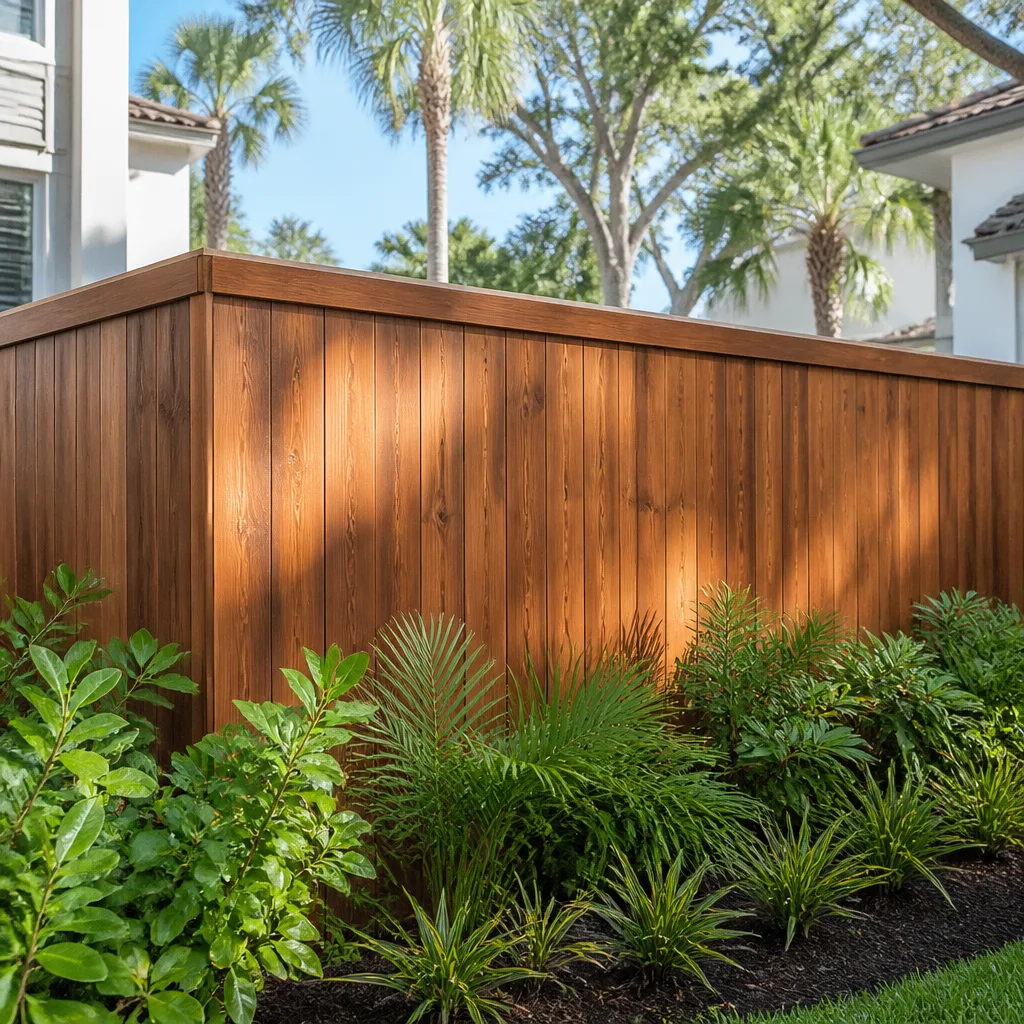
In North Miami Beach, seal a wood fence every 2 to 3 years, not the 4 to 5 years recommended in drier climates. Any project with new raw cedar, pine, or pressure-treated lumber needs an initial seal within 30 to 60 days of installation – once the wood has dried but before it starts to take on moisture. After that, reseal whenever water stops beading on the surface. If it soaks in immediately, it’s overdue.
For materials, we recommend penetrating oil-based sealers over film-forming topcoats in this climate. A film-forming finish cracks in UV and traps moisture underneath, which is the fast track to rot.
Signs of early rot versus surface weathering
This is where most homeowners get fooled. Gray, weathered wood isn’t rotting – it’s just sun-bleached and dry, and it’s cosmetic. Rot feels different: soft, spongy, and it darkens or takes on a checkered look. Here’s the test we use on job sites:
- Push a screwdriver into the wood at the bottom 6 inches of a picket. If it sinks more than 1/4 inch, you have early rot.
- Look for a white or gray powdery fungus at the base. That’s a rot fungus, not surface mildew.
- Tap the wood with a knuckle. A hollow sound at the bottom of a post means the core is going.
When you catch rot early, you can often replace one picket or one lower rail section instead of the whole fence. That’s the whole point of the schedule: extend life without full replacement.
Vinyl and Aluminum: What Actually Needs Doing
Vinyl and aluminum fences are the low-maintenance options – but low isn’t zero, and the manufacturers’ recommended maintenance has less to do with reality in a coastal Florida climate than the marketing suggests. Here’s what actually needs doing, and what you can safely ignore.
What needs to happen
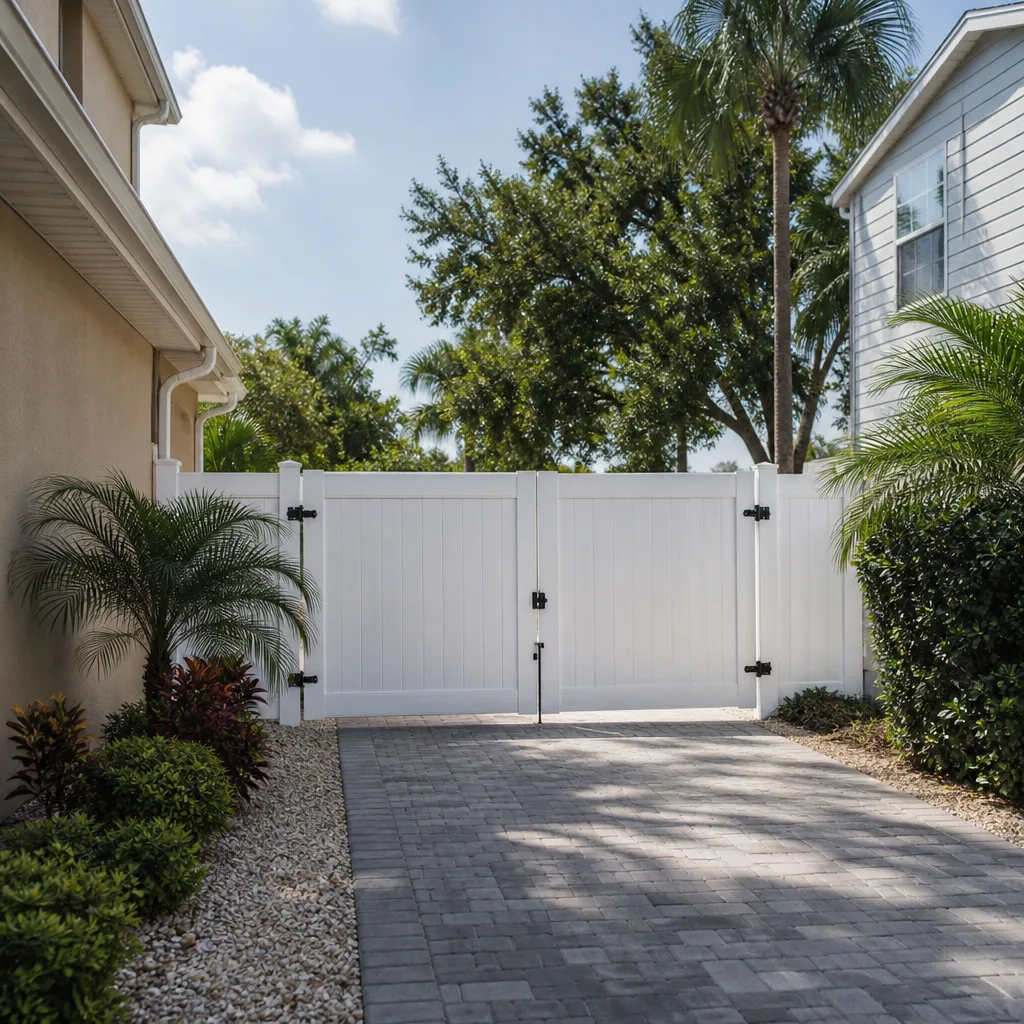
- Wash twice a year. Mild soap, water, a soft brush. In North Miami Beach, salt air deposits a film on vinyl that becomes permanent after two or three years. This is the one task almost everyone skips.
- Inspect hardware every six months. This is the big one, and it’s the one thing most homeowners never do. Bolts back out. Screws holding panel brackets work loose. Gate hinges wear at the pivot. You will not notice any of this from the house – you have to put a hand on every connection.
- Check panel seating. Vinyl panels can lift out of their routed tracks after a storm, particularly on exposed runs. Press each panel down and confirm it’s fully seated.
- Clear vegetation from base. Covered later, but it applies to every material.
What you can skip
Ignore most of what the manufacturer suggests about “annual professional cleaning.” A pressure-wash on vinyl at low setting once a year, plus a garden hose wash the rest of the time, is plenty. Aluminum does not need waxing or painting if the finish is intact – spot-touch any scratches with a color-matched touch-up pen and call it done.
Keeping Roots and Vegetation from Undermining Posts
The single most underrated threat to a fence in North Miami Beach isn’t wind or rain – it’s the plants next to it. Miami-Dade landscaping includes some aggressive root systems, and a post placed four feet from the wrong tree will be heaved out of the ground within a decade.
Here are the plants we see cause the most root pressure around North Miami Beach fences:
- Ficus hedges. The standard privacy hedge across South Florida. Ficus roots are shallow, aggressive, and will run under a fence line and lift a concrete footing. Keep at least 4 feet between a mature ficus and any post.
- Oleander. Fast-growing and root-aggressive. Also toxic, which matters if you have pets.
- Bougainvillea. Beautiful, but the root ball expands and the vines climb and pull on panels. Prune hard each spring; don’t let it grab the top rail.
- Sea grape. Native and gorgeous, but the surface roots push sideways right at fence-post depth.
- Royal poinciana. A stunning shade tree with a wide, aggressive root plate. A post within 10 feet of the trunk is at risk.
The rule of thumb: keep any woody plant at least 3 feet from a post, and any tree with aggressive roots at least its expected canopy radius away. Ivy and vine cover looks great and does real damage – it traps moisture against wood, hides rot, and pulls on the fence in wind.
Ground cover is fine. Low, shallow-rooted plants like liriope or dwarf mondo grass along a fence line won’t hurt a thing. It’s the woody stuff that becomes the problem.
Documentation That Protects Your Warranty and Insurance Claim
Here’s the piece of fence maintenance most homeowners never hear about: taking photos and keeping records. In North Miami Beach, this matters more than almost anywhere in the country because the storm damage question comes up every single year.
The practice is simple. Two folders. One physical, one digital.
- Installation records. Keep the original fence contract, materials list, and (if your install came with one) the workmanship warranty document. Include photos of the finished fence, all four sides, on the day it was done. This is your baseline.
- Bi-annual inspection photos. Every May and every November, take the same set of photos – wide shot of each run, close-up of every gate, close-up of all post bases. Date-stamp them (most phone cameras do this automatically; just make sure location is turned on).
- Maintenance log. Simple written log: date, what was done, materials used. Sealing dates, hardware replacements, anything over $50. This is what demonstrates due diligence if a section fails and a neighbor or a claim tries to blame you.
- Post-storm damage photos before repairs. The single biggest insurance mistake we see is a homeowner who fixes a leaning panel before photographing it. You can’t claim what you can’t show.
If your fence fails and causes damage to a neighbor’s property – or if a section blows into a car – documentation is what determines whether you’re covered and whether your warranty applies. This is also what protects a workmanship guarantee from being voided over a “you didn’t maintain it” dispute. If you want a fence built right in the first place, our team at Fence Installation in North Miami Beach walks every homeowner through the installation documentation we hand over on completion.
Common Mistakes to Avoid
- Skipping the November inspection because the fence “looks fine.” The damage that matters after a hurricane season is below grade and behind fasteners. If you haven’t put hands on it, you haven’t inspected it.
- Sealing wood on a wet schedule. Applying sealer to wood that isn’t fully dry traps moisture under the finish and accelerates rot. In North Miami Beach, wait for at least three dry days before sealing – which means late fall or early spring, not mid-summer.
- Pressure-washing wood like it’s a driveway. A wood fence at 3,000 PSI carves grooves into the grain and opens it up to rot. Low pressure, wide tip, along the grain only.
- Planting a ficus or oleander right up against the fence line. Gorgeous privacy hedge, ten years later: heaving posts and a cracked footing. Keep 4 feet of clearance.
- Rebuilding or replacing a section before photographing storm damage. If a claim or a neighbor dispute is coming, the pre-repair photos are the whole case.
- Ignoring loose hardware in winter because “it’s not storm season.” Wind events happen in February too. A loose bracket in December becomes a missing panel by March in North Miami Beach – we’ve seen it dozens of times.
- Assuming vinyl is maintenance-free. Wash it, check the hardware, seat the panels. That’s the whole list, and skipping it is how a 20-year fence becomes a 12-year fence.
See the difference
 Before
 After
 Before
 After
 Before
 After
When to Call a Professional
Most of this guide is homeowner work: walking the line, tightening hardware, taking photos, sealing wood, planting the right things away from the fence. But there are specific situations where a professional should step in – and knowing them prevents small problems from becoming structural ones.
Call a professional when more than one or two posts fail the push test, when a footing is cracked or the concrete collar has separated from the post, when a gate has completely fallen out of square or a corner post is leaning, or when you find rot more than 4 inches up a post. Any damage from a named storm that you’re considering claiming should also get a professional inspection before you touch it. Our team at Groundwork Construction Co. of North Miami Beach offers free estimates in North Miami Beach – call (844) 797-4868. We’ll walk the fence with you, tell you honestly what’s fine, what needs a targeted repair, and what’s at end of life.
If the fence is done, and you’re thinking about the rest of the exterior – the driveway, the roof, the windows – many of our North Miami Beach customers bundle fence and hardscape work in the same project. The Driveway & Pavers in North Miami Beach page is a good place to start if you’re considering the full exterior renovation.
Frequently Asked Questions
Twice a year at minimum – once in May before hurricane season opens and once in November after it closes. Monthly quick visual walks during storm season catch anything the seasonal inspections missed. That’s the baseline schedule we recommend to every North Miami Beach homeowner, and it accounts for both the storm season and the wet season that runs alongside it.
Every 2 to 3 years, versus the 4 to 5 years recommended in drier climates. South Florida’s year-round humidity and daily wet-season rain strip sealer faster than anywhere else in the country. New wood needs an initial coat 30 to 60 days after installation, then reseal whenever water stops beading on the surface. Call (844) 797-4868 if you need a recommendation for what sealer works best on your specific material.
Yes, but not because the vinyl itself breaks – modern vinyl is extremely wind-resistant. The concern is that panels can lift out of their routed tracks, and hardware holding the rails can back out during wind events. A post-storm walk that presses every panel back into place and tightens every bracket catches virtually all vinyl storm damage.
Ficus, oleander, bougainvillea, sea grape, and royal poinciana are the biggest offenders in North Miami Beach. All five have aggressive root systems that run sideways at fence-post depth and heave concrete footings. The safe rule is 3 feet between any woody plant and a post, and the full canopy radius between any large tree and a post.
Usually not directly – storm damage is typically handled by homeowner’s insurance, not the workmanship warranty. But a workmanship warranty can be voided by lack of maintenance, which is why documentation matters. Keep bi-annual inspection photos and a written maintenance log. Our 730-Day Done Right Promise covers the workmanship we install, and we’ll never point at maintenance records as a reason to deny a legitimate claim.
Often yes, if the damage is caught early. Replacing one picket, one rail section, or one panel is a normal maintenance repair – and it’s exactly why the bi-annual inspection exists. Once you’re seeing rot more than 4 inches up a post or posts failing the push test, that’s usually a signal the section needs replacement, not repair. Our team can give you an honest assessment – call (844) 797-4868 for a free estimate.
The Bottom Line
The fence that lasts 20 years in North Miami Beach isn’t a better fence – it’s a better-maintained one. Two inspections a year (May and November), a wood sealing schedule that respects the humidity, the one hardware check most homeowners skip on vinyl and aluminum, and a habit of keeping vegetation away from posts. Add a simple documentation practice – photos every six months, a written maintenance log – and you’ve protected your investment, your warranty, and your insurance position all at once. If the fence is past the point of maintenance, if multiple posts are failing, or if you’re staring at storm damage and unsure what’s claim-worthy, we’re here. Groundwork Construction Co. of North Miami Beach builds fences that are built to last and backed in writing – that’s the whole point. Every install is covered by our 730-Day Done Right Promise, our technicians are background-checked and arrive in uniform, and pricing is upfront with no surprises. From the first call to the final walkthrough, we handle the fence so you don’t have to.
Ready for a free estimate and design consult? Call (844) 797-4868. A live person answers around the clock, so you won’t hit voicemail when a storm is coming and you need an answer today. Learn more at the Groundwork Construction Co. of North Miami Beach home page, or call now to schedule your free estimate.
Written by the team at Groundwork Construction Co. of North Miami Beach.