

Last updated November 17, 2026







Free written scope consultation - allowances, timeline, and change-order rules on paper before a single trade is scheduled
Windows & Doors Maintenance Schedule: What to Do and When
Impact window seals in coastal South Florida can break down far faster than the manufacturer’s rating suggests when salt film, wind-driven grit, and year-round humidity are allowed to sit in the frame channels. Most installers hand over a homeowner’s manual and never mention it again. Then a warranty claim gets denied because the channels were never cleaned, or a sliding door starts weeping water at the sill three years after installation. In this guide we lay out the exact maintenance calendar we’d follow in North Miami Beach – what to do quarterly, twice a year, once a year, and after every named storm – so a significant investment keeps performing for its full rated life instead of limping to year ten.
Quick Answer
Clean frame channels and weep holes every quarter, lubricate impact-door hardware twice a year with a silicone-based (never petroleum) product, and do one full inspection of seals, gaskets, and corners every fall. After any tropical storm or hurricane, run a post-storm check before assuming the windows are fine. Log every task with dates and photos so a warranty claim or a future sale has documentation behind it.
Styles & brands we work with
- Kitchen remodeling
- Bathroom remodeling
- Home additions & ADU
- Roofing
- Windows & doors
- Driveway & pavers
- Fence
Table of Contents
- Why impact openings need a schedule that no installer gives you
- The quarterly tasks (every three months)
- The twice-a-year tasks (spring and fall)
- The once-a-year deep inspection
- Hardware lubrication: the right product for impact-rated doors
- Three spots that cause most water intrusion – and how to inspect them
- Post-storm inspection protocol for North Miami Beach
- How to log maintenance for warranty claims and resale value
Why impact openings need a schedule that no installer gives you
Impact-rated windows and doors are tested to withstand flying debris, but the test doesn’t account for what happens after a decade of salt air settling into every seam of the aluminum frame. In our North Miami Beach work, we see seals and gaskets dry out and lose flexibility well before their rated lifespan when the homeowner was never given a maintenance calendar. That’s not the product failing – it’s the neglect.
The North Miami Beach climate stacks the deck against impact openings in ways that most manufacturer literature barely touches. You have salt aerosol blowing in off the Atlantic and Biscayne Bay, year-round humidity in the 70s and 80s, occasional cold snaps that stress gaskets more than people realize, and a UV load that breaks down rubber and silicone faster than almost anywhere else in the country. A home in Eastern Shores or around Maule Lake sees a very different stress profile than one inland near the Oleta River, but both still need the same basic calendar.
The other thing competitors miss: the most common failure isn’t the glass. It’s the corners. Water enters the frame through the weep holes and drainage channels, then sits because the channels are clogged. Once it sits, it works its way into the corner joints, corrodes fasteners, and starts showing up as staining on the interior drywall. By the time a homeowner notices, the damage is already several months old.
The good news is that a proper maintenance schedule is cheap and quick. Fifteen minutes a quarter, an hour in spring, an hour in fall. The alternative is a multi-thousand-dollar repair that almost never falls under warranty because nobody kept a record. If your windows or doors are nearing the end of their service life, the full Groundwork Construction Co. of North Miami Beach home page is a good starting point for planning a replacement, but for now let’s get the calendar straight.
The quarterly tasks (every three months)
Quarterly maintenance is the foundation of the whole schedule. It’s the layer that catches 80% of problems before they turn expensive, and each pass should take about 15 minutes for a typical North Miami Beach home with six to ten impact openings.
- Rinse the frame channels. Use a garden hose with a gentle nozzle (never a pressure washer – it will drive water past the weatherstripping and force salt deeper into the joints). Run water down the vertical channels of every window and door, paying particular attention to the bottom track where salt and grit collect fastest.
- Flush every weep hole. A weep hole is the small slot at the bottom of the frame that lets water drain out. They clog with sand, salt crust, dead insects, and landscaping debris. Use a soft brush or a pipe cleaner, never a screwdriver or drill bit – gouging the weep hole is a fast way to void the drainage design.
- Wipe down the sill. A microfiber cloth with a mix of a few drops of mild dish soap in a quart of water is enough. Skip the bleach, skip the ammonia-based glass cleaner on frames (it’s fine on glass but stresses the gaskets).
- Run every sash and door through its full range of motion. Open, close, and latch each one. Anything that catches, drags, or requires extra force is telling you something is out of alignment before it becomes a mechanical failure.
- Check gaskets on sight. A quick visual pass along every corner and perimeter for cracks, brittle patches, or gaps. You don’t need to remove anything at this stage – just note what looks off.
If you live within a few blocks of the water – Eastern Shores, the corridors near Haulover Park, or along the Intracoastal side of North Miami Beach – run this quarterly pass more like every ten weeks than every thirteen. Salt exposure comes in waves with the wind, and the closer you are to the beach, the more frequently the salt film rebuilds.
The twice-a-year tasks (spring and fall)
The twice-a-year pass adds lubrication, gasket conditioning, and a real hardware inspection to the quarterly cleanup. Do one in March or April before the summer storm pattern ramps up, and one in October or November after hurricane season ends. Those two timestamps alone put you ahead of almost every other homeowner in North Miami Beach.
- Lubricate all moving hardware. Every hinge, roller, latch, and slide track. Use silicone-based lubricant for the tracks and hinges. Petroleum-based products like WD-40 or general-purpose grease attack the elastomeric seals they’re supposed to protect. See the hardware section below for the sequence.
- Condition the weatherstripping and gaskets. A silicone-based gasket conditioner (auto parts stores sell plenty for this exact reason) keeps rubber flexible and slows UV breakdown. Apply sparingly, work it into the gasket with a clean cloth, wipe off the excess.
- Check the caulking line around every frame. On the interior and exterior. The caulking where aluminum meets stucco is a north-south seam that takes the full force of hurricane-season rain. Any crack, peeling, or gap is a direct route for water. Trim and re-caulk with an exterior-grade paintable elastomeric caulk, not a cheap builder-grade tube.
- Test the locking mechanisms under load. Latch the door or window, then try to pry the sash a quarter-inch outward with very mild hand pressure. If it moves easily, the lock hardware is losing engagement. That matters both for security and for the wind-pressure rating – an impact door that doesn’t fully engage the lock during a storm isn’t performing as tested.
- Inspect sliding door tracks and rollers. Almost every home in North Miami Beach has at least one impact sliding glass door, and the bottom track is where sand, grit, and insect debris collect. Blow it out with compressed air or brush it out, then vacuum, then lubricate.
- Check the interior sealant at the sill. Where the frame meets the interior floor or sill, the sealant should be intact. Look for stains, discoloration, or bubbling drywall below – any of those is a sign water is already getting past.
If you’re adding a porch, lanai, or new sliding door as part of a larger project – a home addition or ADU, for example – the maintenance calendar should be set up before the contractor leaves the driveway. Once you’re considering structural work, the Home Additions & ADU in North Miami Beach page walks through how those additions integrate with existing openings and drainage. Brand partners like Pella and Andersen both publish maintenance guides that line up well with the schedule we’re laying out (we specify both, alongside Marvin, on installs) – use theirs as a supplement, but the timing below is the local one.
The once-a-year deep inspection
Every fall – ideally in November, right after storm season closes – block out an hour for the deep inspection. This is the pass that catches what quarterly and twice-a-year maintenance can’t: early seal degradation, hairline cracks in the frame, misalignment from house settling, and hardware wear that isn’t showing up as obvious drag yet.
- Inspect every seal and gasket at eye level. Look for cracks, discoloration, and any spot where the material has lost its rubbery flexibility and turned brittle. A brittle gasket means it’s no longer sealing – it will let wind-driven rain past under pressure even if the window closes cleanly.
- Check the corners of every frame. This is where corrosion starts on aluminum impact frames. Any white powder, dark staining, or rough texture at the corner joints is a flag. If it’s under warranty, document it now; if it’s not, it’s a call-a-pro situation.
- Test operation under load. Not just open-and-close, but a full range of motion with a light pressure on the sash. Look for wobble, uneven tracking, or a window that closes but doesn’t glide smoothly. These are the early signs of failing rollers or worn hinges.
- Examine the exterior caulk at all perimeters, corners, and sill transitions. With a flashlight, at each corner and along the sill where the frame meets masonry or stucco. Cracks that run through the caulking need to be addressed before the next wet season.
- Look inside for signs water already got in. Interior drywall staining around the window or door perimeter, peeling paint near the sill, bubbling texture, or a musty smell when you open a window are all signs water has been entering through the drainage channels.
- Check every screen and screen frame. Impact-rated windows often have a screen or a bug barrier that takes its own damage. Replace torn screen before the rainy season opens it up as a wind-driven rain path.
- Inspect the drainage channels with a flashlight and a mirror. The bottom of the frame where weep holes sit isn’t always easy to see. A small mirror and flashlight will expose a clog you’d otherwise miss.
- Photograph everything, note the dates. This becomes your maintenance record – more on that below.
If your windows are original to a home built in the 1990s (which covers a large share of North Miami Beach construction), the annual inspection is the checkpoint where you start deciding whether repair or replacement is the better answer. We’ll come back to that below.
Hardware lubrication: the right product for impact-rated doors
Every impact-rated door – sliding glass, hinged entry, French door – has a hardware system with hinges, rollers, latches, and tracks. Lubricating them is where we see the most damage done by well-meaning homeowners, because the wrong product attacks the very seals it’s meant to protect. Silicone-based lubricant on every moving surface; nothing else.
Here’s the sequence we walk through during the twice-a-year pass:
- Clean first, then lubricate. Use the quarterly cleaning routine on the tracks and hardware, then dry it completely with a clean cloth. Lubricant over grit grinds. Lubricant over clean metal glides.
- Sliding door tracks and rollers. Silicone spray along the bottom and top track, then roll the door back and forth three or four times to distribute. Wipe excess off with a clean rag. Never over-do it – drips collect dust.
- Hinges on hinged doors. A few drops of silicone lubricant on the hinge pin at the top, middle, and bottom of the door swing. Open and close the door slowly five times. Listen for squeaks – if sound persists, work the door a few more cycles before adding more lubricant.
- Lock and latch mechanisms. A drop of silicone lubricant into the keyway (yes, on the exterior cylinder) and into the internal latch pocket. Cycle the lock a few times. On multi-point locking systems – common on premium impact doors – check each point if the door has one.
- Check the seals after lubrication. Once you’ve finished, run a fingertip along every gasket in the path of the door. If a gasket feels slippery or tacky, you used too much. Wipe it clean and try again with less.
Product recommendations matter. Silicone-based spray (the type meant for automotive door seals and window tracks) is the right product. Avoid WD-40’s original formula – it’s a solvent, not a lubricant, and it strips protective films. Avoid white lithium grease on tracts (it attracts grit), and avoid anything labeled “penetrating oil.”
On our installs, we specify door hardware from a short list of brand partners that hold up well to the salt and humidity, and we size the rollers and hinges to the actual weight of the door system being installed. It matters – a full-glass impact slider is heavy, and thin factory rollers wear out in half the time. If you’re replacing doors, the Fence Installation in North Miami Beach page is a good example of how we approach exterior envelope work more broadly, and a reminder that every opening – windows, doors, gates – is part of one continuous shell.
Three spots that cause most water intrusion – and how to inspect them
Water intrusion on impact windows and doors almost always traces back to one of three points on the frame: the weep holes, the drainage channels, and the corner joints. You can inspect all three in about ten minutes per opening, and doing so quarterly eliminates the majority of interior water damage we see.
1. Weep holes
The weep hole is the exit point for water that gets into the frame. Under normal conditions, water enters through the exterior perimeter and exits through the weep hole at the bottom. If the weep hole is clogged, water pools inside the frame and finds its way into the corner joints or the interior wall cavity. Look at each weep hole with a flashlight and check for blockage. Then run a trickle of water into the top of the vertical channel and confirm it exits at the bottom weep hole within a few seconds. If water weeps out slowly or not at all, the channel above is clogged.
2. Drainage channels
The vertical and horizontal channels around each pane are the water highway. Salt collects on the channel walls, narrows the channel opening, and eventually blocks flow. On a sliding impact door, the bottom track is the biggest culprit because sand and grit settle there. Inspect with a flashlight at the top, middle, and bottom of each run. Flush with a gentle stream of water – not pressure – and confirm full flow every step of the way.
3. Corner joints
The corners where aluminum extrusions meet are the structural weak point for water. Even under normal conditions, water briefly enters the corner during wind-driven rain; the corner is designed to drain quickly. Corroded fasteners, white aluminum oxide powder, or visible dark staining say water has been sitting there. Any of these signs is worth having a trained technician look at – especially on windows more than ten years old. A corner that has corroded enough to fail the seal is a job for a professional; do not attempt to re-seal it yourself with third-party caulk, because the wrong product can trap water and accelerate corrosion.
Water intrusion is one of the top reasons we’re called to homes in North Miami Beach, and it’s almost always preventable. A few extra minutes each quarter catches the issue while it’s still a cleaning problem instead of a wall-replacement problem.
Post-storm inspection protocol for North Miami Beach
Every named storm or major tropical system that affects North Miami Beach calls for a post-storm inspection before you assume the impact windows performed as designed. The failure mode after a storm is subtle: the window may still look intact but have suffered seal displacement, hairline frame cracks, or minor water intrusion that won’t show as visible damage until weeks later.
- Wait for the “all clear” before going outside. Do the interior check first. Look at every interior window perimeter for staining, discoloration, or bubbling drywall – all signs water got in during the storm.
- Walk the interior with a flashlight and a moisture meter if you have one. Check each sill, each jamb, and each corner. A non-invasive moisture meter is cheap (under forty dollars) and reads through drywall. Readings above fifteen percent moisture content suggest a problem.
- Check outside once it’s safe. Look at every exterior caulk line, every corner, and every sill transition. Note any caulk that has pulled away, any frame that shows deformation, any screen that has torn.
- Test every sash and door under full range of motion. Not just opening and closing, but pushing on the sash with mild hand pressure to check for wobble. A window that operated smoothly before the storm and doesn’t now has likely suffered seal or roller damage.
- Inspect the weep holes and drainage channels for debris. Storms push debris up against siding and into weep holes. Clear them within the first couple of days.
- Document everything with photos and timestamps. If this becomes a warranty or insurance claim, the photos matter. Include a couple of shots that show the interior and exterior of each opening.
If you see water intrusion or visible damage, call before attempting to re-seal or replace anything yourself. A trained technician can diagnose seal displacement versus actual frame damage, and can document the condition in a way that supports an insurance claim. On our team, technicians have up to 12 years of experience with impact-rated systems, and we walk through the post-storm findings with the homeowner rather than dropping a repair quote on the kitchen table.
How to log maintenance for warranty claims and resale value
The gap we see most often in warranty claims is documentation. Manufacturer warranties on impact windows and doors typically require “reasonable maintenance” and “proof of maintenance history” when a claim is filed. Too many North Miami Beach homeowners get a claim denied not because they didn’t maintain the windows, but because they never kept a record. A five-minute logging habit solves this.
Here’s the system we recommend for every homeowner with impact windows and doors:
- Create a simple spreadsheet or notebook. Columns: Date, Opening (identify each window or door by room), Task Performed, Product Used (brand name and type), Observations, Photos Attached (yes/no).
- Log every quarterly, semi-annual, and annual pass. Even the cleaning pass you did in fifteen minutes. The whole point is the pattern.
- Take one overview photo of each opening every time you do the annual pass. That photo dates and documents the condition. It’s the single most useful piece of evidence when a claim is filed five years later.
- Keep receipts for any maintenance products you buy. A receipt from a hardware store for silicone lubricant or gasket conditioner is surprisingly good corroborating evidence.
- Log the post-storm inspections too. Date, storm, observations, photos. Insurance companies care about this specific record in ways that are hard to overstate.
- Keep the log with your home documents. Not buried on your phone – with the warranty paperwork, the closing documents, and the inspection reports. That’s where a buyer’s inspector will look.
At resale, a documented maintenance log adds real value in a North Miami Beach market that’s still absorbing the impact of the 2024 insurance reforms. Buyers now ask specifically whether impact windows have a maintenance history, because they know what a warranty denial looks like when the seals fail at year seven. A clean log is one of the few concrete, verifiable pieces of evidence a seller can hand a buyer’s inspector.
The other thing a log does: it gives you leverage during a warranty dispute. When a manufacturer says the maintenance wasn’t performed, the log says otherwise with dated photos. That’s the difference between a repair covered by the warranty and a repair covered by the homeowner’s checkbook.
Common Mistakes to Avoid
- Using WD-40 or general-purpose grease on window and door hardware. These products feel like they’re lubricating, but they attack the gaskets and seals. Silicone-based lubricant is the correct product every time – no exceptions.
- Pressure-washing the frames. It’s fast, it’s satisfying, and it drives water past weatherstripping and forces salt into the corner joints. A garden hose with a gentle stream does the job without the damage.
- Skipping the weep-hole flush. The single most common cause of water intrusion we see in North Miami Beach is a weep hole that hasn’t been cleaned in five years. It’s a thirty-second task – do it every quarter.
- Waiting for a leak to notice a maintenance problem. By the time water shows up as interior staining, the damage has been happening for months. Quarterly and twice-a-year checks catch it while it’s still cheap.
- Re-sealing with the wrong caulk. Builder-grade caulk from the big-box store is not rated for the salt and UV load here. Use a paintable exterior elastomeric caulk, and clean the joint fully before applying it.
- Ignoring the log. The single biggest warranty-denial cause in our experience is “we don’t have a maintenance history.” Start the log today, even if the windows are only two years old – the value builds over time.
- Assuming a closed window is a working window. Impact-rated openings can look closed while a gasket has failed, a lock isn’t fully engaging, or a roller is worn. Always test operation under load during the annual pass.
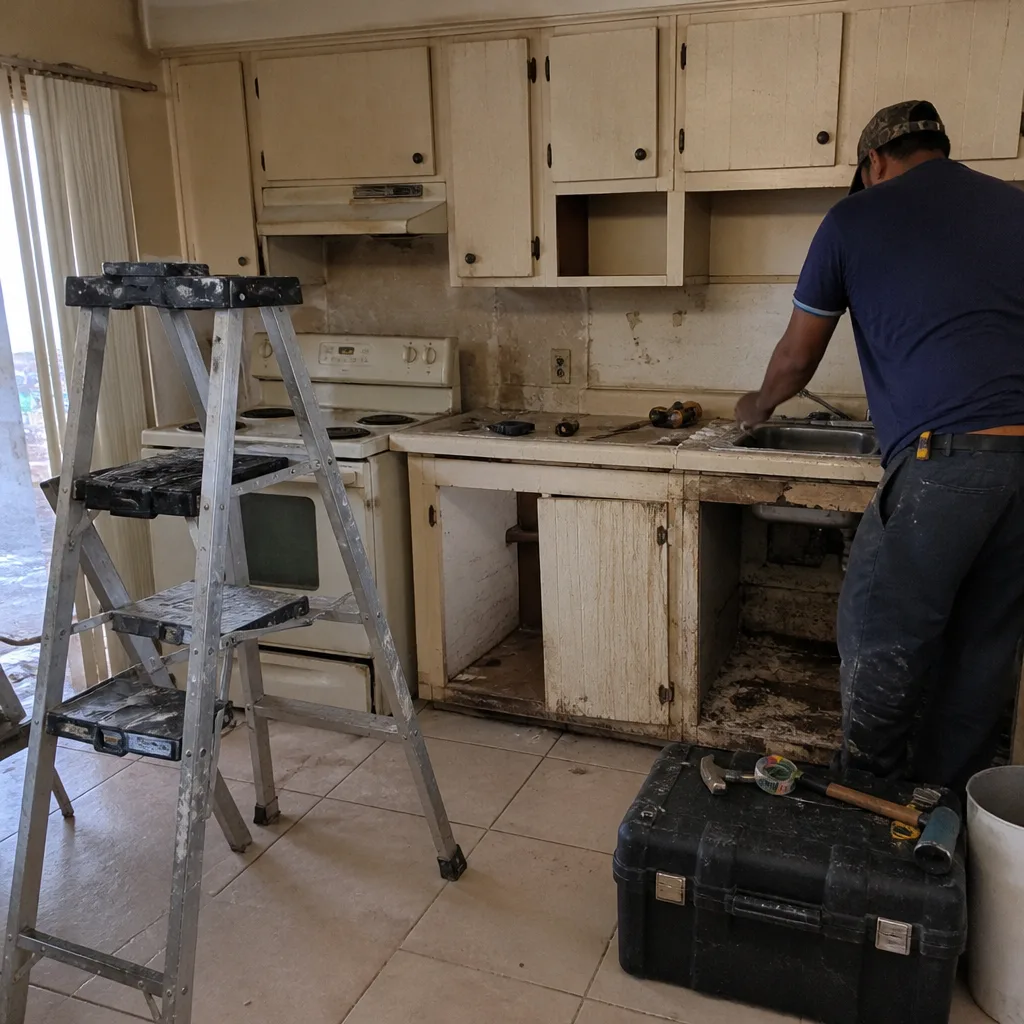
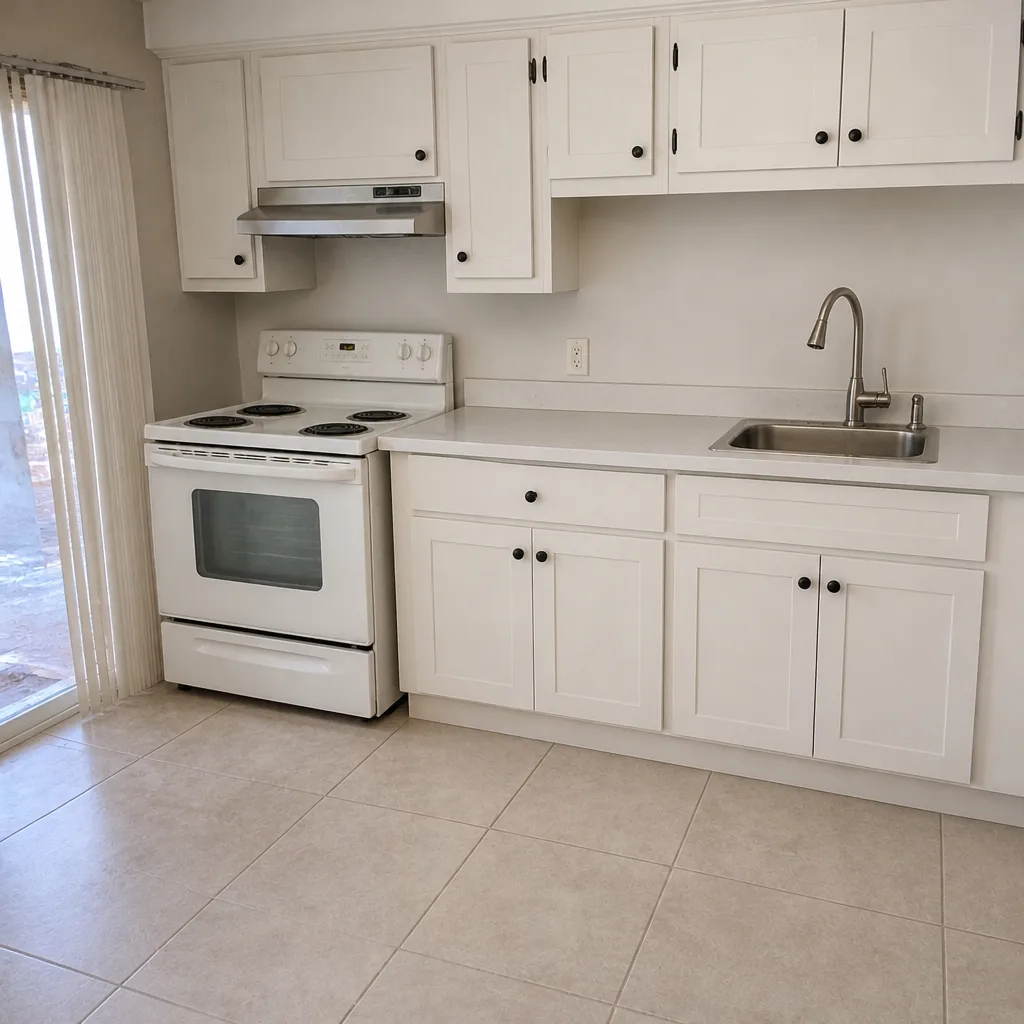
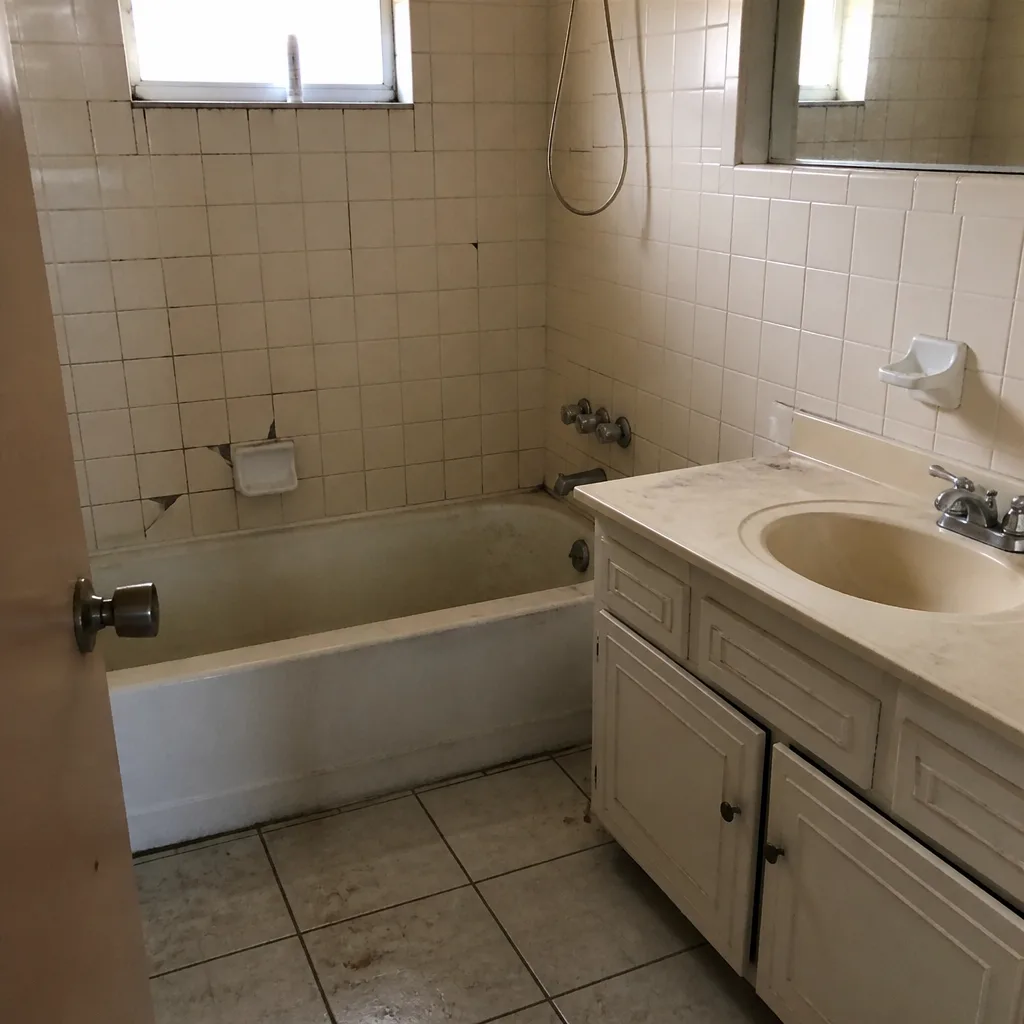
See the difference
 Before
 After
 Before
 After
 Before
 After
When to Call a Professional
Minor maintenance – cleaning, lubrication, caulking, and the log – is well within reach of any homeowner. Call a professional when you spot early corrosion at the corner joints, a corner that has visibly failed the seal, or interior water staining that wasn’t there before. Call when a sash or door fails to operate under load even after lubrication, when a latch doesn’t fully engage, or when the window looks fine but the interior shows moisture. And call before replacing anything yourself, because the wrong repair in a coastal environment speeds up the failure it was meant to reverse. Groundwork Construction Co. of North Miami Beach offers free estimates in North Miami Beach – call (844) 797-4868, and a real person answers, day or night. Every estimate includes a written line-item quote you can compare against other options, and every job is backed by our 730-Day Done Right Promise.
Frequently Asked Questions

Every quarter – three to four times a year. If you’re within a few blocks of the saltwater, run it closer to every ten weeks. Salt film rebuilds fast in the North Miami Beach humidity, and a cleaned frame drains water properly while a neglected one lets water sit in the corner joints. The full cleaning pass takes about fifteen minutes for a typical home.
Silicone-based lubricant. Never petroleum-based products like WD-40 or general-purpose grease, because they break down the elastomeric seals and gaskets on impact doors. Silicone-based spray on hinges, tracks, and latch mechanisms; gasket conditioner on the weatherstripping. Call (844) 797-4868 if you’d like a free inspection before the spring pass.
Look for interior drywall staining around the window perimeter, peeling paint near the sill, bubbling texture, or a musty smell when you open the window. All of these say water has been entering through the drainage channels and getting past the seal. Call for a professional inspection – estimates are free, and the early diagnosis saves the wall cavity.
No. Pressure washers drive water past the weatherstripping and force salt into the corner joints and drainage channels. Use a garden hose with a gentle nozzle. The faster cleaning you get from a pressure washer is not worth the damage it does to a system rated for a twenty-plus year service life.
The interior first – flash each window perimeter for staining, then use a moisture meter on the sills and jambs to read through drywall. Then walk the exterior once it’s safe: caulk lines, corners, sill transitions. Finally, test every sash and door under load. Document everything with dated photos, and call for an inspection if anything has shifted.
Yes. Buyers in North Miami Beach have become much more informed about impact window system lifespan since the insurance reforms, and a documented maintenance history is one of the few concrete pieces of evidence an inspector can verify. It also helps if a warranty claim comes up, because a manufacturer won’t cover failures that trace back to neglected maintenance.
When the corner joints show corrosion that’s deeper than surface staining, when a gasket can’t be re-seated, or when the window is original to a home built before roughly 2002 and shows signs of failing seals. A free estimate will tell you which way to go – repair is usually the right call on a window under ten years old with a small seal issue, and replacement is usually the right call once you’re seeing more than two problems on the same window.
The Bottom Line
The maintenance schedule that protects impact windows and doors in North Miami Beach is simple: quarterly cleaning of frames and weep holes, twice-a-year lubrication and gasket conditioning, an annual fall deep inspection, a post-storm check after every named system, and a log that runs alongside all of it. None of those tasks takes more than a few minutes to an hour, and together they protect a substantial investment – not to mention a warranty that’s easier to keep than to claim. If you’re not sure where your windows currently stand, or you’re facing a repair or replacement decision and want a straight answer, call Groundwork Construction Co. of North Miami Beach at (844) 797-4868 to schedule your free estimate. Our technicians have up to 12 years of experience with impact-rated systems, we carry no-hassle upfront pricing with no change orders, and every install is covered by our 730-Day Done Right Promise. From foundation to finish line, we make sure the openings on your home are built to last and backed in writing.
Written by the team at Groundwork Construction Co. of North Miami Beach.